Locking Wheel Nut Lost? What to Do When the Key Goes Missing
Reaching for your locking wheel nut key and finding it gone is a uniquely frustrating moment — and it almost always turns up at the worst time, with a flat tyre and a wheel that simply won’t come off. The reassuring news is that a lost key is a common, solvable problem, and you have more than one safe route back onto the road.
The Short Answer
Don’t force it, and never hammer or chisel the nut off — that wrecks the wheel and makes removal harder. First, check the usual hiding spots: the glovebox, the boot side panel, under the seats, and the spare-wheel or tool kit. If the key is genuinely gone, you have two safe options — order a replacement using your vehicle’s locking nut key code, or call a mobile tyre fitter or breakdown provider who can remove the nut with a specialist extraction tool.
What Is a Locking Wheel Nut (And Why Is the Key Missing?)
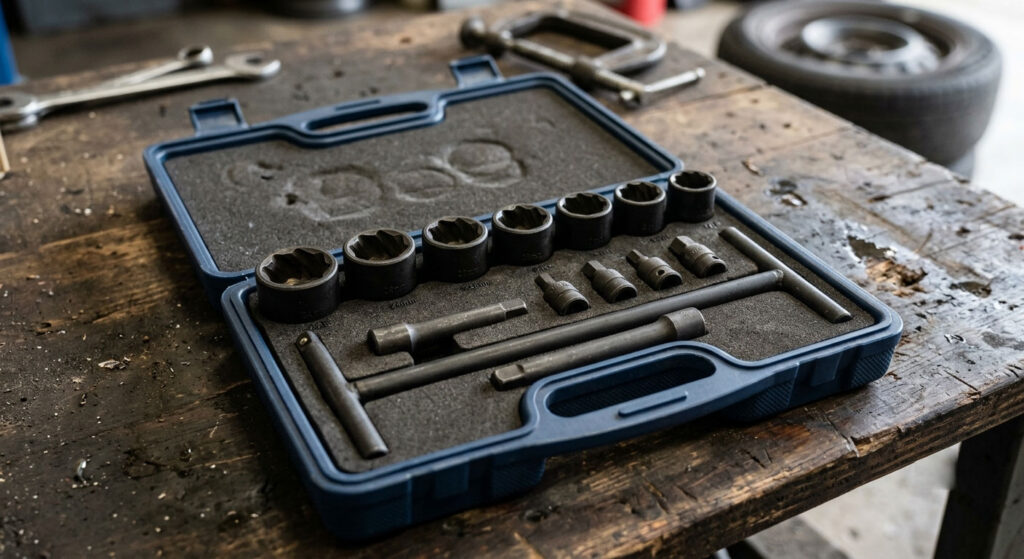
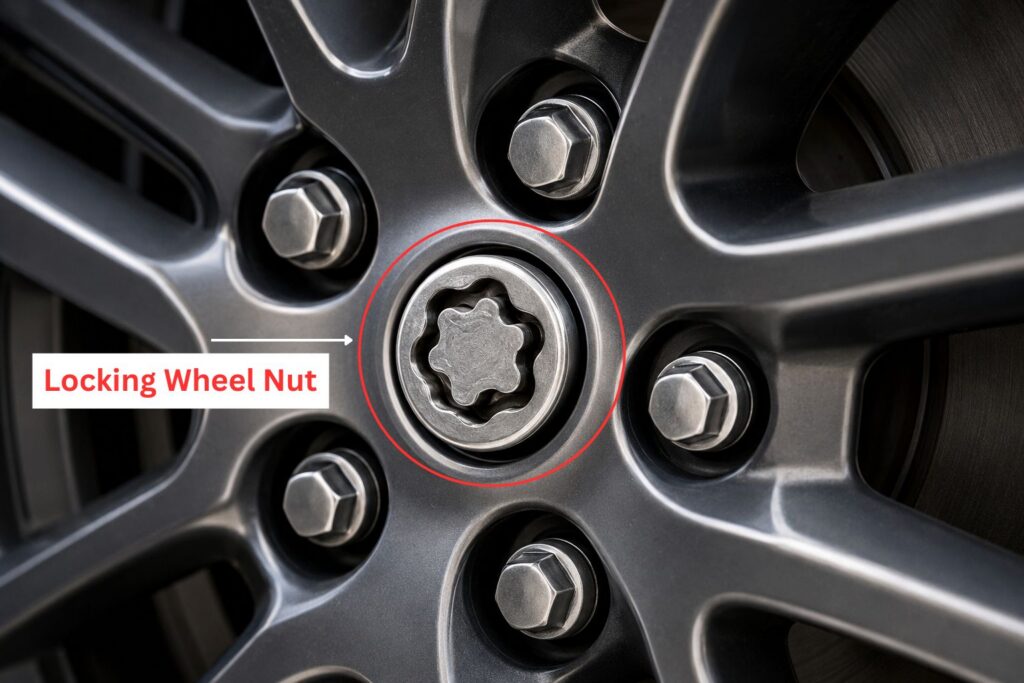
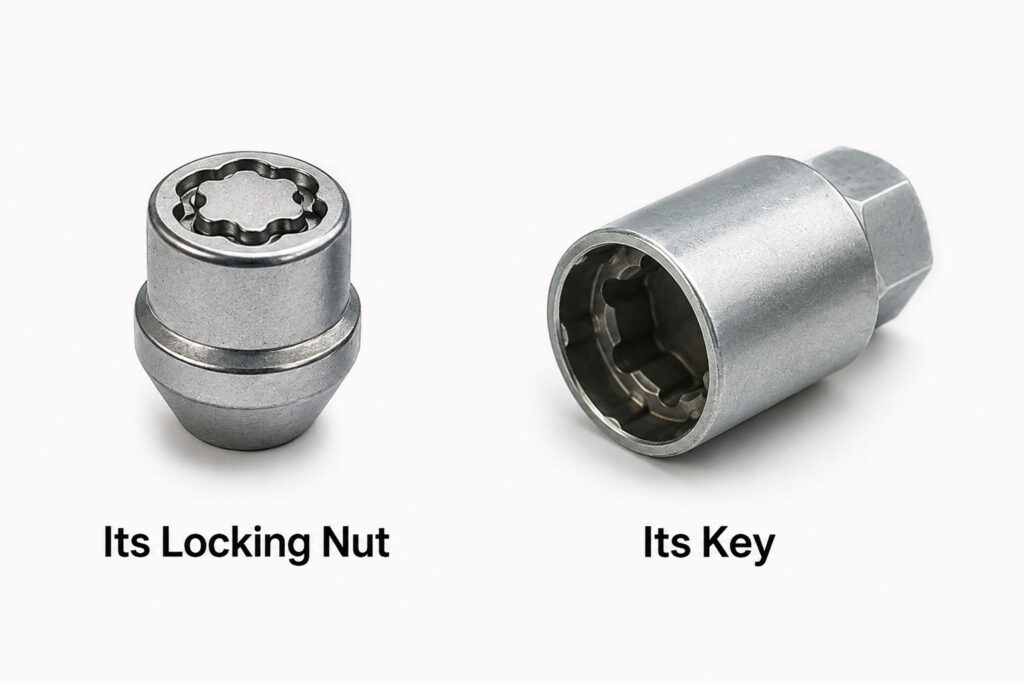
A locking wheel nut is a specially shaped security nut fitted to each wheel in place of one ordinary nut. Its head has a unique pattern that only a matching key — a small keyed socket — can grip, which stops thieves from simply undoing your wheels and taking the alloys. One locking nut per wheel is standard, and a single key fits all four.
Why is the key so easy to lose?
The key is a small, loose item that rarely lives anywhere consistent, so it slips out of sight easily. The most common reasons drivers end up without one include:
- It was moved during a service. Garages take it out to remove wheels and don’t always put it back where it started.

- You bought the car used and it was never handed over by the previous owner or dealer.
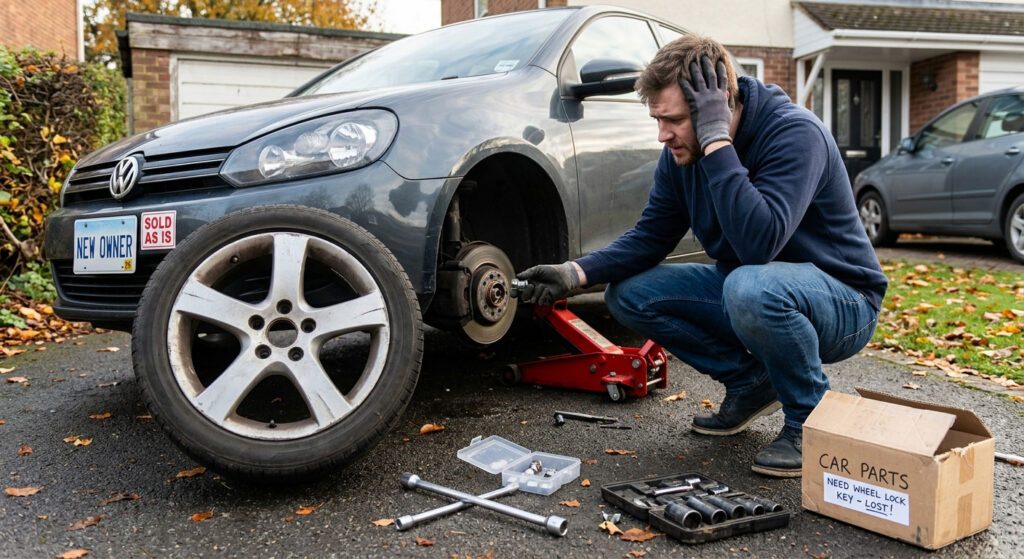
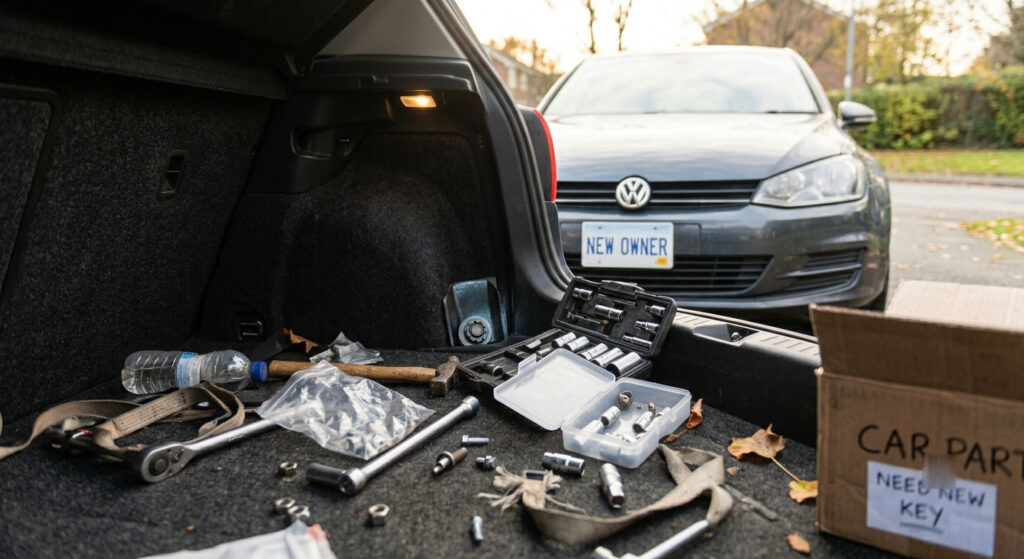
- It rolled loose in the boot and vanished under the trim or parcel shelf.
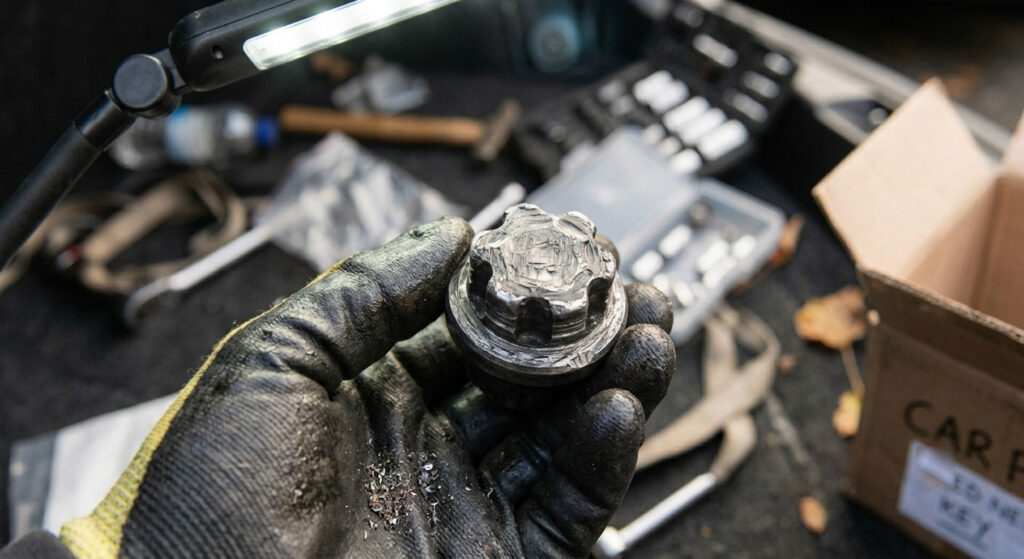
- The teeth wore down from being hammered on with an impact gun, so it no longer grips.
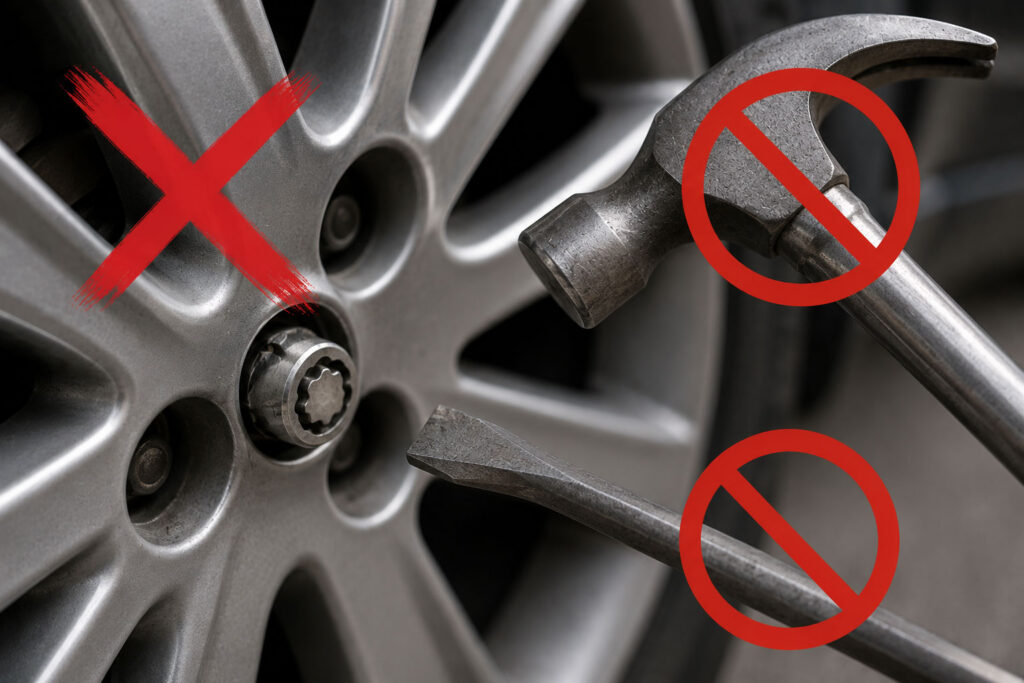
Quick Fact
Good to know: locking wheel nut patterns aren’t truly one-of-a-kind. Each manufacturer uses a limited set of patterns identified by a short key code — which is exactly why a replacement key can be matched to your car. For background on how these security nuts work, the RAC’s guide to locking wheel nuts is a useful read.
Immediate Steps: What NOT to Do
When the key is missing and you’re tempted to improvise, the wrong move can turn a £30 fix into a ruined alloy. Before you try anything, know what to avoid.
Avoid These Mistakes
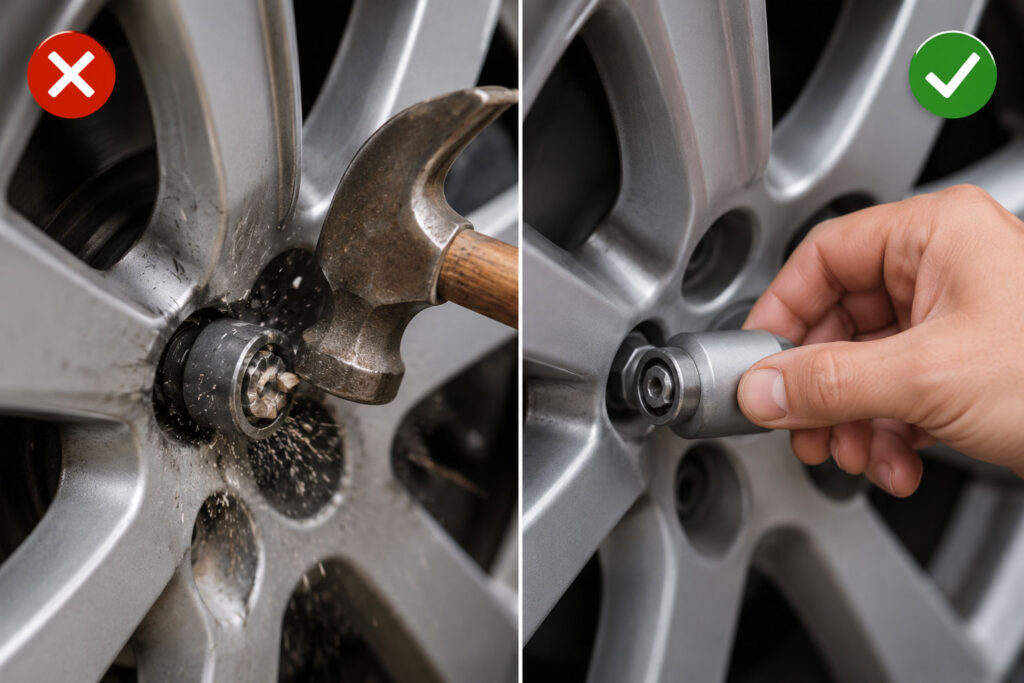
- Don’t hammer or chisel the nut or its outer collar — modern nuts with a free-spinning ring are built to defeat this, and you’ll only damage the wheel.
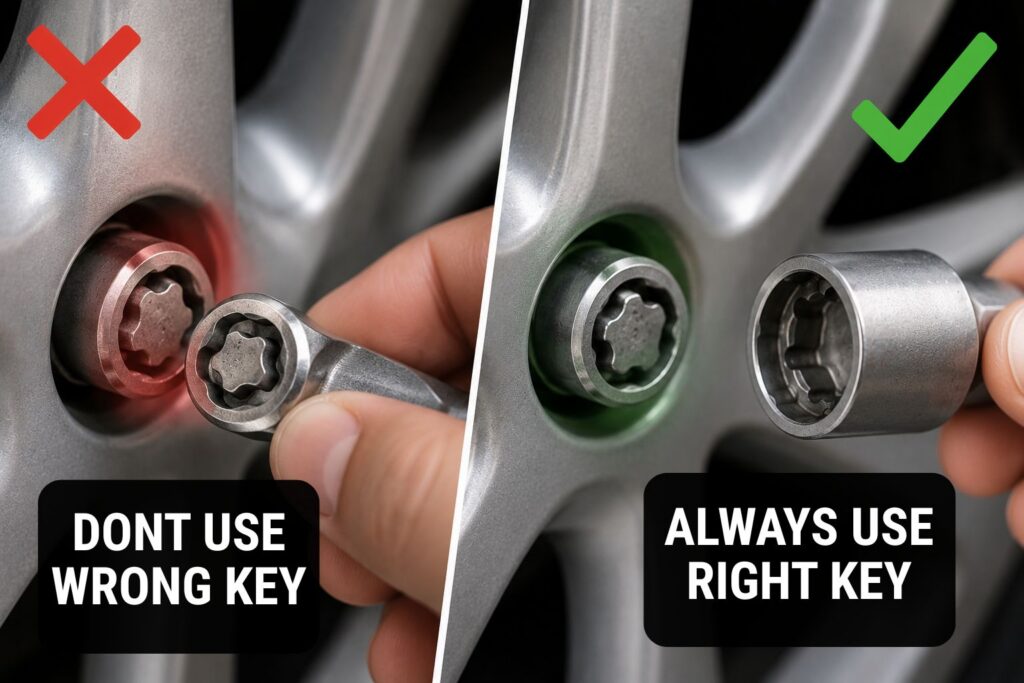
- Don’t force another car’s key onto it, even the same make. Mismatched patterns strip both the key and the nut.
- Don’t drive on a flat to reach a garage — you’ll destroy the tyre and possibly the wheel.
- Don’t panic-buy a cheap removal kit and attack it roadside; many slip and make professional removal harder.
Do This Instead
| If you’re tempted to… | Do this instead |
|---|---|
| Hammer a socket onto the nut | Call a fitter with a proper extractor tool |
| Use a friend’s key | Match a replacement to your key code |
| Drive on the flat tyre | Wait for mobile assistance to reach you |
| Grind off the spinning collar | Leave removal to a specialist tool |
Why It Matters
Specialist extraction tools grip the nut without touching the alloy. Brute force does the opposite — once a nut is rounded off or a wheel is gouged, the job costs far more and can even mean replacing the wheel itself.
How to Find Your Locking Wheel Nut Key Code
The key code is a short reference — often three or four digits, sometimes with a letter — that identifies the exact pattern your nuts use. It’s the single most useful piece of information for ordering a replacement key.
Where is the key code usually recorded?
- On the key itself or the plastic cap/collar it came with.
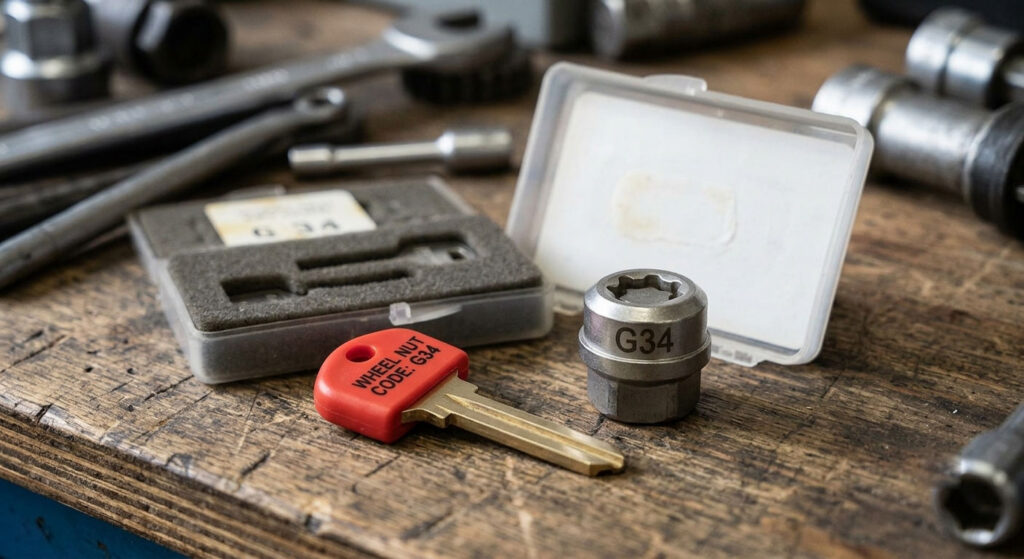
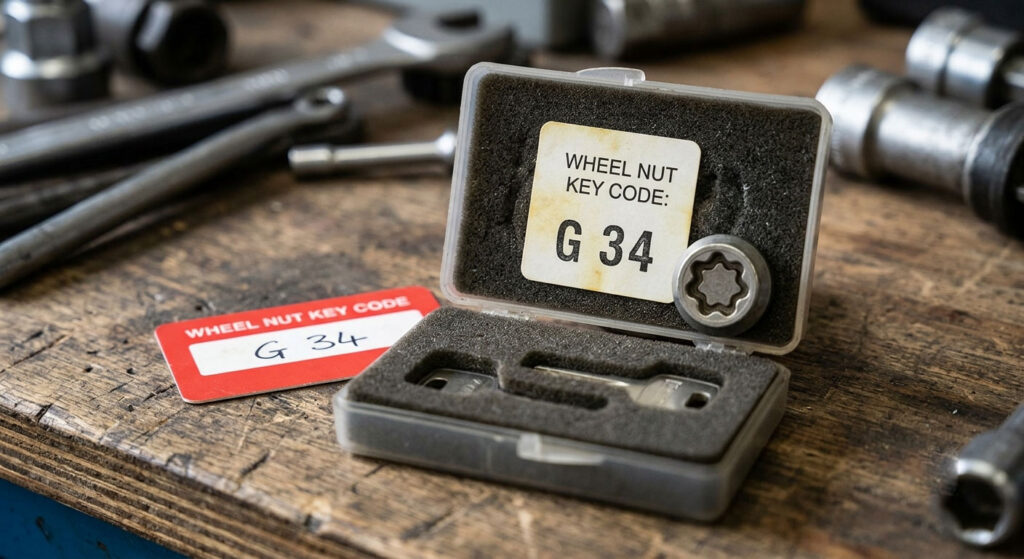
- In the locking nut box — the small case the set was supplied in.
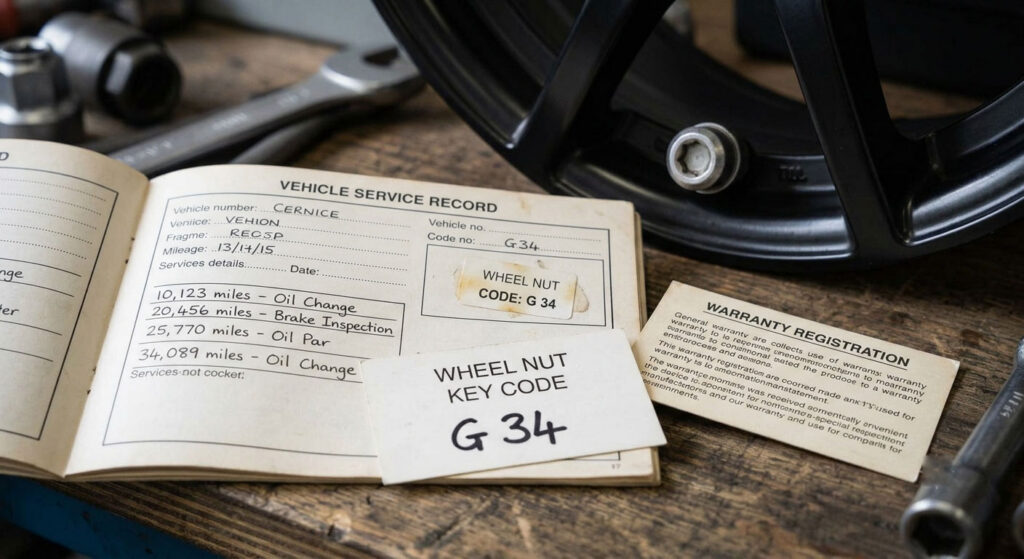
- In the service book or handbook, sometimes on a card or sticker.
- In the glovebox or boot, on a code card with the documents.
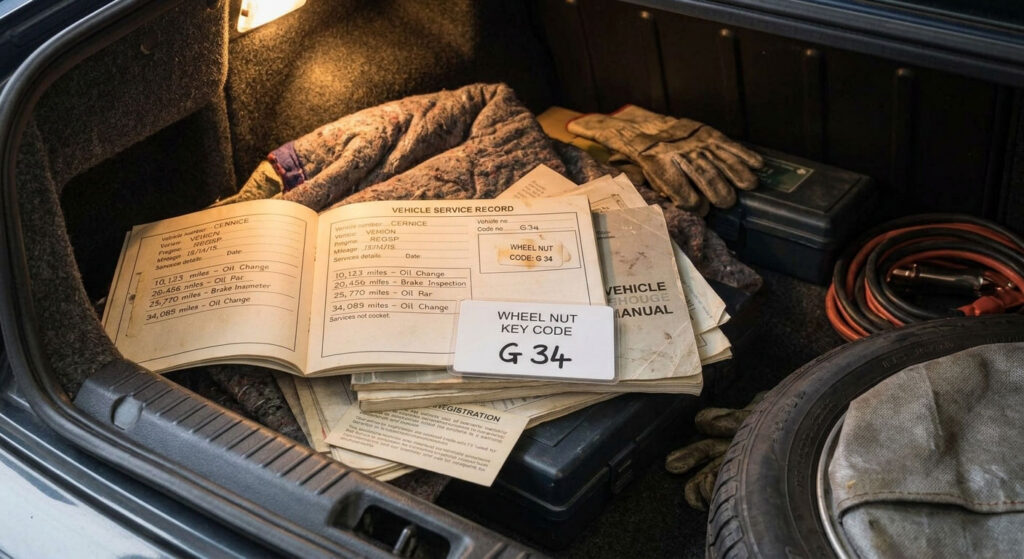
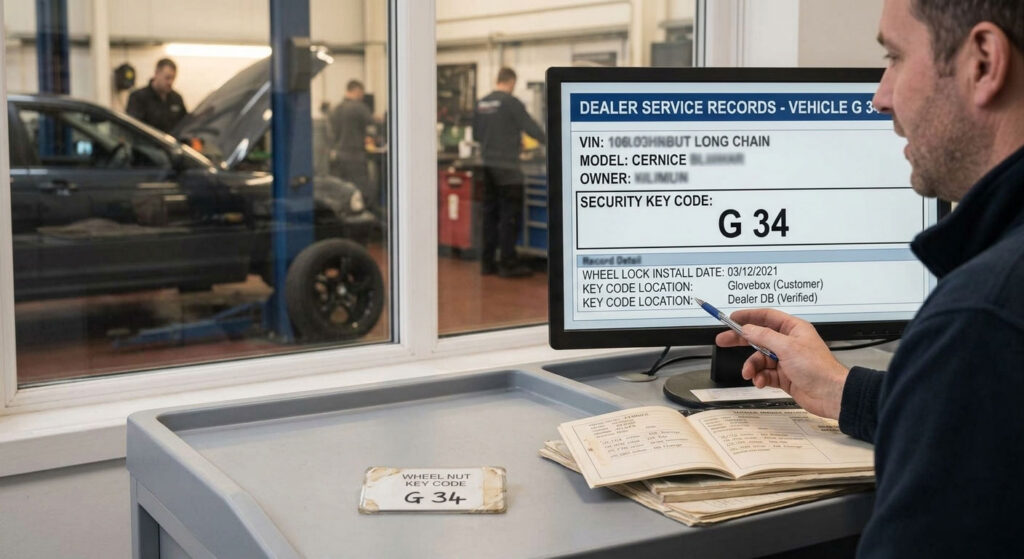
- On your dealer’s records — they can often look it up against your registration or VIN.
No Code? No Problem
Lost the code too? Specialist services can identify the pattern from a clear photo of the nut and supply a matching key — handy when there’s no paperwork left at all.
| Where to look | What you’re looking for |
|---|---|
| Original key or cap | A stamped 3–4 digit code |
| Locking nut box | Code printed on the case or label |
| Service book / handbook | A code card or dealer sticker |
| Main dealer | Lookup by registration or VIN |
Step-by-Step Guide to Getting a Replacement Key
Once you have your key code (or a clear photo of the nut), getting a replacement is straightforward. Here’s the order that saves the most time and money.
- Confirm your key code from the key, box, service book or dealer.
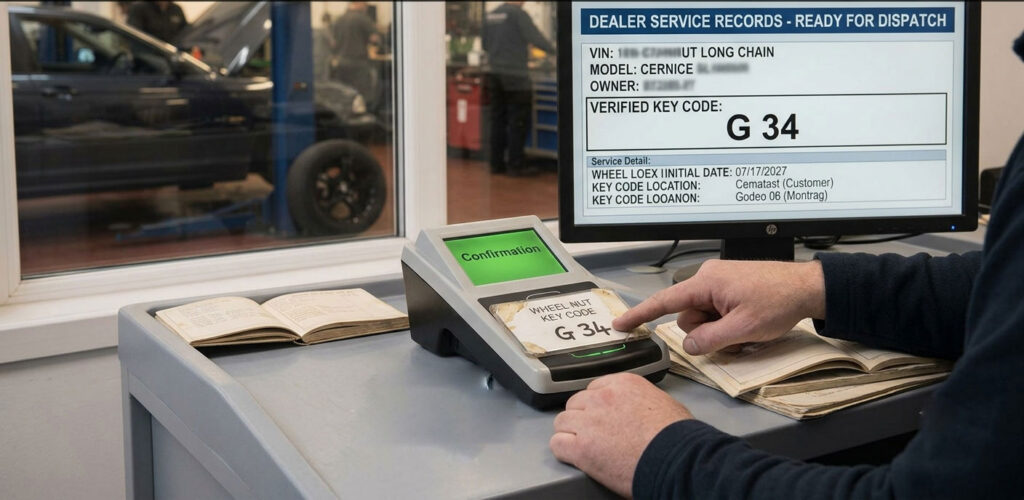
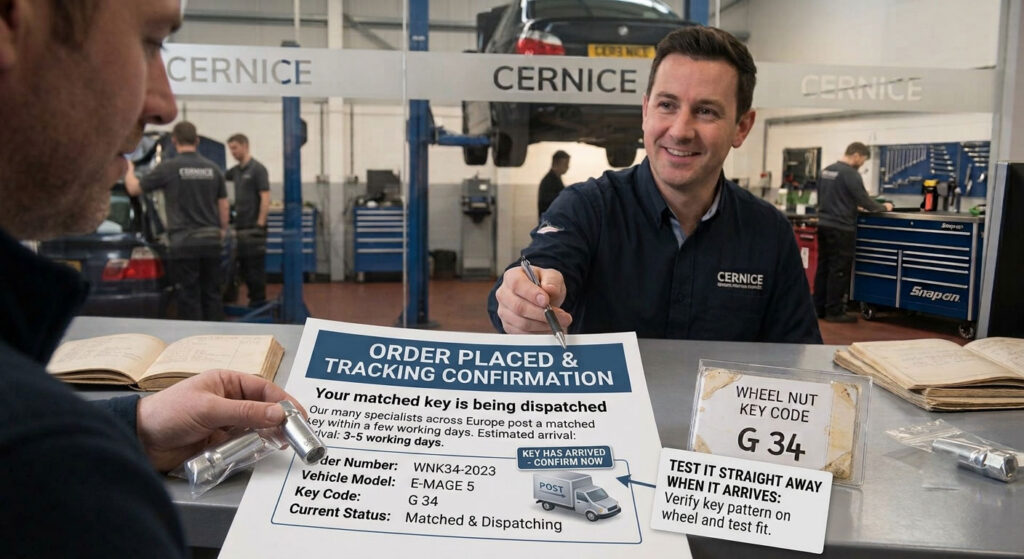
- Choose your source — a main dealer, or an online locking-key specialist that matches by code or photo.
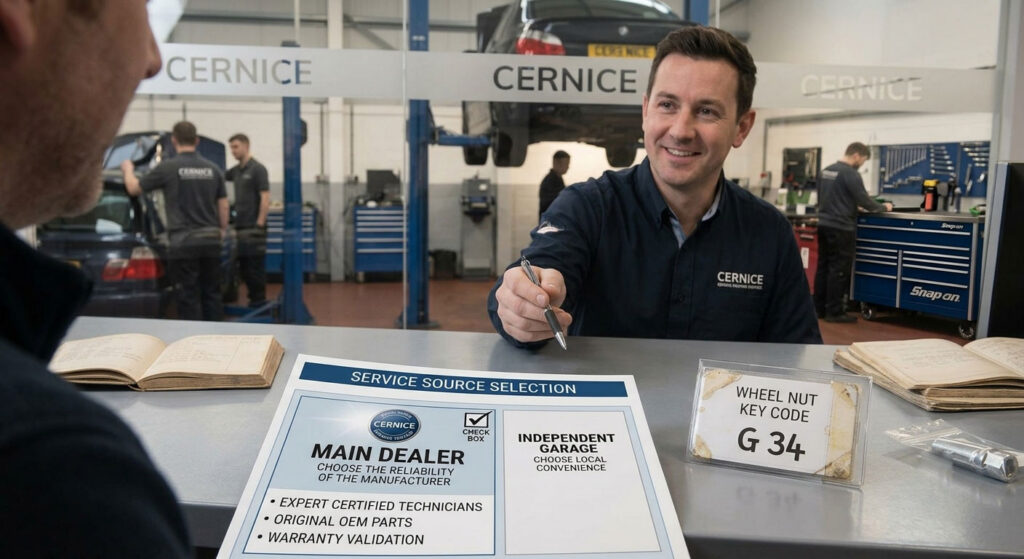
- Provide your details — make, model, year and the code (or a sharp photo of the nut face).
- Order and wait — many specialists post a matched key within a few working days.
- Test it straight away when it arrives, then store it somewhere consistent.
Replacement Options Compared
| Option | Typical cost* | Turnaround | Best for |
|---|---|---|---|
| Main dealer (by code) | ~£25–£40+ | Days to 1+ week | Original-spec key on file |
| Online specialist (by code) | ~£20–£40 | 1–3 working days | Fast, no dealer trip |
| Online specialist (by photo) | ~£35–£55 | 2–4 working days | No code or paperwork left |
| Mobile fitter removes nut | Quote on request | Same / next day | You need the wheel off now |
*Indicative UK figures only — prices vary by make, supplier and delivery speed.
Expert Tip
If you need the wheel off today — say you’ve got a puncture — a key in the post won’t help. In that case, skip straight to professional removal (below), sort a fresh key afterwards, or let an emergency mobile tyre replacement handle both at once.
Emergency Removal Methods (When You Can’t Get a Key)
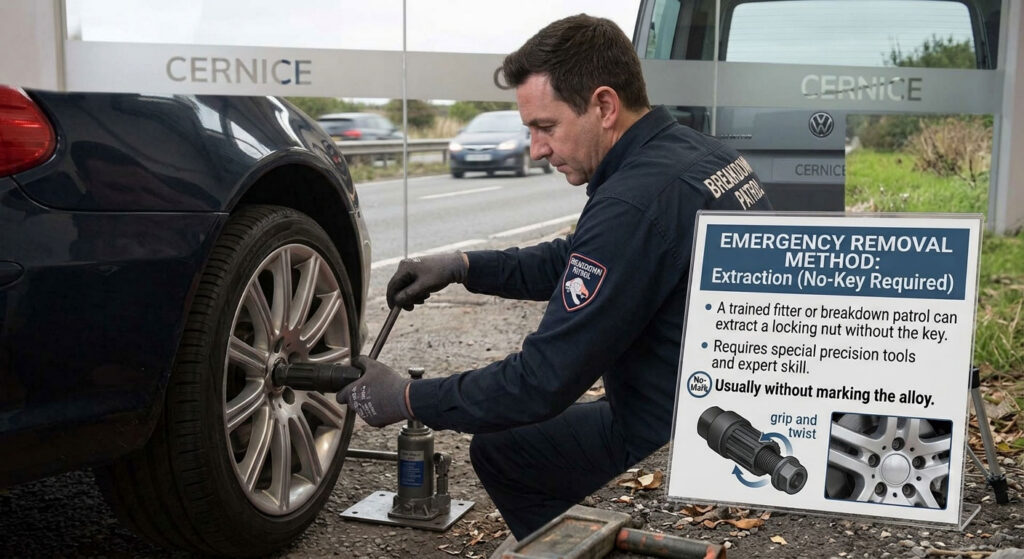
If the wheel has to come off before a replacement key can arrive, the safe answer is professional removal. A trained fitter or breakdown patrol can extract a locking nut without the key — usually without marking the alloy — using a dedicated extraction tool.
How do professionals remove it without the key?
The proper tool bites into the nut with a reverse-thread or moulded head that grips even a spinning-collar design, then backs it out. Breakdown providers and tyre specialists carry these because it’s a routine job for them — often done in well under half an hour per wheel.
Are DIY removal kits worth trying?
Occasionally, on older and simpler nuts, a tight-fitting extractor socket can work. But on modern nuts with a free-spinning ring, cheap kits frequently slip, round the nut, or damage the wheel — turning a quick job into an expensive one. For most drivers, it isn’t worth the gamble.
Removal Methods Compared
| Method | Who should do it | Risk to your wheel |
|---|---|---|
| Specialist extraction tool | Tyre fitter / breakdown patrol | Very low |
| Extractor socket (spinning collar) | Professional only | Medium |
| Hammer-on socket | Not recommended | High |
| Grinding or drilling out | Last resort, professional | High — cosmetic damage likely |
Important Safety Note
⚠ Don’t improvise at the roadside. If you’re stranded with a flat and no key, a mobile tyre replacement service can come to you, remove the locking nut safely and fit your spare or a new tyre on the spot — no towing required.
Prevention: How to Never Lose It Again
Most ‘lost’ keys aren’t really lost — they’re misplaced or left behind after a garage visit. A few simple habits make sure you’re never caught out again.
3 Habits That Keep Your Key Safe
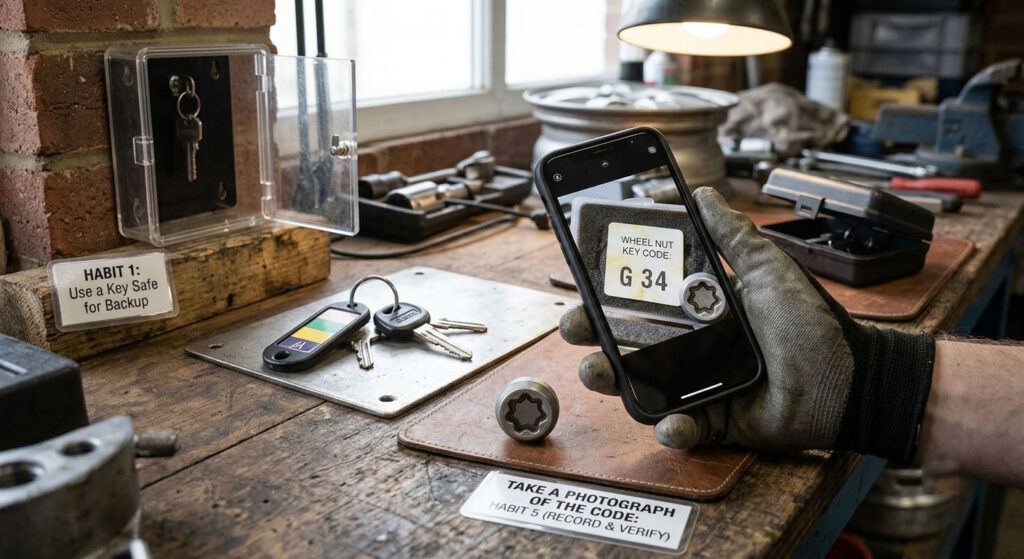
- Photograph the key code the day you find it and save it to your phone or cloud, so the code survives even if the key doesn’t.
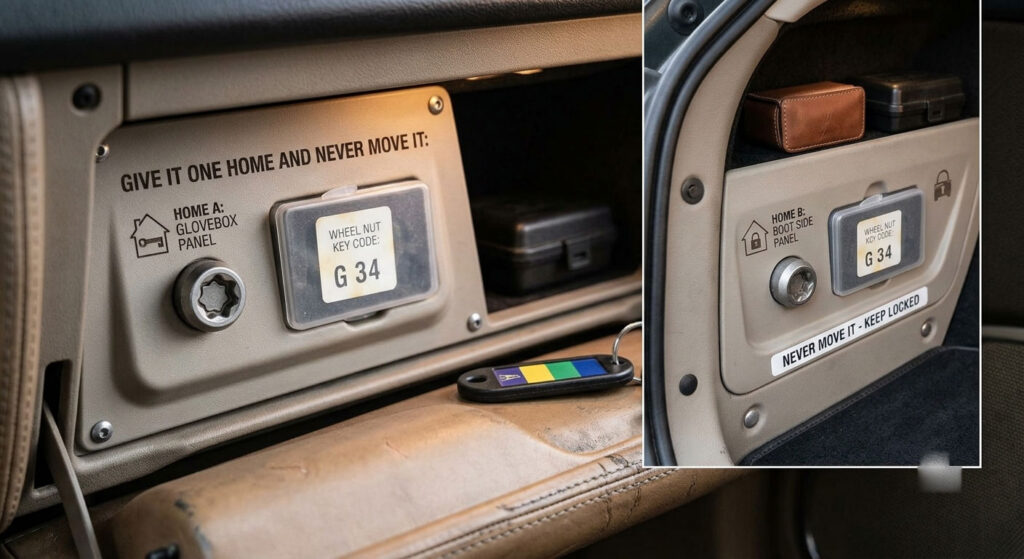
- Give it one home and never move it — glovebox or boot side panel, always the same spot.
- Check it at every tyre change, and ask the fitter to torque the nut by hand rather than blast it with an impact gun, which is what wears the teeth down.

Should you swap to standard nuts instead?
Some drivers replace locking nuts with ordinary ones for convenience. It removes the key problem entirely, but also removes the theft deterrent — worth weighing up if you have desirable alloys. Whatever you choose, keeping your tyres and wheels in good order matters; the UK charity TyreSafe has practical guidance on tyre care, and our own tyre maintenance tips cover the essentials.
Quick Checklist
- ✓ Key code photographed and saved
- ✓ Key kept in one fixed spot
- ✓ Checked at every service and tyre change
- ✓ Nuts torqued by hand, not hammered
Frequently Asked Questions
Yes. Breakdown patrols carry specialist extraction tools and remove locking nuts regularly, though whether it’s covered or chargeable varies, and some will only attend if you actually have a flat. A mobile tyre fitter can do the same and come to your home or workplace.
As a rough guide, expect around £25–£40 from a dealer or online specialist when ordering by code, and a little more if it has to be matched from a photo. Prices vary by make and supplier, so it’s worth comparing a couple of sources.
If all your wheels are on and properly torqued, yes — the missing key only matters when a wheel needs to come off. The catch is you can’t change a tyre or have work done that needs wheel removal until it’s sorted, so don’t leave it too long.
A garage can’t remove your wheels without the key, which can hold up tyre work, brake checks and some service tasks. It’s best to locate or replace the key before you book in.
No — each key is matched to a specific pattern and isn’t interchangeable between cars, although manufacturers reuse a limited range of patterns identified by a key code. That code is what lets a specialist supply the right key.
On simple older nuts it sometimes is, but modern spinning-collar designs often defeat DIY attempts and get damaged in the process. Professional removal is quick, low-risk and usually leaves the alloy unmarked, so it’s the safer choice for most drivers.
Key Takeaways
Quick Recap
- ✓ Don’t hammer, chisel or force it — you’ll damage the wheel.
- ✓ Check the glovebox, boot panels, seats and tool kit first.
- ✓ Use your key code (or a photo of the nut) to order a matched replacement.
- ✓ Need the wheel off now? Have it removed professionally, then replace the key.
- ✓ Save the code and keep the key in one place to avoid a repeat.
Need a Hand Right Now?
Stuck with a flat and no key? Our mobile tyre fitting team comes to your home, work or the roadside, removes the locking nut safely and gets you moving — often the same day. For urgent cases, our emergency tyre replacement service is ready when you are.