Tyre Sidewall Damage Explained: What It Means and When You Must Replace
The sidewall is one of the hardest-working parts of your tyre, and one of the easiest to damage. A single scrape against a kerb or a sharp jolt through a pothole can leave a mark that looks harmless yet quietly weakens the whole tyre.
This guide explains what the sidewall does, how to tell the different kinds of damage apart, why almost none of it can be repaired, and the simple habits that keep your tyres, and everyone in the car, safer. Use the quick links below to jump straight to the part you need.
What Is the Tyre Sidewall?
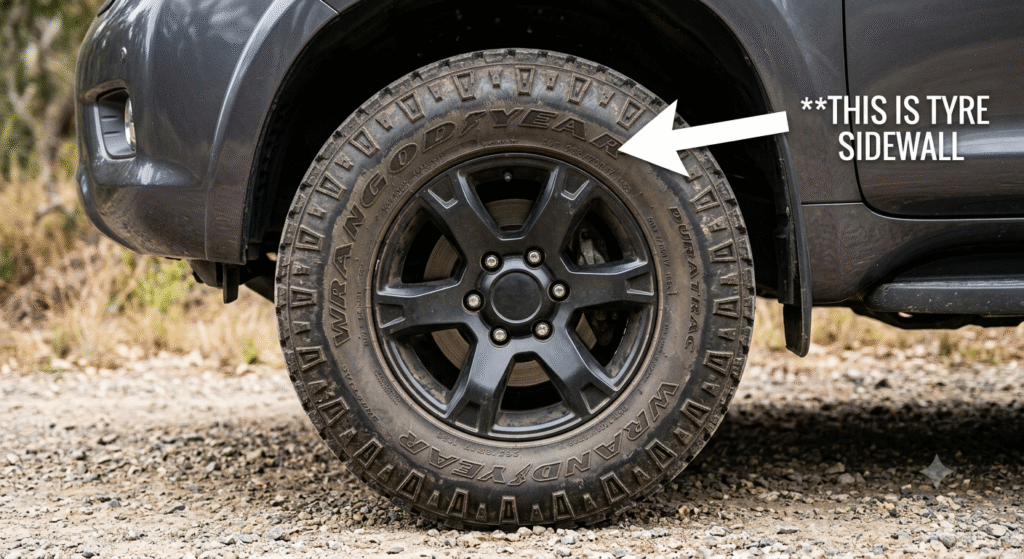
The sidewall is the smooth, upright face of the tyre that runs between the tread (the part that grips the road) and the bead (the inner edge that seals onto the wheel rim). While the tread does the gripping, the sidewall’s job is to flex. It cushions bumps, carries the weight of the vehicle and holds the tyre’s shape as it rolls and corners.
Because it bends with every rotation, the sidewall has no steel belts running through it the way the tread does. That flexibility is exactly what makes it vulnerable, and why damage here is treated so seriously.
Quick Answer
The sidewall is the flexible side of the tyre between the tread and the rim. It supports the load and absorbs impacts, so any damage to it weakens the tyre’s structure and, in nearly all cases, cannot be safely repaired.
How to Read Your Sidewall Markings
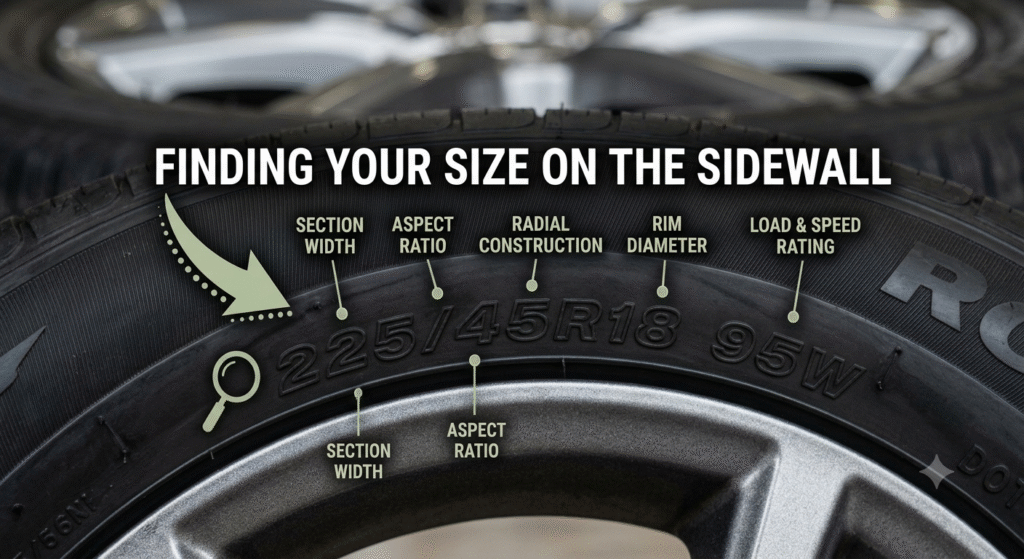
Every sidewall is stamped with a line of numbers and letters describing the tyre. Learning to read them helps you buy the correct replacement and check the tyre’s age. Take a common size such as 225/45 R18 95w:
| Marking (example) | What it tells you |
|---|---|
| 225 | Tyre width in millimetres |
| 45 | Aspect ratio – sidewall height as a percentage of width |
| R | Radial construction |
| 18 | Wheel diameter in inches |
| 95 | Load index – the maximum weight the tyre can carry |
| W | Speed rating – the maximum speed it’s rated for |
| DOT code | The week and year the tyre was manufactured |
If you’re ever unsure which tyre you need, reading this line to your fitter, or quoting your registration, is enough to match the exact size. For more on picking quality rubber, see our guide to the best tyre brands.
Common Types of Tyre Sidewall Damage
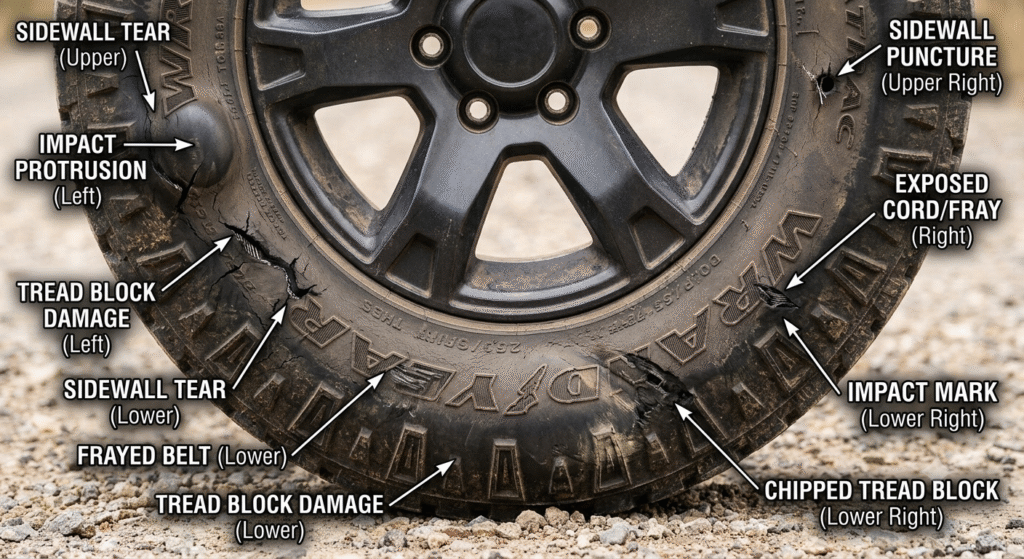
Not all sidewall damage looks the same, and some kinds are far more urgent than others. The table below is a quick reference; the notes that follow explain the most serious types in a little more detail.
| Type of damage | How to spot it | Safe to keep driving? |
|---|---|---|
| Cuts & lacerations | A clean slice or gash through the rubber | No – replace the tyre |
| Bulges or bubbles | An egg-shaped lump pushing out from the side | No – replace immediately |
| Cracking (perishing) | Fine, dry, spider-web cracks in the rubber | Get it checked – usually replace |
| Sidewall puncture | A nail or screw in the side rather than the tread | No – not repairable |
| Scuffs & gouges | A surface graze, often from a kerb | Maybe – have it inspected |
| Impact bulge | A lump appearing after hitting a pothole | No – replace the tyre |
Bulges and Bubbles
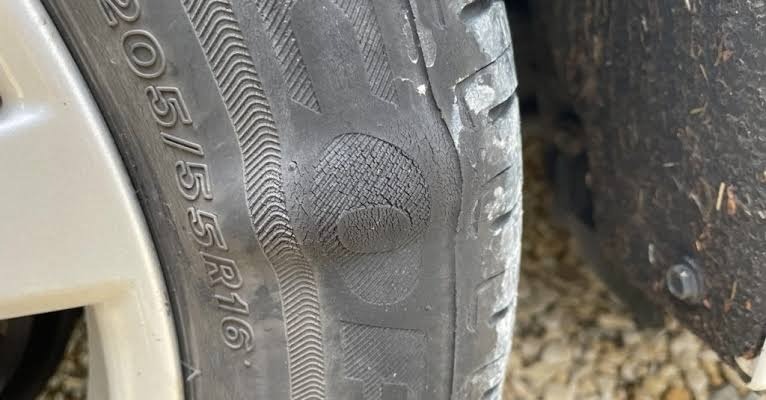
A bulge means the internal cords of the tyre have snapped, usually after a hard impact, and air is now pushing against nothing but a thin layer of rubber. It is the clearest sign that a tyre is about to fail.
Spotted a Bulge? Treat It as Urgent
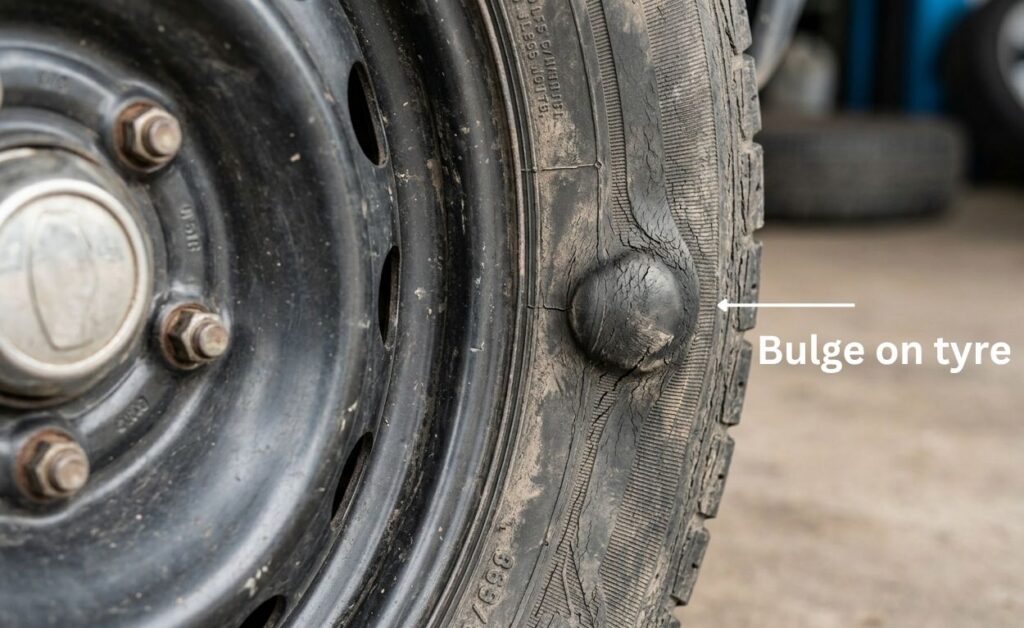
A bulge can burst without warning, even at low speed. Stop using the tyre and arrange a replacement rather than risking a blowout on the move.
Cracking and Perishing
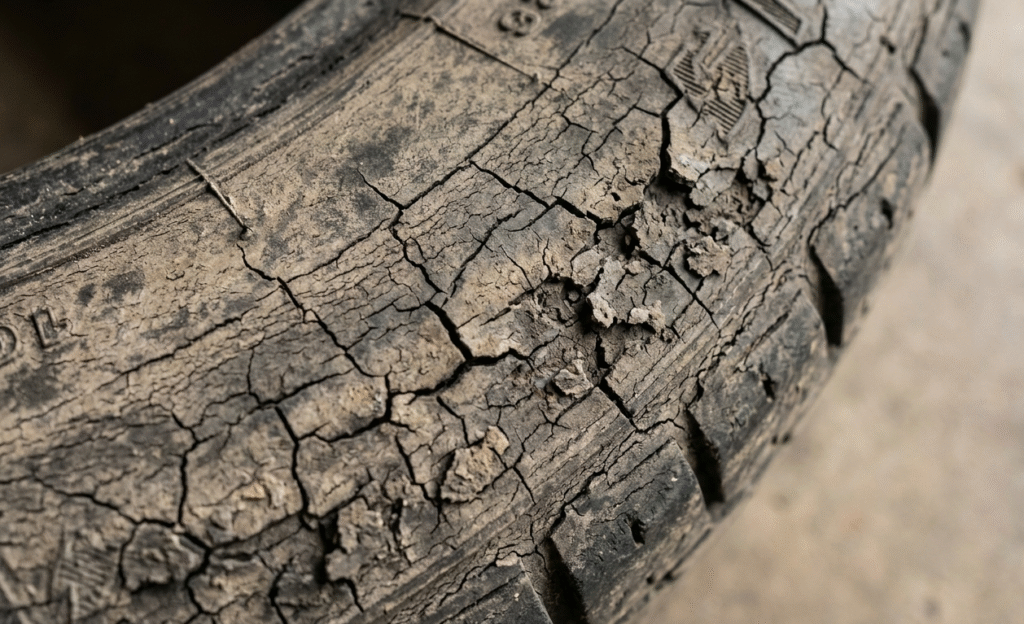
Fine cracks appear as rubber ages or is exposed to sunlight and chemicals. A few shallow lines may be cosmetic, but deep or widespread cracking means the rubber has hardened and lost its integrity, and the tyre should be replaced.
What Causes Sidewall Damage?
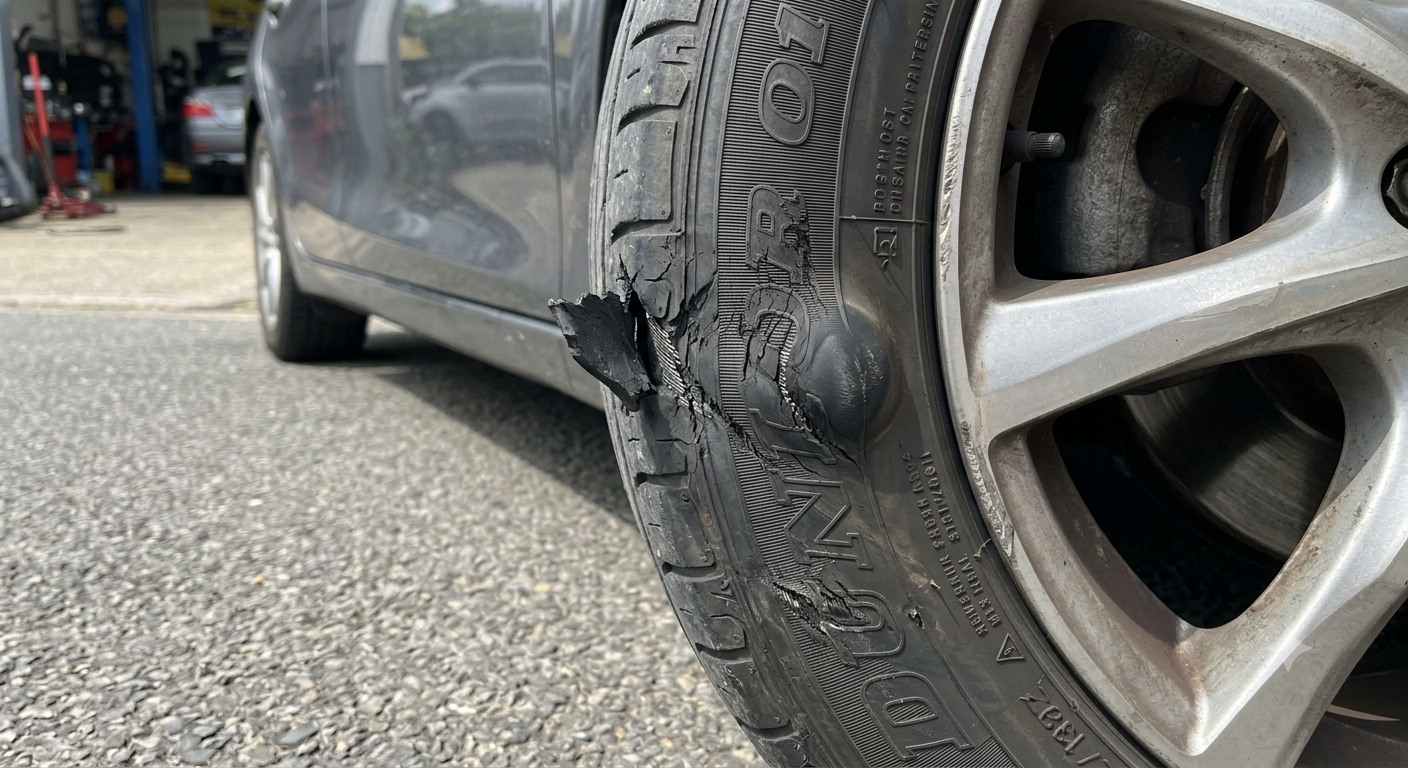
Most sidewall damage comes down to everyday driving rather than faulty tyres. The usual culprits are:
- Kerbing – scraping or mounting kerbs while parking or turning.
- Potholes and debris – sharp impacts that pinch the sidewall against the rim.
- Under-inflation – a soft tyre flexes too much, overheats and weakens the sidewall.
- Overloading – carrying more weight than the tyre’s load rating allows.
- Age and UV exposure – sunlight and ozone slowly perish the rubber.
- Sharp objects – glass, nails or metal catching the side of the tyre.
The Cheapest Way to Protect Your Sidewalls
Correct pressure is your best and cheapest defence. A properly inflated tyre flexes far less and shrugs off knocks that would damage a soft one. Our tyre pressure guide explains how to get it right for your vehicle.
Can Sidewall Damage Be Repaired?
Quick Answer
In almost every case, no. Sidewall damage cannot be safely repaired. That part of the tyre flexes constantly as you drive, so a patch or plug simply won’t hold. The only safe fix is a new tyre.
Puncture repairs are only permitted within a limited central band of the tread, and only for small holes. The sidewall and shoulder sit outside that repairable zone because they bend on every rotation, meaning any repair would work loose and fail. UK repairs follow the industry standard BS AU 159, and reputable fitters won’t patch a sidewall for exactly this reason. The road-safety charity TyreSafe gives the same advice.
| Damage location | Repairable? |
|---|---|
| Small central-tread puncture (within the legal repair area) | Often yes |
| Sidewall puncture | No |
| Bulge or bubble | No |
| Sidewall cut or deep crack | No |
| Shoulder damage | No |
If the verdict is a replacement, you don’t have to drag the car to a garage. A mobile tyre replacement brings the new tyre to you, and every fresh tyre is properly balanced with a new valve before you drive off. You can read more about how that works in our guide to mobile tyre replacement.
The Dangers of Driving on a Damaged Sidewall
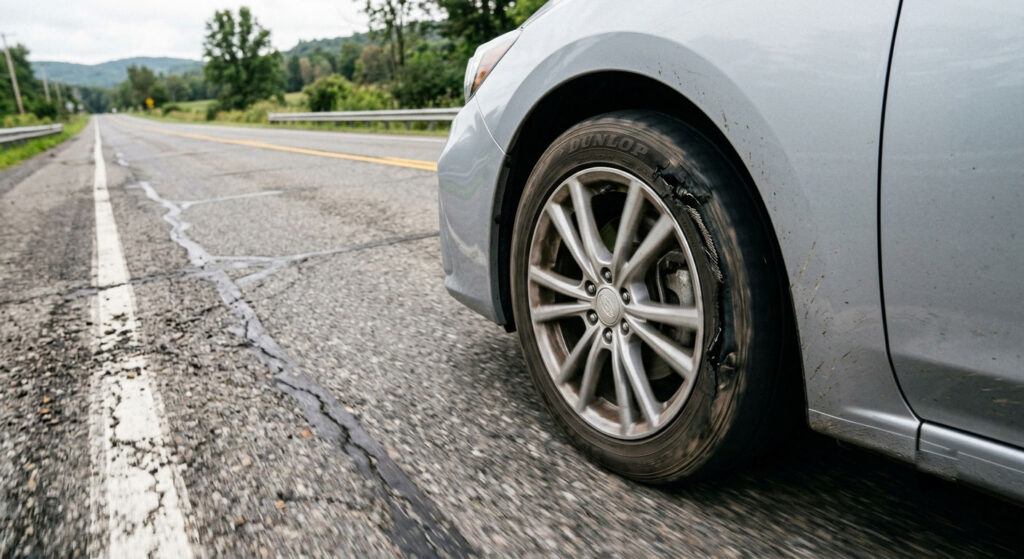
A weakened sidewall doesn’t just risk an inconvenient flat, it can fail suddenly and take your control of the car with it. The main dangers are:
- A sudden blowout at speed, with little or no warning.
- Loss of steering control as the tyre deflates.
- Longer stopping distances and unstable braking.
- Further damage to the wheel, suspension and bodywork.
- An automatic MOT failure, plus the risk of a fine and penalty points for driving on a defective tyre.
Driving on a dangerously damaged tyre is against the law in the UK; the official rules are set out in the government’s guidance on tyre safety and the law.
The Safest Option
If you spot sidewall damage while you’re out, the safest move is rarely to limp home. Knowing the difference between calling a fitter to your location and paying for a tow, something we break down in Emergency Mobile Tyre Fitting vs Recovery Services, can save you time, money and unnecessary risk. Where a wheel is completely flat, our guide on whether you can drive with a flat tyre is worth a quick read, and if you’re already stranded, emergency roadside tyre fitting will come to you.
How to Inspect Your Tyres
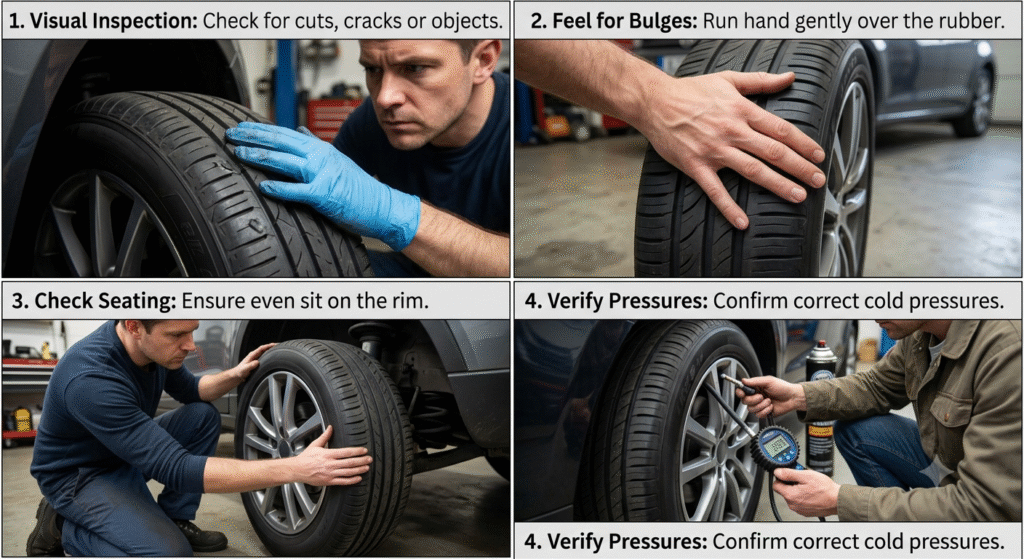
A regular check takes a couple of minutes and catches problems before they turn into breakdowns. Work around each tyre in turn:
- Look along the tread and both sidewalls for cuts, lumps, cracks or embedded objects.
- Run your hand gently over the rubber to feel for bulges you might not see.
- Check the tyre is sitting evenly on the rim, with no obvious deformation.
- Confirm the pressures are correct while the tyres are cold.
Don’t Forget the Inner Sidewall
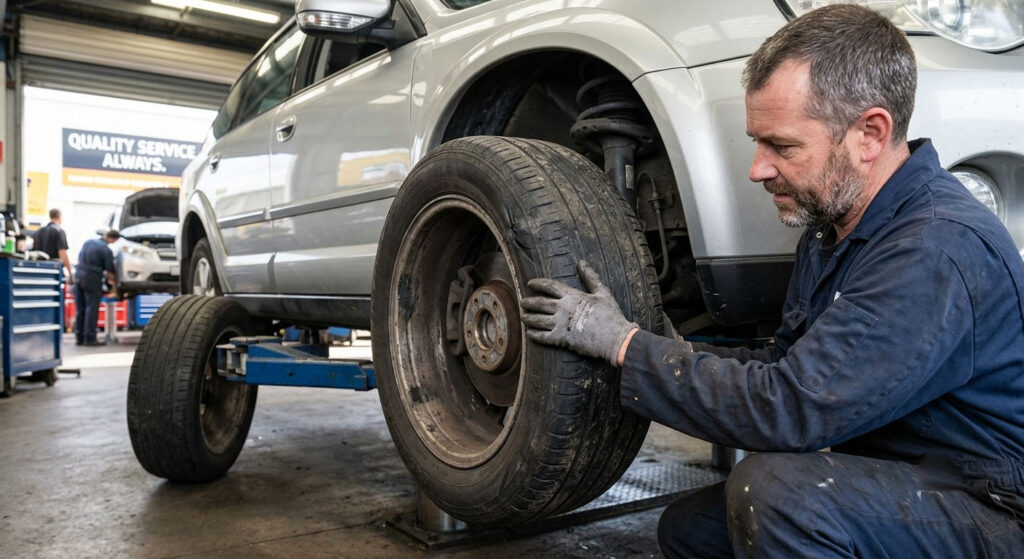
The inner sidewall faces the underside of the car, so it stays completely hidden during a normal walk-around. Turn the steering onto full lock to swing the inner edge into view, or carefully run your hand along it. Plenty of kerb and pothole damage hides on the side you can’t see, so it pays to check both faces of every tyre.
| What to check | What you’re looking for |
|---|---|
| Outer sidewall | Kerb scuffs, cuts, bulges, cracking |
| Inner sidewall | Hidden gouges and bulges – check on full lock |
| Tread | Depth, uneven wear, embedded nails or glass |
| Valve | Cracks or leaks around the base |
While you’re there, it’s worth checking your tread too – our guides on checking tyre tread depth and how long tyres last show you exactly what to look for.
How to Prevent Future Sidewall Damage
You can’t avoid every hazard, but a few sensible habits dramatically cut the odds of damaging a sidewall.
Driving Habits That Protect Your Tyres
- Give kerbs a wide berth when parking, turning and pulling in.
- Slow right down for potholes, speed bumps and rough surfaces.
- Keep every tyre at its correct pressure, checked at least monthly.
- Don’t overload the vehicle beyond its rated capacity.
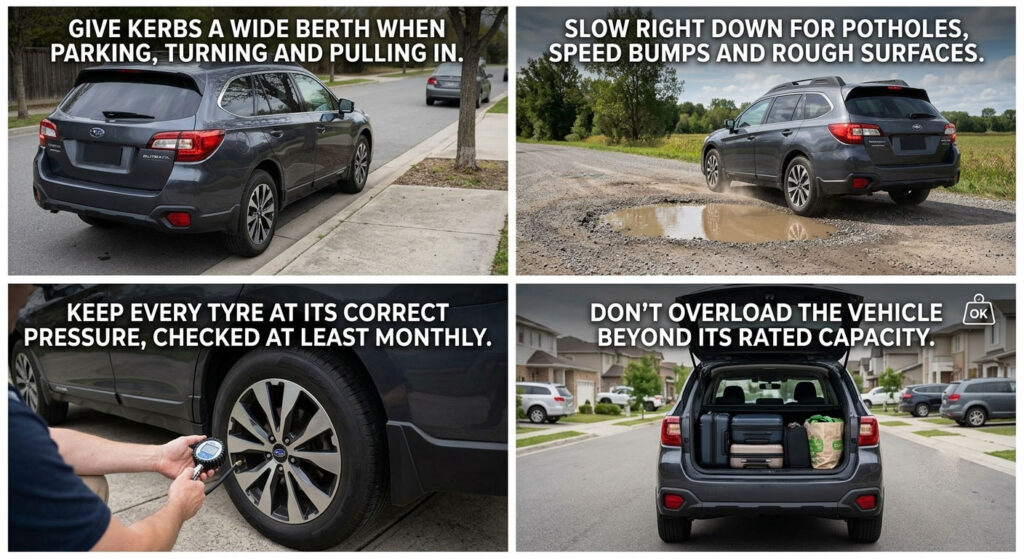
Simple Care Tips
- Park in the shade or under cover where you can, to slow UV perishing.
- Clean tyres with mild soapy water, not harsh solvent-based dressings that dry the rubber.
- Inspect and rotate your tyres regularly to spread wear evenly.
For a fuller routine, our most useful tyre maintenance tips pull everything together in one place.
| Do | Avoid |
|---|---|
| Park square, away from kerbs | Clipping or mounting kerbs |
| Ease over potholes slowly | Hitting potholes at speed |
| Keep pressures correct | Running tyres under-inflated |
| Use mild soapy water | Harsh chemical tyre cleaners |
Conclusion: Put Safety First
The sidewall may be the quiet part of the tyre, but it carries the load and takes the knocks, and once it’s damaged there’s rarely a safe way to patch it. Learn to recognise cuts, bulges and cracks, check both faces of every tyre, and treat anything more than a light scuff as a reason to get the tyre looked at.
If a replacement is needed, our fitters can come to your home or workplace or reach you at the roadside, often the same day. When it comes to tyres, a little caution now is always cheaper than a blowout later.
Frequently Asked Questions
It’s not worth the risk. A shallow surface line might be cosmetic, but cracks often run deeper than they look and can spread quickly. Have the tyre inspected – if the cracking has reached the underlying rubber, it needs replacing rather than nursing along.
Yes. A bulge or lump in the sidewall is a straightforward MOT failure because it shows the tyre’s internal structure has been damaged. It also makes the tyre unsafe to use in the meantime, so it should be replaced before you drive any further.
As a rule, any cut deep enough to expose the cords, any bulge, and any crack that reaches beyond the surface rubber means the tyre must be replaced. Light kerb scuffing that hasn’t broken the surface is usually fine, but if you’re unsure, get it checked.
The sidewall flexes on every rotation, so a plug or patch there would constantly work loose and eventually blow out. Repairs are only allowed within a limited central band of the tread, where the tyre is reinforced and moves far less.
Not always, but often. Very fine surface cracks on an otherwise healthy tyre may just be cosmetic weathering. Deep, widespread or spreading cracks mean the rubber has perished and lost strength, and that tyre should be replaced.
If the scuff is genuinely superficial – you can’t see or feel any cut, bulge or exposed cord – the tyre is usually safe to keep using while you monitor it. Re-check it regularly, and replace it the moment the damage looks like it’s deepening.
Spotted Sidewall Damage? Don’t Risk It
A damaged sidewall won’t fix itself, and it rarely gives much warning before it lets go. If you’ve found a cut, bulge or crack, our fitters can come to your home, workplace or the roadside and fit a replacement on the spot – no garage visit needed. Book an emergency tyre replacement or get in touch and we’ll come to you.