Can You Drive With a Flat Tyre?
It is one of the first questions that hits you the moment the wheel starts to pull and you hear that heavy, dragging thud: can you keep driving on a flat tyre, just far enough to get home or reach a garage? In almost every case the answer is no.
Quick Answer: driving on a flat tyre is unsafe, it damages your car, and it can turn a cheap puncture into an expensive wheel repair. Below we explain exactly what happens, how far you can realistically move the car in an emergency, the warning signs to watch for, and the safest way to get going again. If you would rather skip the wait, our mobile tyre fitting service comes to you.
Here’s what this guide covers:
Table of content:
What Happens When You Drive on a Flat Tyre?
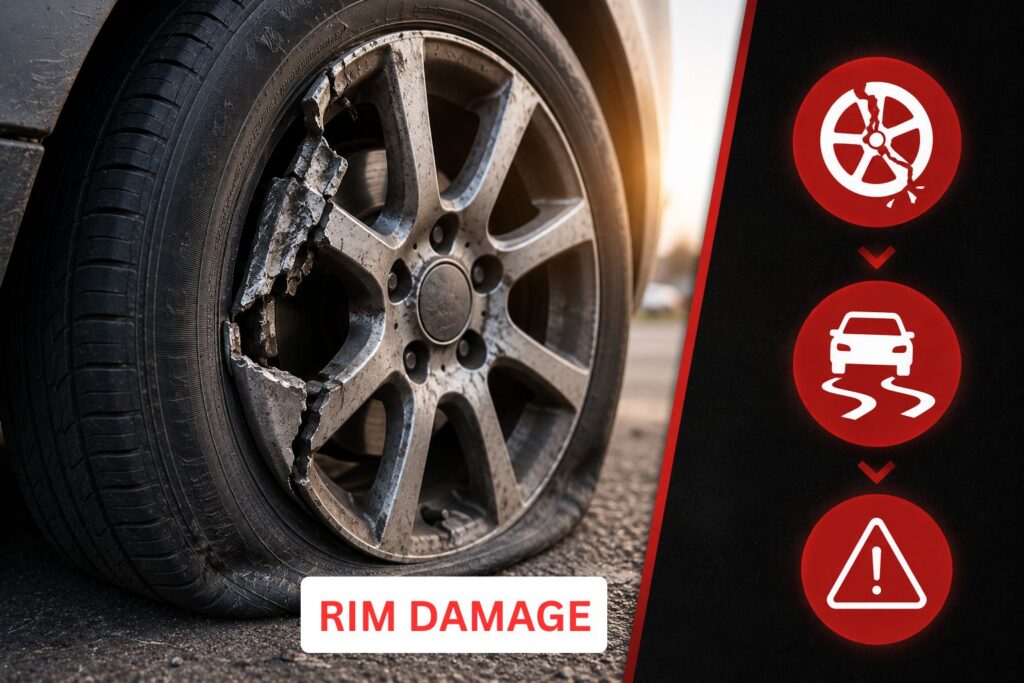
A tyre is built to carry the full weight of your car on a cushion of pressurised air. Once that air is gone, the rubber can no longer hold its shape, the sidewall folds, and the metal rim drops onto the road. Within a short distance the tyre begins to shred, the rim grinds against the tarmac, and the heat and friction can spread damage to your suspension, brake lines and wheel bearings. What started as a simple puncture quickly becomes a repair that involves the wheel itself. If the tyre is already ruined, an emergency mobile tyre replacement costs far less than the damage caused by driving on it.
What Goes Wrong, Part by Part
| Component | What Happens |
|---|---|
| Tyre | Shreds and is destroyed beyond repair |
| Alloy wheel | Scored, buckled or cracked |
| TPMS sensor | Can be damaged inside the wheel |
| Suspension & steering | Extra strain and possible misalignment |
The Real Cost of Driving on a Flat Tyre
Stop quickly and a puncture is often repairable for a small fee. Keep driving and that picture changes fast. The tyre is nearly always destroyed, and you may also be paying for wheel, sensor and alignment work on top.
Where the Money Goes
| Item | Likely Outcome |
|---|---|
| Puncture repair (if you stop) | Low cost, often repairable |
| Tyre | Full replacement needed |
| Alloy wheel | Can cost more than the tyre |
| Wheel alignment & balancing | Often required afterwards |
Putting the alignment and wheel balancing right afterwards adds even more. Quick Tip: a few hundred metres of driving can turn a £20 puncture repair into a bill of several hundred pounds, so stopping promptly always pays.
Is It Illegal to Drive on a Flat Tyre in the UK?
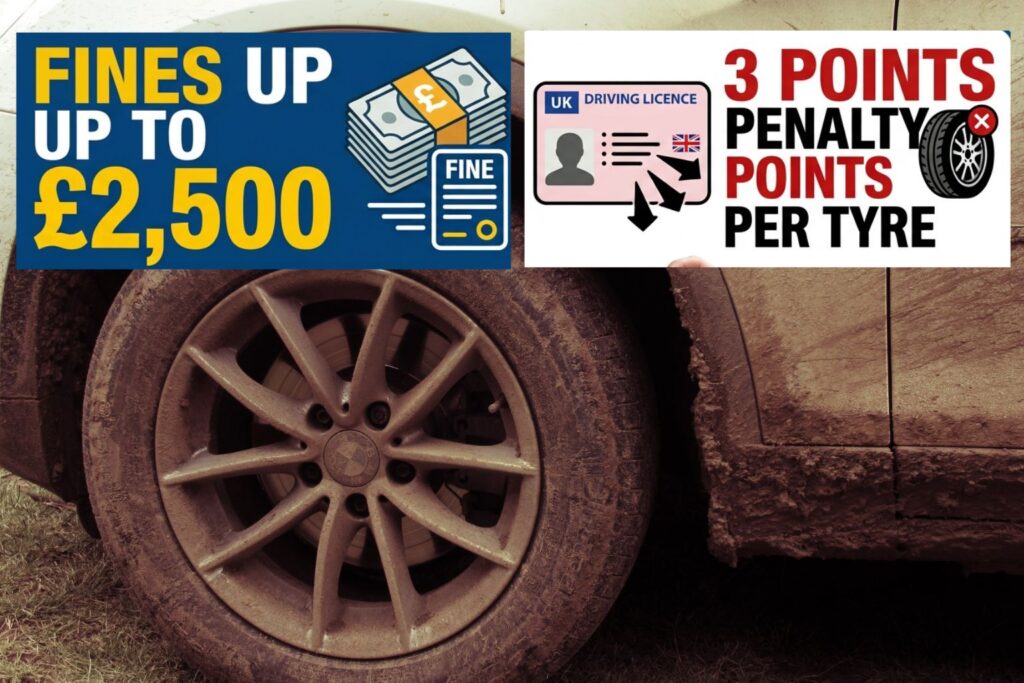
It certainly can be. UK law treats a tyre that is flat, badly damaged or below the legal tread limit as a defective tyre, and driving on one is an offence. Penalties can reach £2,500 and three penalty points per tyre, and any tyre below the legal minimum of 1.6mm will also fail its MOT. An accident caused by an unsafe tyre can invalidate your insurance too. It pays to know how to check your tyre tread depth regularly.
Expert Insight
TyreSafe, the UK’s tyre-safety charity, stresses that running on a soft or flat tyre can cause hidden structural harm you won’t spot from the outside. Quick Answer: if the tyre is flat, treat the car as undriveable and call for help.
Safety Risks and Loss of Control
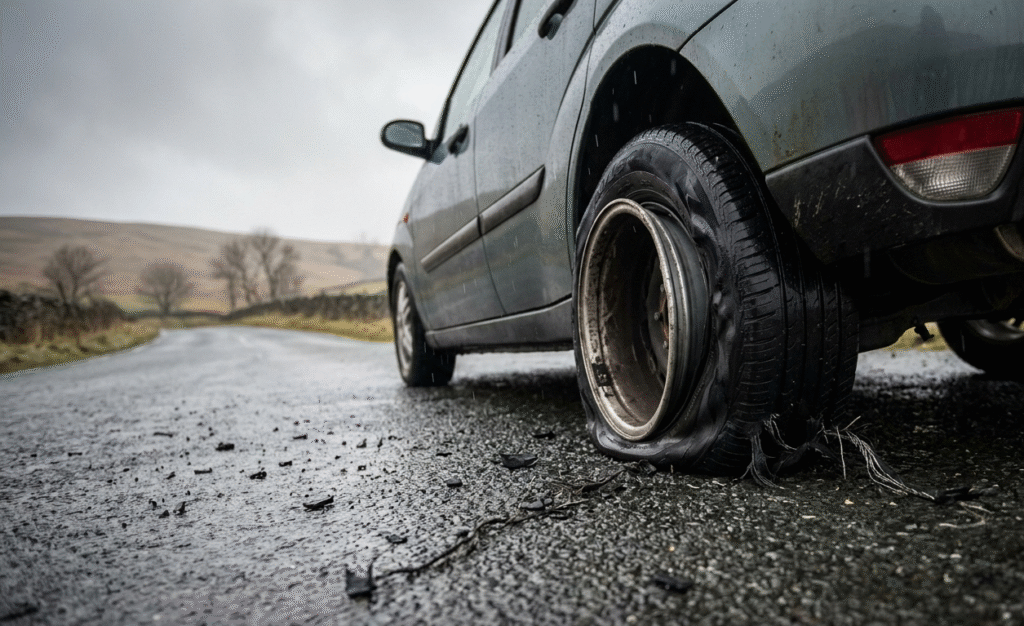
A flat tyre strips away the grip and stability that keep a car predictable. Steering turns heavy and vague, braking distances stretch out, and the vehicle pulls sharply towards the deflated corner. At speed a collapsing tyre can come apart entirely, causing a sudden loss of control that is especially dangerous on a motorway or in the wet.
Can You Still Steer on a Flat Tyre?
Usually yes, but only just. The car fights you, so the safest response is to hold the wheel firmly and slow down gradually rather than braking hard. Wet stopping distances are already far longer on worn tyres, as testing referenced by the RAC shows, and a flat tyre makes it worse.
Do's and Don'ts If a Tyre Goes
| Reaction | Recommended |
|---|---|
| Grip the wheel with both hands | ✓ Yes |
| Brake hard | ❌ No |
| Ease off and slow gradually | ✓ Yes |
| Swerve or steer sharply | ❌ No |
How Far Can You Drive on a Flat Tyre?
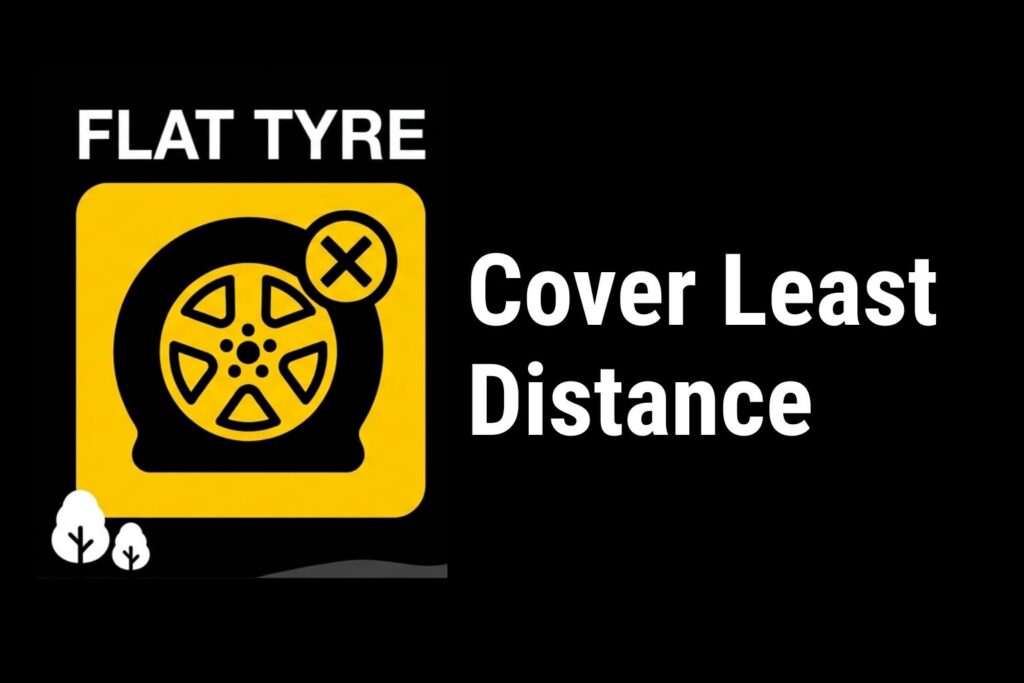
The honest answer is: as little as possible, and ideally not at all. A standard tyre should only be moved far enough to get the car off a live carriageway and onto the hard shoulder, a lay-by or a safe verge, and only at walking pace. Every extra metre adds to the wheel damage and the danger. Once you are somewhere safe, stop and call for help rather than pressing on to a garage. Our emergency roadside tyre fitting team can reach you where you are.
Rule of Thumb
✓ Move only to reach safety
✓ Keep to walking pace
✓ Then stop and call a fitter
What to Do Instead of Driving
If a tyre goes while you are driving, resist the urge to carry on. Work through these steps calmly.
Step by Step at the Roadside
- Ease off the accelerator gently, without braking hard or swerving
- Indicate and steer towards the nearest safe place to stop
- Switch on your hazard lights
- Get everyone out on the side away from traffic, behind a barrier if you can
- Call for professional help rather than changing it in a dangerous spot
What to Avoid
- ❌ Driving on to “just get home”
- ❌ Standing between the car and moving traffic
- ❌ Attempting a wheel change on a live carriageway
Our emergency tyre burst guide covers this in more detail, and if you just need a fresh tyre quickly, same-day mobile tyre fitting can have you moving again the same day.
How to Fix the Problem Safely
Once you are safely off the road, you have a few options depending on what your car carries and where you are.
Your Options Compared
| Option | Best For |
|---|---|
| Fit the spare wheel | Cars with a serviceable spare, in a safe spot |
| Temporary repair kit | A short-term fix to reach a fitter only |
| Mobile tyre fitter | The safest choice, fitted where you are |
If you have a spare and a safe location, our guide on how to change a tyre shows you how. The simplest and safest option, though, is to let a professional come to you. With mobile tyre fitting at your home, workplace or roadside, a fully equipped fitter brings the right tyre and fits it on the spot. Just get in touch and we will come to you.
Frequently Asked Questions
It is best not to. Even a short trip on a flat can wreck the wheel rim and leave a much bigger repair, as well as putting your safety at risk. Pull over somewhere safe and call a fitter to come to you.
Driving slowly reduces the danger a little, but it does not remove it. The tyre still shreds and the rim still grinds on the road. Low speed should only be used to roll clear of traffic.
Very often, yes. With no air to protect it, the rim sits directly on the road and can quickly be scraped, buckled or cracked. Alloys are expensive to replace, which is why stopping promptly matters.
It depends on the cause and how far it was driven. A small, fresh puncture caught early can sometimes be repaired, but a tyre driven on while flat has usually suffered internal damage and needs replacing.
In most cases a fitter can be with you within a couple of hours, and genuine roadside emergencies are prioritised. We bring the tyre and equipment to you, so you can wait safely rather than driving on damage.
Key Takeaways
If you have a flat tyre:
- Don’t drive on it, beyond rolling clear of traffic
- Driving on a flat damages the wheel and can be illegal
- A mobile fitter is the safest way to get going again
Quick Emergency Checklist
✓ Hazards on
✓ Roll to a safe stop
✓ Everyone behind a barrier
✓ Call a mobile fitter
Final Thoughts
A flat tyre is stressful, but the safest move is almost always to stop and call for help rather than drive on. Wherever you are, our fitters bring the right tyre to you. Choose emergency roadside tyre fitting if you’re stranded, or contact us to get moving again.