Thinking About Run Flat Tyres? Here's Everything You Must Know
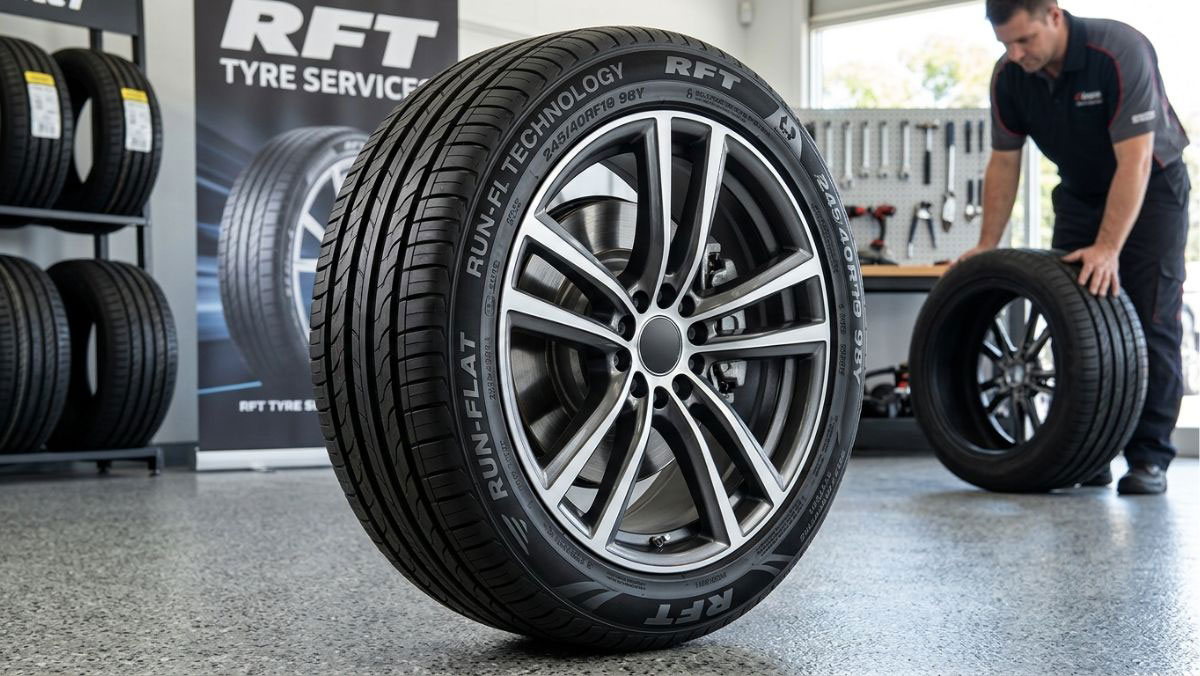
A run flat tyre is built to keep you rolling even after it loses all its air, so a sudden loss of pressure doesn’t leave you stranded on the hard shoulder. Instead of grinding to a halt the moment you pick up a puncture, you can usually carry on for a short, controlled distance and reach somewhere safe.
That single idea has changed how millions of drivers think about roadside trouble. But run flat tyres (often shortened to RFT) also come with rules of their own – how far you can drive, how to spot them, which brands make them, and which cars actually need them.
This guide walks through all of it in plain English, from reading your tyre sidewall to picking the right brand for your budget and vehicle. And if you’d rather someone simply came out and did the work, our team can fit run flats you’ve already bought or supply them from stock at a competitive price.
Here’s what this guide covers:
What Is a Run Flat Tyre?
A run flat tyre is a tyre engineered to support the weight of your vehicle for a limited distance after a puncture or a complete loss of air pressure. Where a conventional tyre collapses onto the wheel rim the instant it deflates, a run flat holds its shape long enough for you to keep driving to a safe location, a fitting bay, or home.
Most manufacturers quote a safe limit of around 50 miles at up to 50 mph once the tyre has lost pressure, although the exact figure varies by brand and model. The point isn’t to keep driving indefinitely – it’s to remove the danger of stopping on a live roadside or a busy motorway to change a wheel.
The Two Main Types of Run Flat Tyre
Run flats fall into two families, and knowing the difference is the single most useful thing to understand before you buy. In short: self-supporting tyres carry the car after a total loss of pressure, while self-sealing tyres simply plug small holes as they happen. They solve different problems, and only one of them is a true run flat.
Self-Supporting vs Self-Sealing – Side by Side
Difference
Self-supporting run flat
A reinforced, heat-resistant sidewall carries the car’s weight when the air is gone.
A sticky sealant layer inside the tread plugs small (nail-size) holes the instant they happen.
After a blowout
Something Important To Know For Clarity
This is the most common point of confusion, so let’s be clear: no – BMW and Mercedes do not make tyres. A ★ (star) or MOE stamp is an approval mark, not a brand. It simply means the tyre developed jointly by tyre manufacturers and car maker.
So a “BMW star tyre” is really (for example) a Michelin or Bridgestone run flat that carries BMW’s ★ approval. You buy it from a tyre supplier, not from BMW.
What Each Approval Mark Actually Means
Here’s the simple, practical answer when you need an urgent replacement:
- Don’t contact BMW or Mercedes for tyres – they don’t sell them. You go to a tyre brand or a fitter like us.
- Match two things: your exact tyre size (e.g. 225/45 R18 95Y) and, if your car came with approved tyres, the same approval mark – ★ for BMW/MINI, MOE for Mercedes, AOE for Audi, T0/T1 for Tesla.
- Stay a run flat if your car needs one. If there’s no spare wheel, keep to a self-supporting run flat carrying the right code and mark.
- Not sure what yours has? Read the sidewall of a tyre still on the car, or send us your registration and size – we’ll confirm the correct approved tyre, supply it and fit it the same day at your home, workplace or the roadside, with no hidden fees.
Which Run Flat Tyre Should You Pick – and When?
For almost everyone the honest answer is simple: match what your car was designed for. Pick this way:
- Choose self-supporting run flats if your car came on run flats from the factory (most BMW and MINI models, many Mercedes), if there’s no spare wheel in the boot, or if your priority is being able to drive on after a full blowout – for example on the motorway or a fast A-road where stopping is dangerous.
- Consider self-sealing tyres only if your car allows standard tyres, you carry a spare or get-you-home kit, and your main worry is slow nail punctures rather than a sudden blowout. They ride like a normal tyre but give you no rescue after a serious cut.
- Never mix the two axles. If your car specifies run flats, replace like with like – fitting one run flat next to one standard tyre upsets the handling the car was set up for.
Expert Help
If you’re unsure what your car needs, the fastest check is the tyre already on it: read the sidewall code above, or look for a ★ / RSC / MOE mark. Still not sure? Send us the size and we’ll confirm the correct fitment for your car, van, 4×4 or SUV before we come out. Our fitters carry the right stock and can handle a same-day or emergency replacement at your home, workplace or the roadside – with no hidden fees.
Run Flat - 50 Miles / 50 mph Rule
Because a run flat can hide the fact that it has deflated, every vehicle fitted with them relies on a Tyre Pressure Monitoring System (TPMS) to warn you. When that light appears, treat it as a countdown, not a suggestion:
Run Flat vs Standard Tyres: SEE the Actual Difference Between Them?
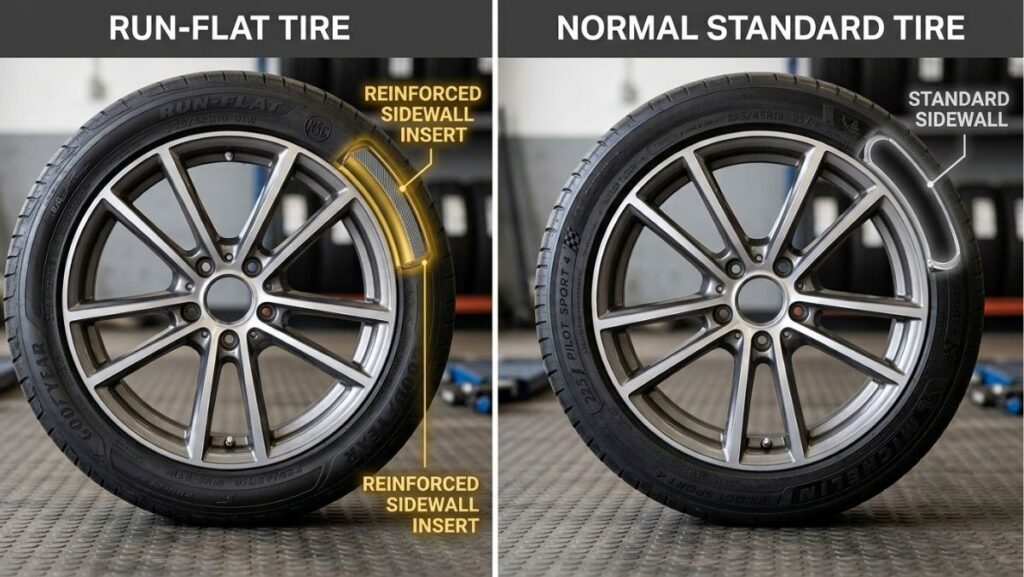
The headline difference is what happens after a puncture. A standard (conventional) tyre needs its air pressure to carry the car; lose the air and the sidewall folds, the tyre overheats and it’s quickly destroyed. That’s why driving on a flat standard tyre is a genuine emergency. A run flat has a reinforced sidewall that props the car up temporarily, buying you time.
That extra reinforcement changes how the tyre feels and costs, though, so run flats aren’t automatically ‘better’ – they’re a different trade-off.
Run Flat vs Standard – Side by Side
Pros and The Compromise
Pros: you keep moving after a puncture, you avoid changing a wheel at the roadside, and most cars that use them free up boot space by dropping the spare wheel entirely.
The compromises: run flats generally ride a little firmer, cost more to buy, and are heavier. They also depend on a working TPMS, and once a run flat has been driven flat it almost always needs replacing rather than fixing – the manufacturer can’t guarantee the internal structure after it has carried the car with no air.
How Do You Identify a Run Flat Tyre?
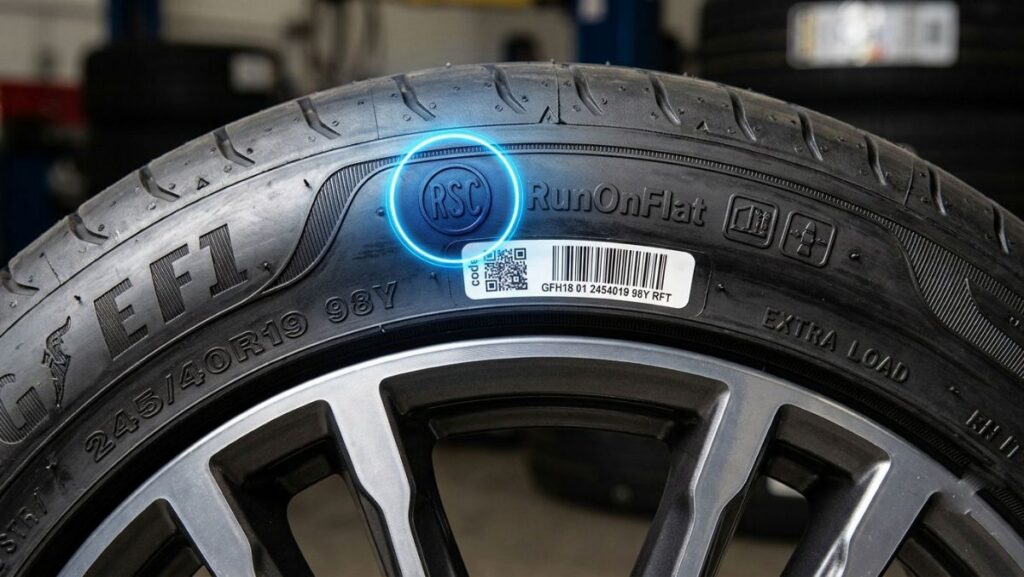
There’s no single universal label, which trips up a lot of drivers. Each brand stamps its own run-flat code on the sidewall, so the reliable method is to read the sidewall and match the code below. If the lettering is worn, check your owner’s manual or the door-jamb sticker – the same place you’ll find pressures for your car, and for heavier loads on vans, SUVs and 4×4 models.
Run Flat Tyre Codes by Brand
Three More Clues Beyond the Sidewall Code
Even without reading the code, these signs strongly suggest run flats are fitted:
- No spare wheel. If there’s only a foam kit or nothing at all in the boot well, the car was very likely designed around run flats.
- A TPMS warning light on the dash. Run flat cars must have tyre-pressure monitoring, because a deflated run flat can look and feel normal.
- Your handbook or door placard. The manufacturer states the original fitment, including whether run flats are required.
What Is a Tyre Sidewall?
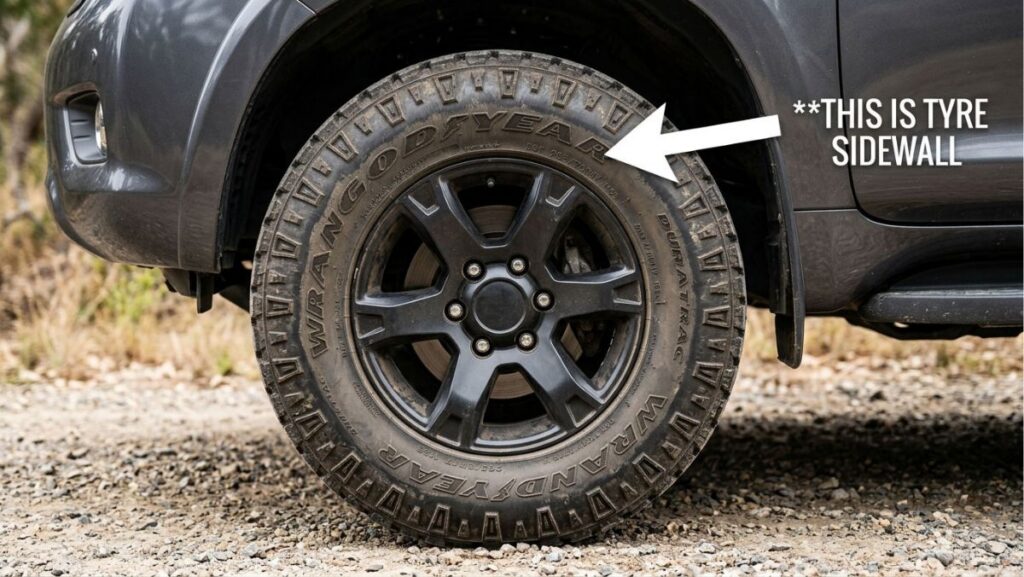
The sidewall is the smooth vertical face of the tyre between the tread (the part that grips the road) and the bead (the inner edge that seals against the wheel). It flexes as you drive, absorbs bumps, and – crucially for run flats – is where all the size, safety and identification markings live.
On a run flat, the sidewall is noticeably thicker and stiffer because it carries the car when the air is gone. Damage here is serious on any tyre; you can read more in our explainer on tyre sidewall damage.
How to Read Your Tyre Sidewall
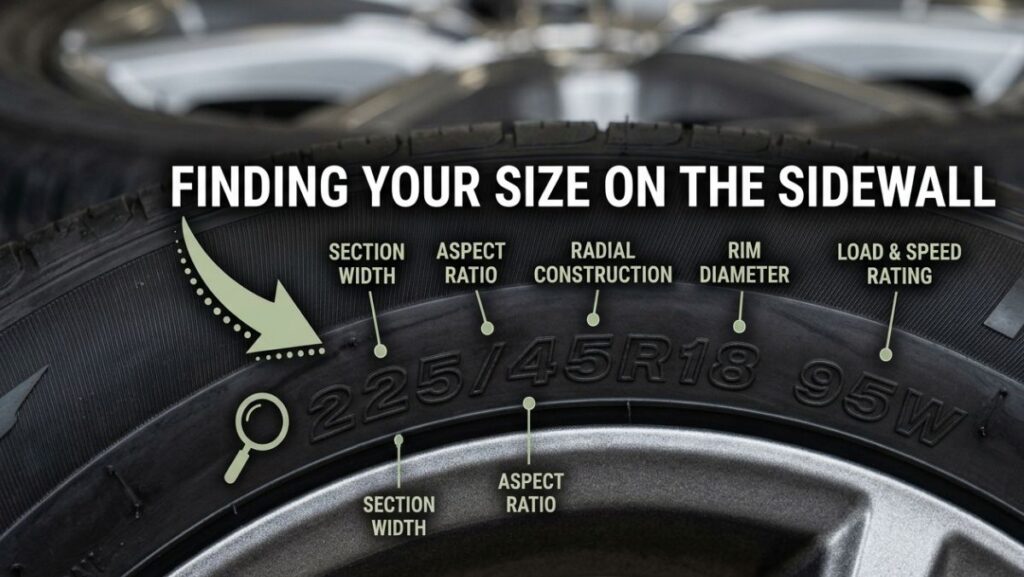
Those numbers and letters aren’t random – they’re a code that tells you the tyre’s exact size and rating. Take a common example, 225/45 R18 95W, and it breaks down like this:
Sidewall Markings Decoded
W = 168 mph
You’ll often see extra letters after the size – that’s where the run flat code (RFT, ZP, SSR and so on) and any vehicle-maker approval (like BMW’s star or Mercedes’ MOE) appear. For a fuller walkthrough, Michelin publishes a clear sidewall reference.
Affordable Run Flat Tyre Brands
Run flats sit at a premium over standard tyres, but you don’t have to buy the most expensive name on the shelf. These value-focused brands make dependable run flats that suit everyday driving without stretching the budget. For the wider picture, see our roundup of the best budget tyres.
These are a sensible choice for city driving and lighter mileage. If you cover big distances or want the sharpest wet grip, it’s worth stepping up a tier.
Mid-Range Run Flat Tyre Brands
Mid-range run flats are the sweet spot for most drivers – noticeably better wet braking, grip and longevity than value tyres, at a price well below the premium badges. Our guide to the best mid-range tyres goes deeper, but here are the run flat names worth shortlisting.
If your car is a family saloon, estate or SUV that does a healthy mix of town and motorway miles, this is usually the tier that gives the best balance of cost and confidence.
Premium Run Flat Tyre Brands
Premium run flats are where the technology is at its best: the shortest wet stopping distances, the quietest ride, the longest life and the most refined feel. These are also the brands most car makers fit as original equipment, so matching one keeps your car behaving the way its engineers intended.
Premium run flats reward drivers of performance saloons, executive cars and heavier SUVs. If your car left the factory on one of these, replacing like-for-like is the safest route – and the manufacturers themselves recommend keeping the same run flat specification across the axle.
A Quick Note on Prices
* The figures above are approximate UK prices per tyre for popular 17- to 19-inch run flat sizes (for example 225/45 R18), and they exclude fitting. Your actual price depends on your exact size, the model, and whether you need an original-equipment approval mark – larger 19–21-inch wheels, wider tyres and ★ / MOE-approved versions sit at the higher end or above. For an exact, no-obligation figure, send us your tyre size or registration and we’ll confirm current stock at competitive prices, with same-day and 24/7 emergency fitting at your home, workplace or the roadside – with no hidden fees.
Winter, Summer and All-Season Tyres: What's the Difference?
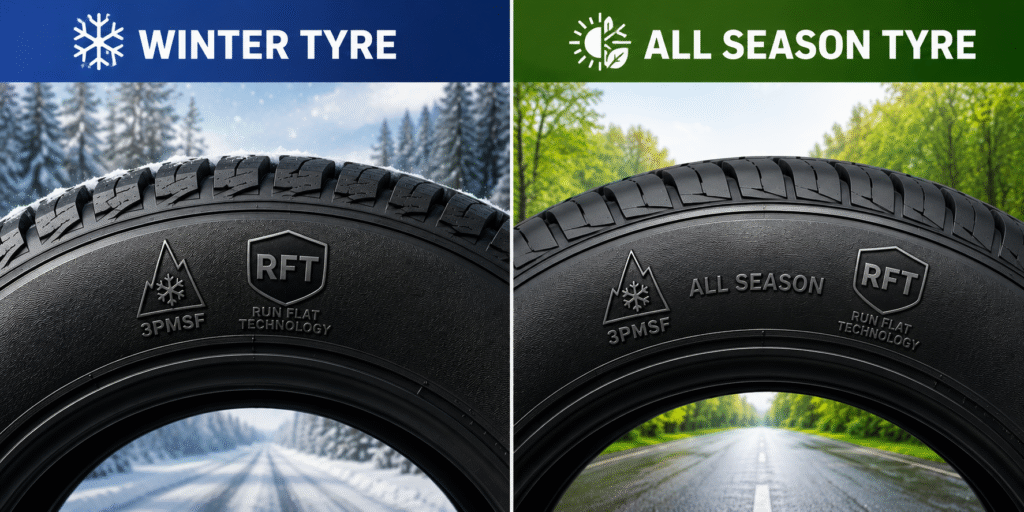
Run flats come in the same three seasonal flavours as normal tyres, and the choice matters because the UK sees everything from icy January mornings to hot July motorways. The difference is mainly in the rubber compound and tread pattern.
Seasonal Tyres Compared
Summer
As a rule of thumb, the compound is tuned around 7°C: summer tyres are at their best above it, winter tyres below it, and all-season tyres bridge the two for drivers who don’t want to swap twice a year. Look for the 3PMSF (three-peak mountain snowflake) symbol if genuine winter capability matters to you.
Recommended Run Flat Tyres by Vehicle
Some cars are designed around run flats from the factory – most famously BMW and MINI. The safest replacement is one carrying the correct vehicle-maker approval mark, because those tyres are tuned to that car’s suspension and steering. Our dedicated guide to the best tyres for a BMW covers this in detail.
Vehicle Fitment & Approval Marks
Reading the approval mark: a ★ star means BMW/MINI, MO/MOE means Mercedes (MOE being the run flat version), T0/T1 means Tesla, and RSC (Run flat System Component) confirms a BMW-group run flat. Matching the mark keeps ride, noise and handling exactly as the car maker intended – these vehicle-approved tyres are also known as homologated tyres.
One-Stop Solution: We Fit and Supply Run Flat Tyres
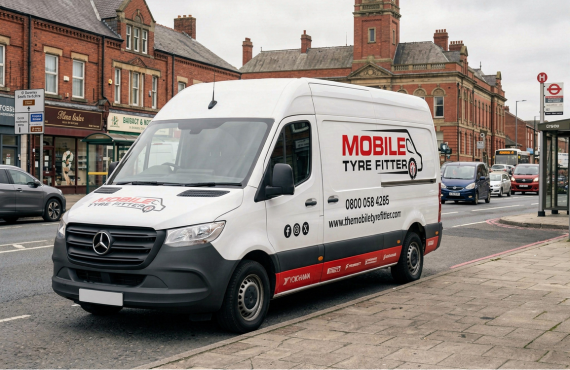
Here’s the part that makes life easy. The Mobile Tyre Fitter is a genuine one-stop solution for run flats:
- Already bought your run flats? We’ll come to you and fit them – at your home, your workplace or the roadside – with no hidden fees.
- Need the tyres too? We hold popular run flat sizes in stock at competitive prices, so you don’t have to shop around.
Because we’re fully mobile, there’s no waiting room and no queue. We cover cars, vans, light commercials, 4x4s and SUVs, and our fitters carry the kit to balance the wheel and handle valve replacement on the spot.
Fast, Flexible Fitting Options
Whether it’s an urgent emergency replacement after a blowout or a planned change, we work around you:
- Same-day and last-minute fitting when you need to be back on the road fast.
- Rapid roadside and motorway assistance – 24/7, with 24-hour cover for an immediate call-out when you’re stuck.
- Next-day and Sunday slots for planned, no-rush changes.
- At-home and workplace fitting so you never lose a day to it.
We operate across a wide list of towns and cities – see our mobile tyre service areas, including London, Birmingham and Manchester. For a quote or to check stock for your exact size, contact our support team and we’ll sort it.
Run Flat Tyres: Frequently Asked Questions
Most manufacturers quote around 50 miles at up to 50 mph once the tyre has lost pressure, but always check your handbook for the exact figure. Treat it as a get-you-to-safety distance, not a licence to keep driving – the tyre should be inspected and usually replaced afterwards.
In most cases, no. Once a run flat has been driven on with low or no pressure, its internal structure may be compromised, and the major brands advise replacement rather than repair. If you’ve had a warning light, the safest move is a fresh tyre – something we can supply and fit for you.
Yes. Because a deflated run flat can still look and feel normal, a working Tyre Pressure Monitoring System is essential – it’s how you know the tyre has lost air. Cars designed for run flats come with TPMS as standard, and it’s checked at MOT.
Not always. Run flats work best on vehicles engineered for them, with suitably rated wheels and a TPMS. Fitting them to a car that wasn’t designed for run flats can change the ride and isn’t always advised. If you’re unsure, ask us and we’ll confirm what suits your vehicle.
It’s strongly discouraged. Mixing types – or even mixing brands across an axle – can upset handling and braking balance. The recommended approach is to keep the same run flat specification across the axle, and ideally all four corners.
Generally yes, because of the extra sidewall engineering, but the gap has narrowed. You also save on a spare wheel and roadside wheel changes. We hold common sizes at competitive prices – contact our team for a quote on your exact fitment.
Key Takeaways
Run flat tyres let you keep driving after a puncture – usually about 50 miles at 50 mph – so you’re never stranded in a dangerous spot. They rely on a working TPMS, ride a touch firmer, cost a little more, and normally need replacing rather than repairing once driven flat. Identify them by the brand code on the sidewall (RFT, ZP, SSR, ROF, DSST and so on), pick a tier that matches your budget, and match any vehicle-maker approval mark for cars like BMW, MINI, Mercedes and Tesla.
Need Run Flats Fitted or Supplied?
Whether you’ve already got the tyres or need them from stock, The Mobile Tyre Fitter is your one-stop solution – mobile, fast and with no hidden charges. Get in touch and we’ll get you rolling again.