Why Is Your Car Vibrating and Your Tyres So Loud?
If your steering wheel buzzes on the motorway, or the cabin fills with a drone that grows louder the faster you go, the cause is almost always sitting at one of your four wheels rather than under the bonnet. Four things explain the bulk of cases: wheels that have drifted out of balance, tread that is wearing unevenly, pressures that have crept away from the right figure, and alignment angles that have slipped.
The useful part is that each of those leaves its own fingerprint. Where you feel the shake, when you hear the sound, and what changes when you brake or steer will normally point at a single culprit. This guide walks you through it the way a fitter would at the roadside: symptom first, cause second, fix third.
Work through it in order and you will know what to ask for before you pay anybody to look.
Here’s what this guide covers:
Table of content:
Match Your Symptom to the Cause
Where exactly do you feel the vibration?
This one question narrows things down faster than anything else you can do. A shake that arrives through the steering wheel is nearly always coming from a front wheel. A vibration you feel through the seat base or the floor is coming from the back of the car. The reason is simple: the steering column is connected to the front hubs, so anything wrong at the front travels straight into your hands.
A rear problem has no such shortcut, so it reaches you through the body shell instead, which is why it feels more like a general tremor than a sharp shimmy.
The 30-Second Self-Check
- Note the speed the shaking starts, the speed it is worst, and whether it fades again above that.
- Decide whether you feel it in the steering wheel or in the seat and floor.
- Press the brake gently from speed – does a judder appear or get worse?
- On a quiet road, sweep gently left then right – does a hum grow louder in one direction?
- Look at all four tyres for odd wear, lumps, or scalloped edges around the tread.
Write those five answers down before you ring anyone. Any tyre technician can read that short list and know exactly where to start, which cuts out guesswork and saves you paying for diagnosis time.
What the sound itself is telling you
Tyre noise has a vocabulary, and learning it is half the diagnosis. A steady hum that rises in pitch with road speed is a different fault from a rhythmic thumping that repeats once per wheel rotation, and both are different again from a rough roaring that only appears when the road surface changes.
Put a name to the sound and you have already ruled out most of the list below.
Important: Noise and Vibration Usually Share One Root Cause
Drivers often treat these as two separate problems and pay for two separate jobs. In reality a wheel that is out of balance will, left alone for long enough, chew the tread into an uneven pattern — and that pattern is what you then hear. The movement and the sound are the same fault at two different stages.
So treat them as one investigation. Checking your tread depth across each tyre at the same time costs nothing and often explains both complaints at once.
Why Your Car Vibrates: Causes in Order of Likelihood
These are listed roughly in the order a fitter would work through them, from the fault that explains most cases down to the ones worth checking last.
1. Wheels out of balance – the most common cause by a wide margin
No wheel and tyre assembly is perfectly even in weight. When your tyres are fitted, a technician spins each one on a balancing machine and corrects the difference with small weights clipped to the rim or stuck inside it. Those weights can be knocked off by a pothole or a kerb, and the tyre itself wears unevenly over thousands of miles, so the balance gradually drifts.
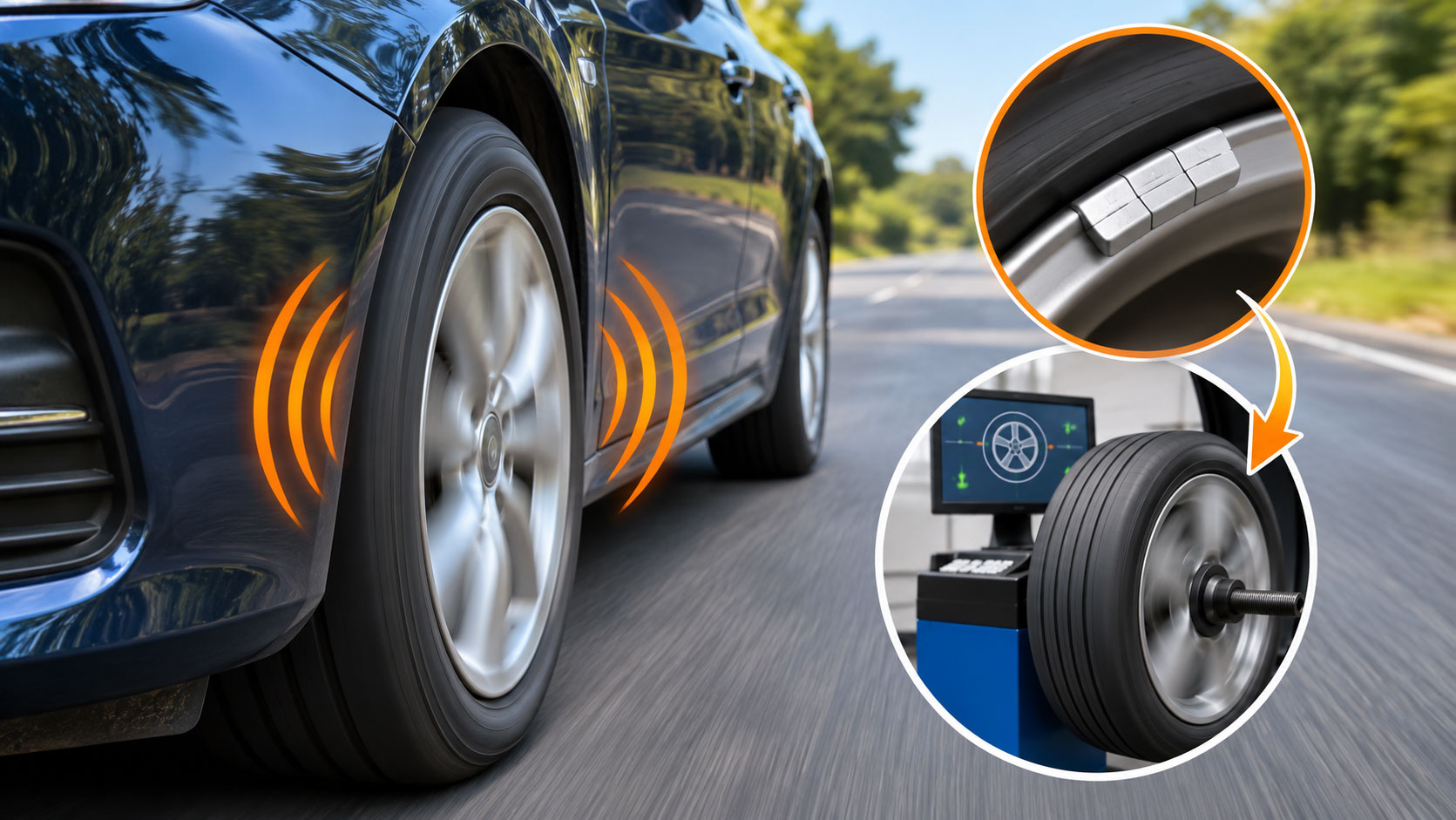
Because the heavy spot spins round with the wheel, the effect is tied to speed. It typically shows up somewhere around 40 to 50 mph, peaks between roughly 55 and 70, and often smooths out again above that. If your shake behaves that way, balancing is the first thing to try — not alignment, and certainly not a full set of new tyres.
Signs It Really Is Balance and Nothing Else
- The vibration has a clear start speed and a clear peak speed.
- It gets no worse when you brake.
- It does not change when you steer left or right.
- The car still tracks straight with no pulling to one side.
- Nothing unusual happened to the wheel recently – no kerb strike, no pothole.
If that matches, having the wheels rebalanced is a short, inexpensive job that solves it outright. Valve stems are usually checked at the same time, since a leaking valve quietly drops your pressure and brings the problem back.
2. Juddering that only appears under braking
If the car is smooth at 70 mph and only shudders the moment you brake from speed, your wheels are not the problem. Brake discs that have worn unevenly are. Repeated heating and cooling leaves high and low spots across the disc face, and the pads skip over them as they bite, sending a pulse up through the pedal and the steering wheel.
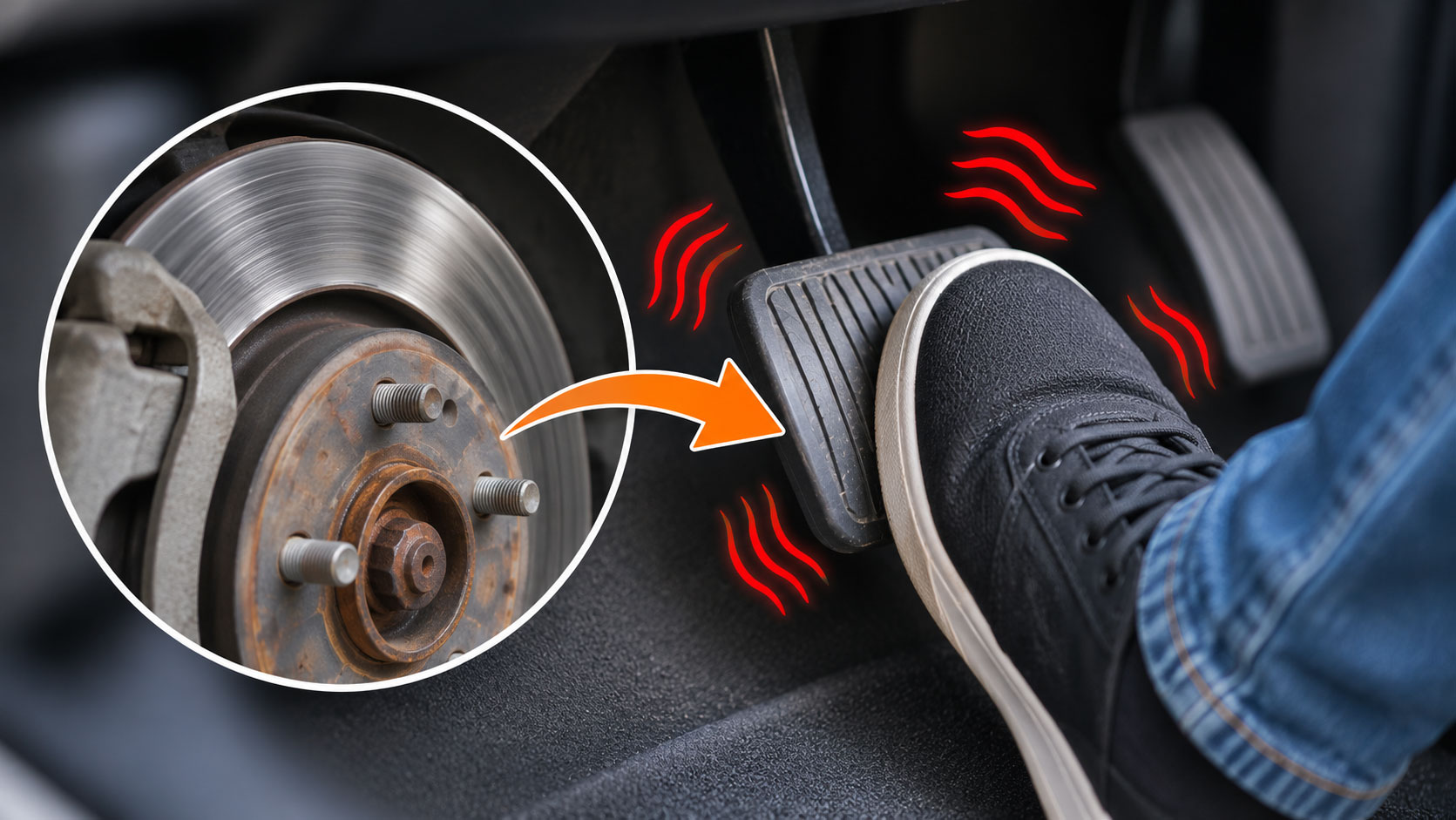
This one is worth dealing with promptly rather than living with, because an uneven disc does not grip consistently, and that lengthens your stopping distance in exactly the situation where you need it shortest.
3. A tyre that has lost its shape
Tyres are built from layers of rubber over steel and fabric belts. A hard kerb strike or a deep pothole can shift one of those belts inside the carcass, leaving a flat or raised section you will almost never see from the outside. The result is a thump or wheel wobble that no amount of balancing can cure, because the tyre is simply no longer round.
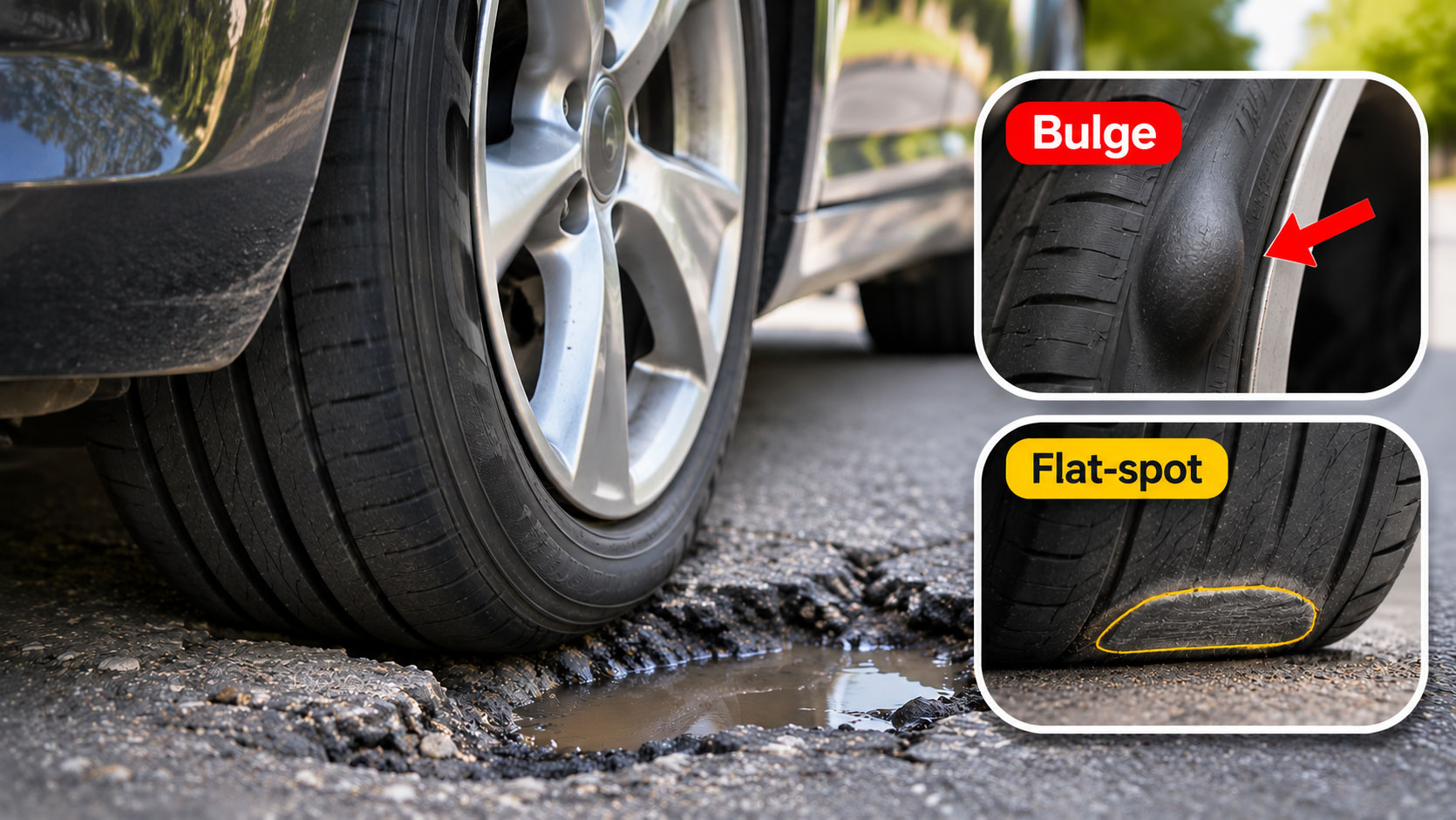
Flat-spotting is the much milder version of the same idea. Leave a car parked in one position for several weeks and the contact patch takes a temporary set, which you feel as a slight shake for the first few miles until the tyre warms and reshapes itself.
One thing to look for while you are down there: a bulge or split in the sidewall. A lump or blister means the structure inside has failed, and that tyre needs changing rather than inspecting again next month.
4. A buckled wheel
Kerbs and potholes bend rims as readily as they damage tyres. A bend of only two or three millimetres is enough to feel clearly at motorway speed, and it is often invisible until the wheel is spun on a machine.
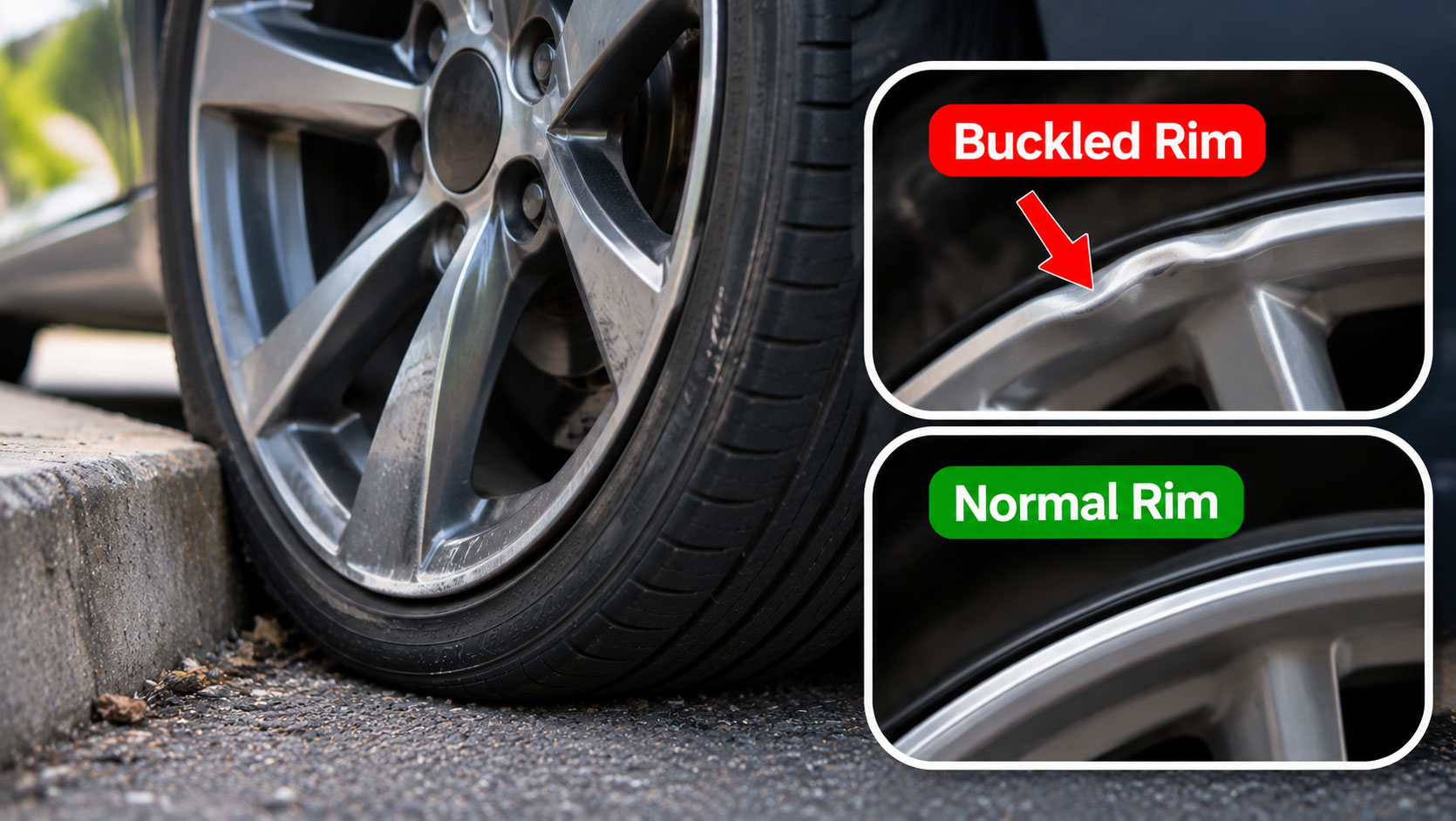
Low-profile tyres make this more likely, because there is far less sidewall between the rim and the road to soak up the impact. If you have moved to bigger wheels with a shallower tyre, a firmer ride and the occasional buckle come with the territory.
5. Alignment angles that have slipped
Alignment describes the angles your wheels sit at relative to each other and to the road. Out-of-specification alignment rarely produces a strong vibration by itself, which is why people dismiss it. What it does instead is drag each tyre very slightly sideways for every mile you drive, scrubbing the tread into an uneven pattern — and that pattern then causes both the shaking and the noise.
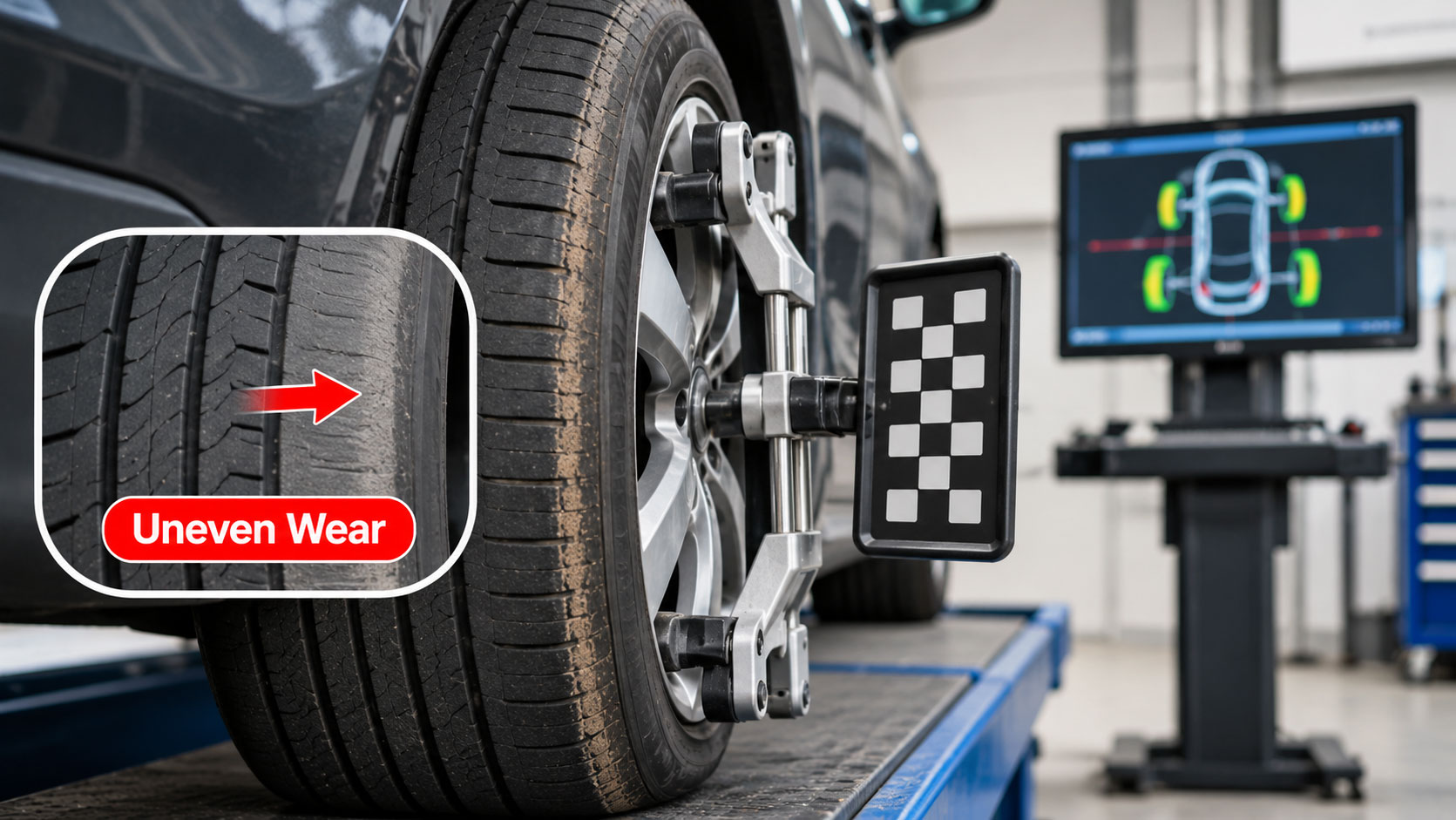
It is the slow-burn cause. Worth ruling out if you have already balanced the wheels and the problem is still there, or if you can see one edge of a tyre wearing faster than the other. There are a few clear signs your alignment needs checking that are easy to spot from the driver’s seat.
6. Worn suspension parts and bearings
Shock absorbers, bushes, ball joints and track rod ends all exist to hold the wheel steady against the road. When rubber bushes soften or a joint develops play, the wheel gains a few millimetres of movement it should not have, and that movement reaches you as a tremor through the wheel or a vague, floaty feeling at speed.
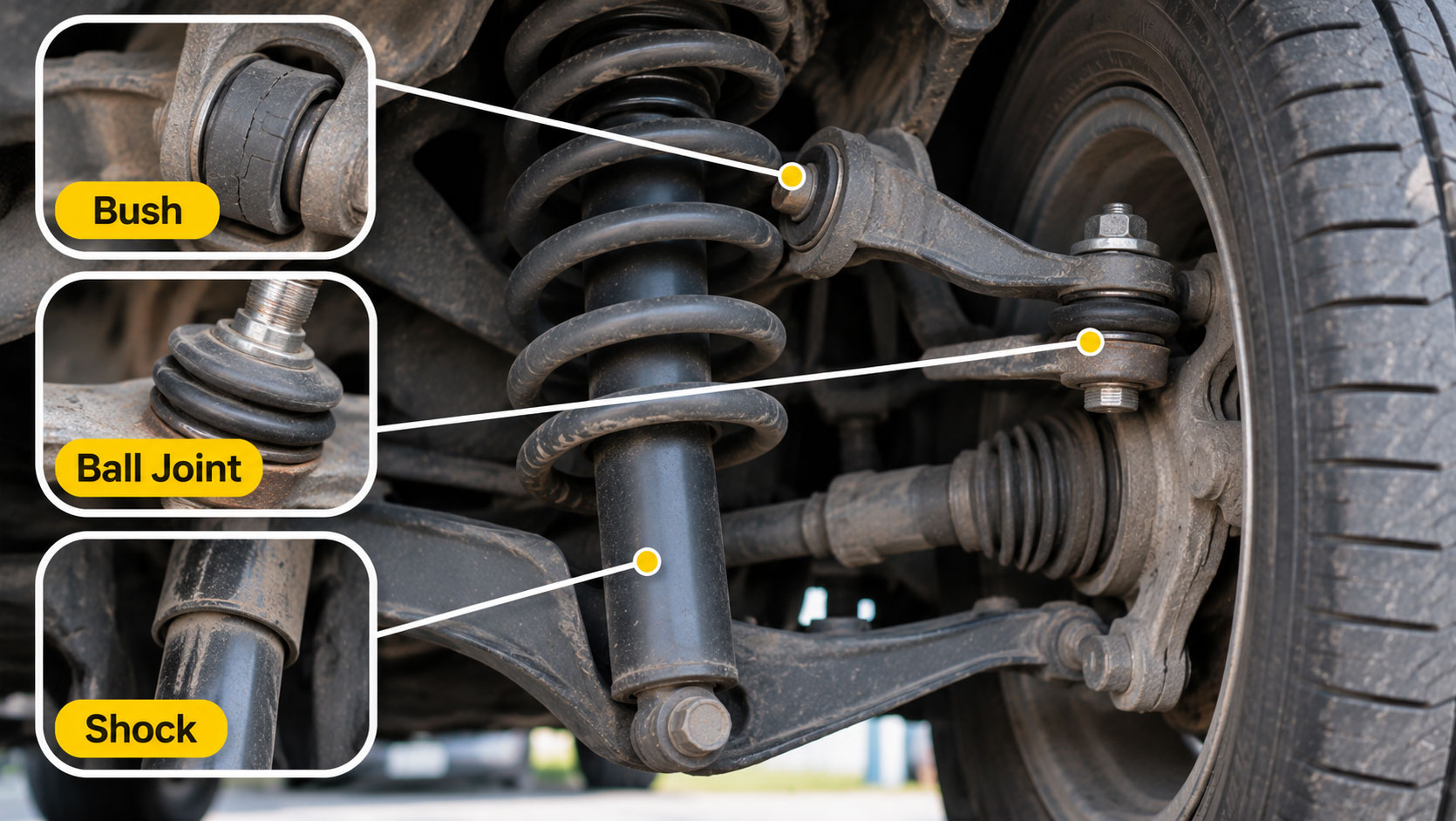
Tired shock absorbers deserve special mention here, because they let the tyre bounce rather than stay pressed to the road. That bouncing is what carves the scalloped wear pattern covered further down, so a suspension fault you ignore today becomes a noisy tyre in six months.
7. Wheel nuts that were not torqued properly
Under-tightened nuts let the wheel sit very slightly off-centre on the hub. Over-tightened ones can distort the brake disc behind it. Either way you end up with a vibration that appeared immediately after a wheel was taken off and put back on.
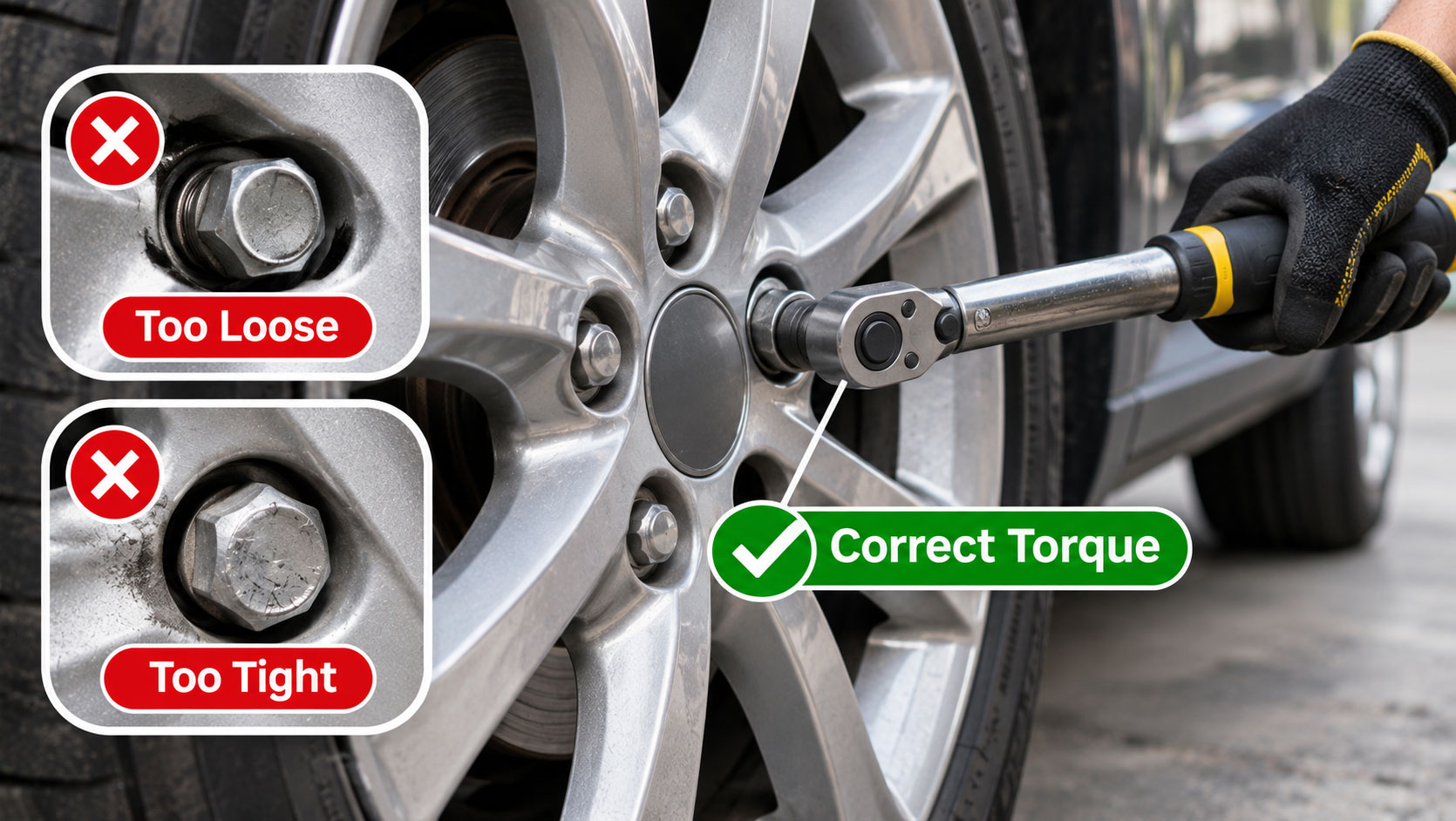
If your shaking started the day after any wheel work, say so straight away — it is a strong clue and a two-minute check. It is also worth knowing what to do about a locking wheel nut, since a seized or missing one is often why a wheel ends up refitted in a hurry.
8. The simplest cause of all – something stuck to a wheel
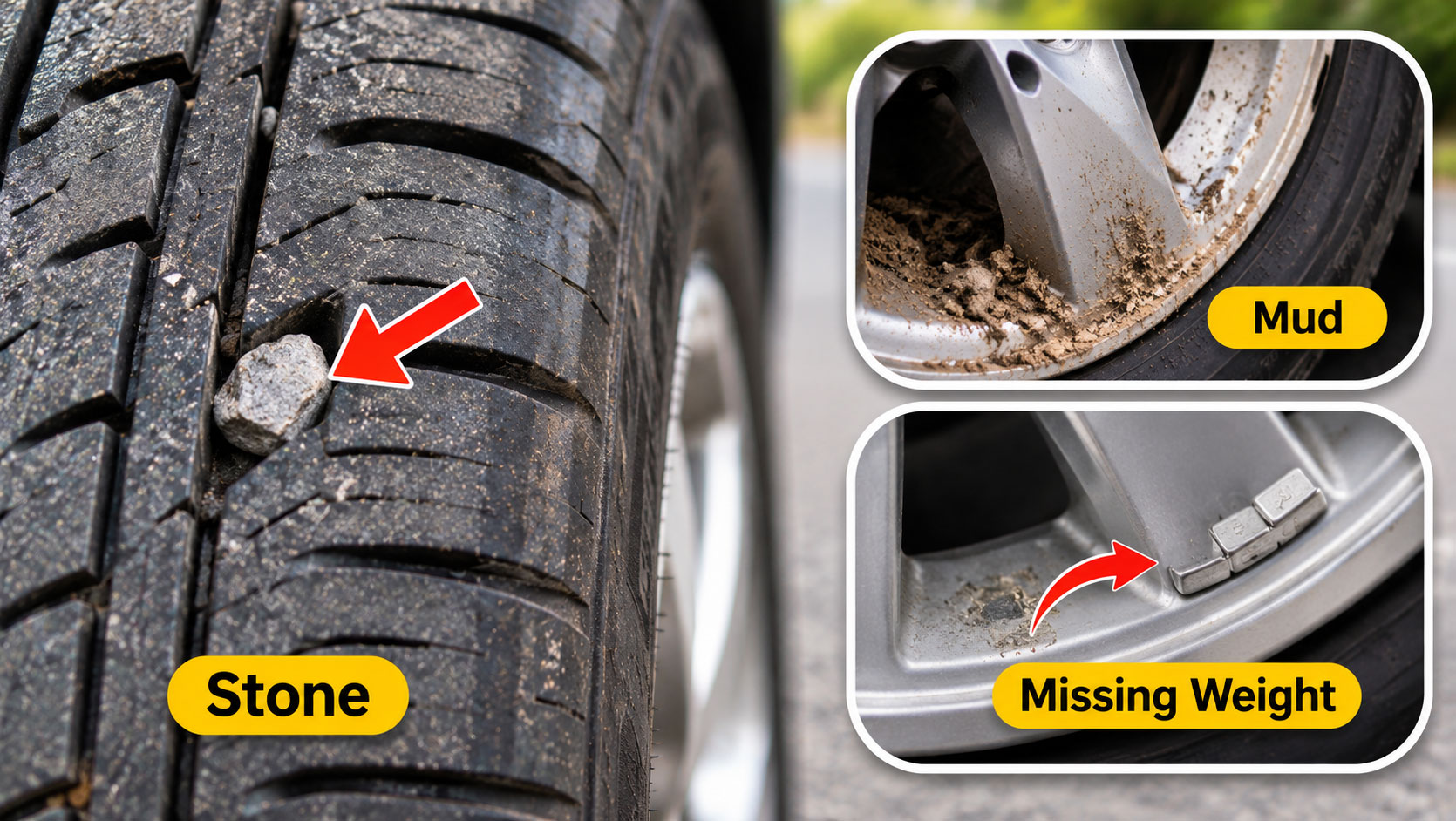
Packed mud, compacted snow in the rim, a stone wedged firmly in the tread, or a balance weight that has fallen off will all upset a wheel enough to feel. Checking takes a minute and costs nothing, so do it before you book anything at all. More than a few callouts end with a technician pulling a flint out of a tread groove.
Swipe the table sideways to see every column.
Why Your Tyres Are Noisy
How much tyre noise is normal?
Some noise is unavoidable and nothing to worry about. Tread blocks slap against the road surface, air is squeezed in and out of the grooves, and the tyre is a sealed chamber of air that resonates like a drum skin. All of that adds up to a background roar that rises with speed on every car ever built.
The question is never “is my car making tyre noise” — it is “has the noise changed”. A sound that has grown louder, altered in character, or appeared after new tyres were fitted is the one worth investigating.
1. Uneven and irregular tread wear
This is the single biggest reason a tyre becomes noisy over time. Once the tread surface is no longer smooth and level, every block meets the road a fraction out of step with its neighbour, and that irregularity is what you hear as sound.
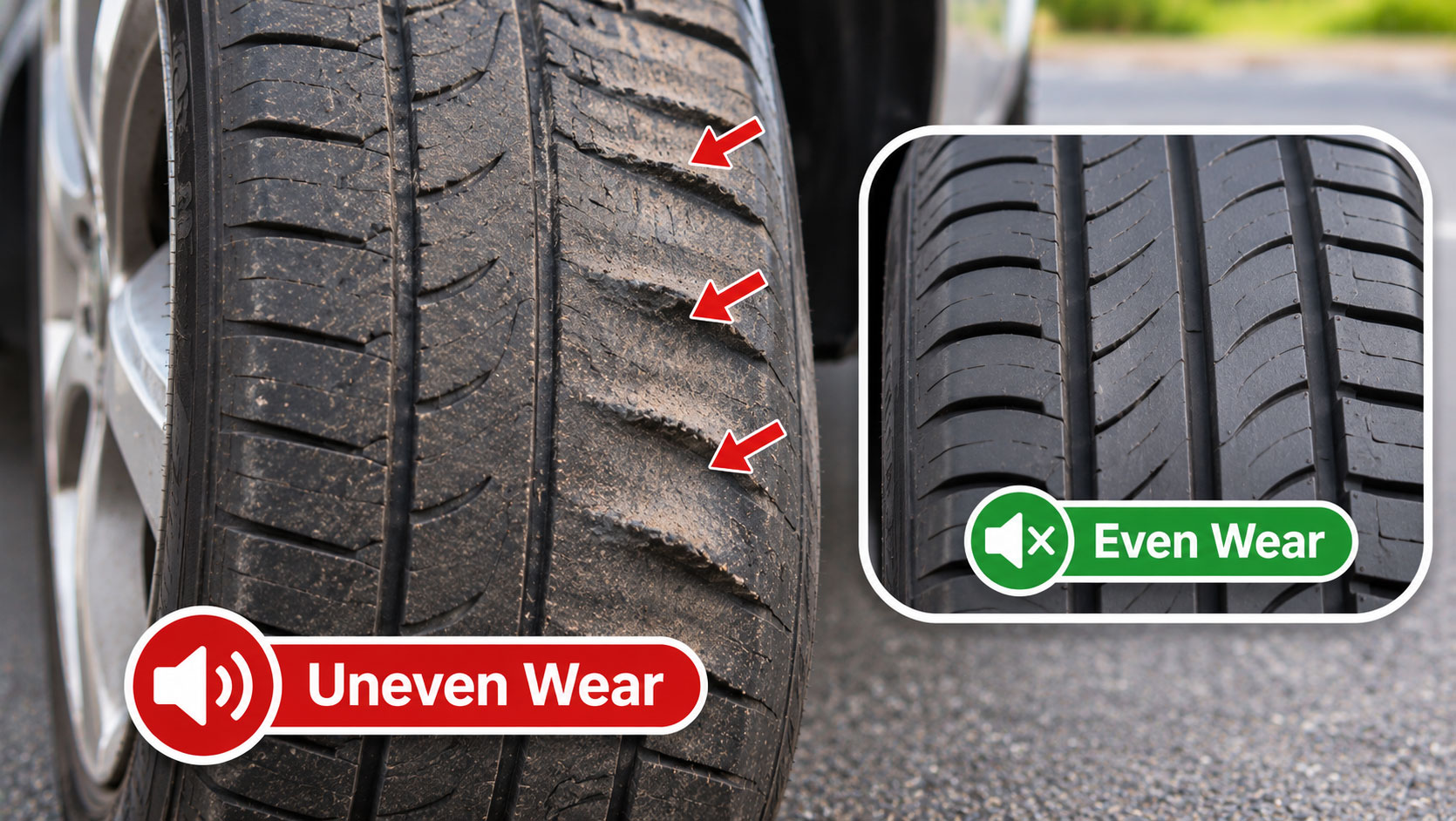
The pattern of the wear tells you what caused it, which is why running a hand across the tread is worth more than looking at it.
Worth Knowing: Cupping Does Not Smooth Itself Out
Replacing the worn shock absorbers stops the cupping getting worse, but the tyre stays scalloped and stays noisy for the rest of its life. Fix the cause, then plan to change that tyre rather than hoping it recovers. Knowing how long tyres normally last and how to read wear makes this easier to judge.
2. Pressures that have drifted away from the right figure
Under-inflation lets the shoulders of the tread carry more load than they should, so they scrub and wear fast while the middle stays untouched. Over-inflation does the reverse: it lifts the shoulders clear and runs the whole car on a narrow central strip, which makes the ride harsh and the drumming noticeably louder.
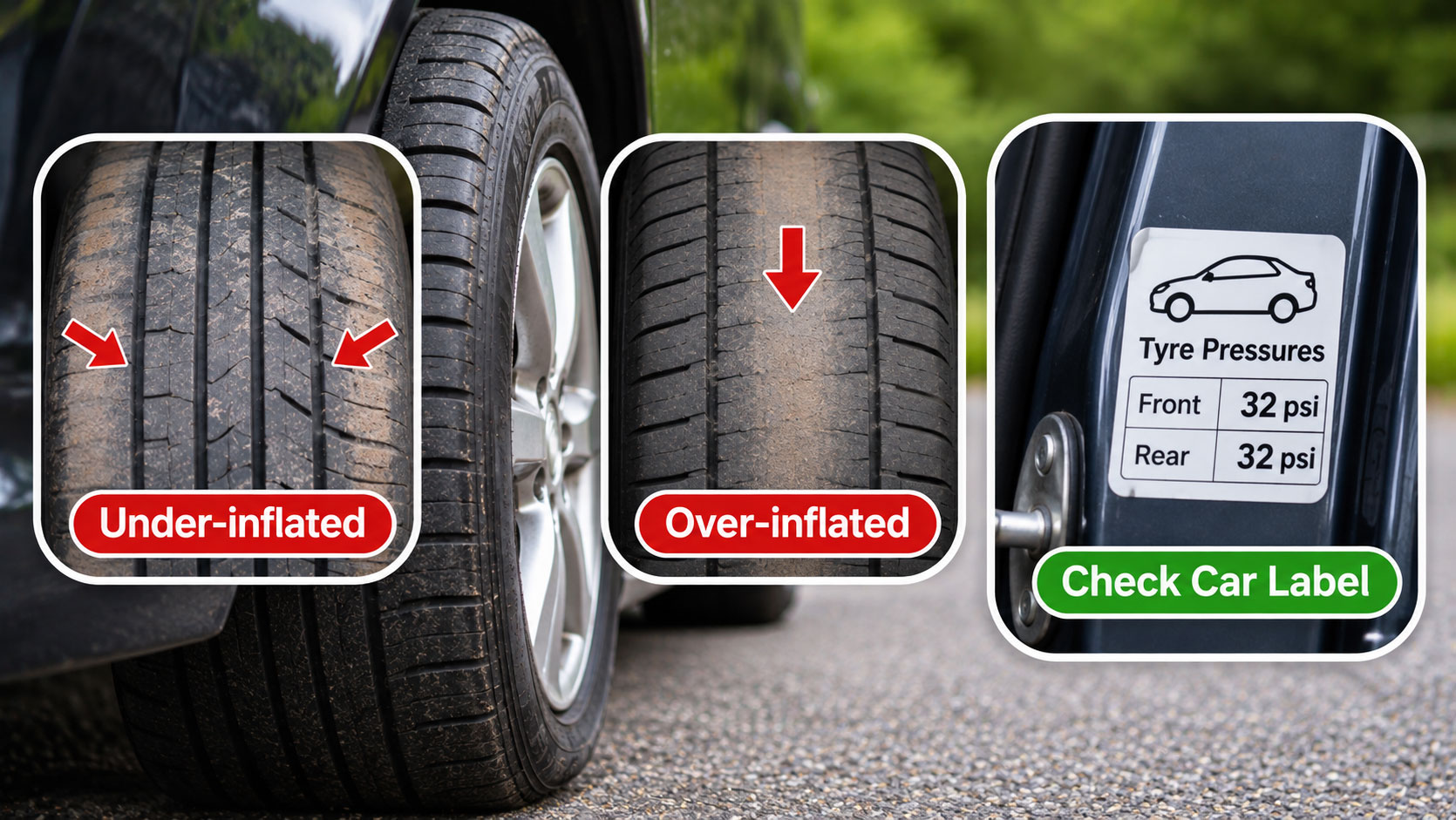
Both show up as noise long before they show up as a safety warning, and both are free to put right. The correct tyre pressure your car needs is printed in the driver’s door sill or inside the fuel flap, not on the tyre itself.
3. Tread that is simply worn down
This one surprises people: as tread wears away, tyres usually get louder, not quieter. Shallow grooves hold and release air differently, there is less rubber left to damp vibration, and more of the road’s texture passes straight through the carcass into the cabin.
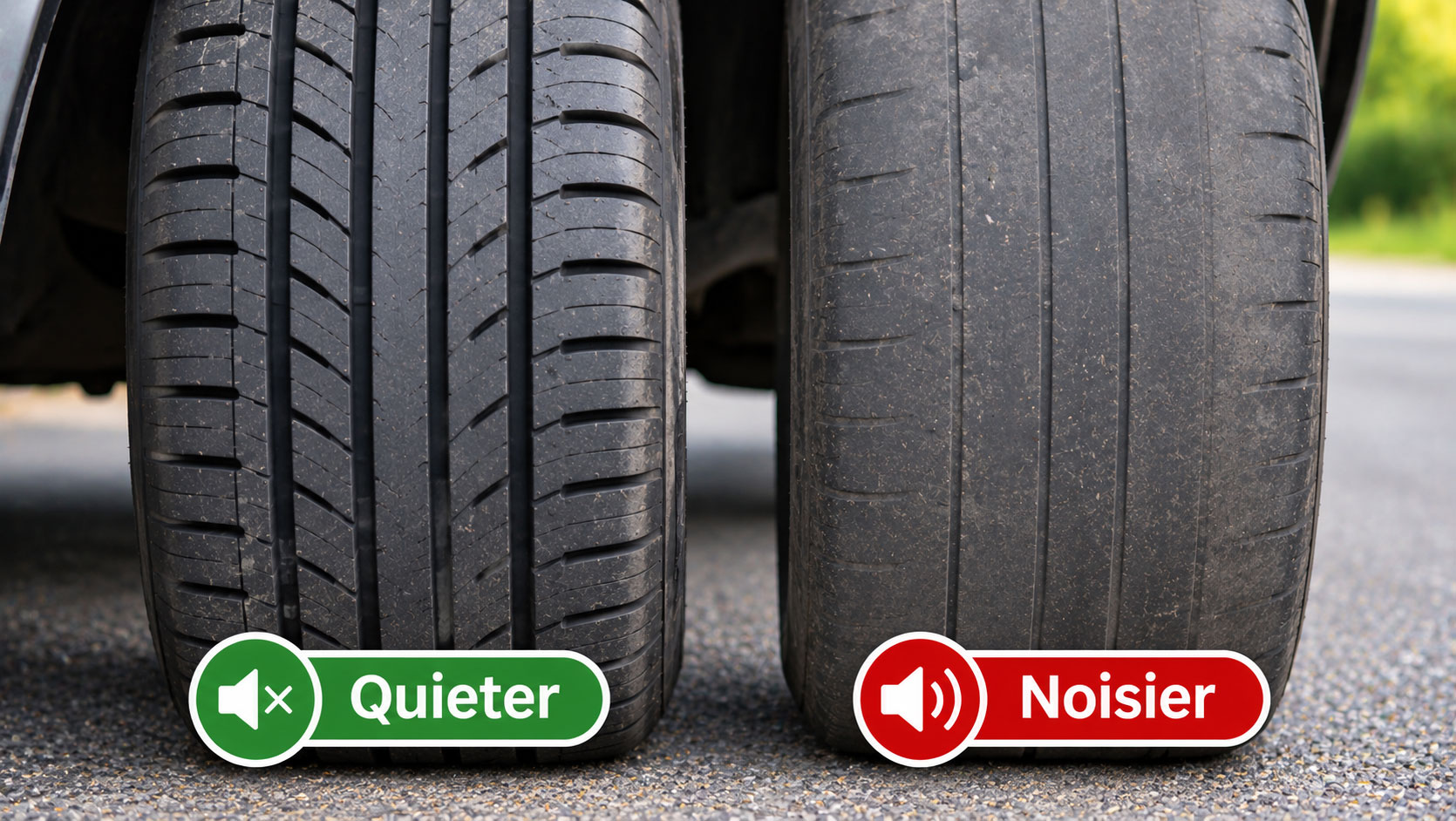
If a set of tyres has slowly become a drone over the last year and the wear looks perfectly even, you may simply be hearing them reach the end of their useful life.
4. The type of tyre and the tread pattern itself
Chunky, widely spaced tread blocks are exactly what grips in snow, mud and loose ground — and exactly what hums and growls on dry tarmac. Winter tyres and all-terrain patterns are noisier than a standard summer tyre by design, not by fault.
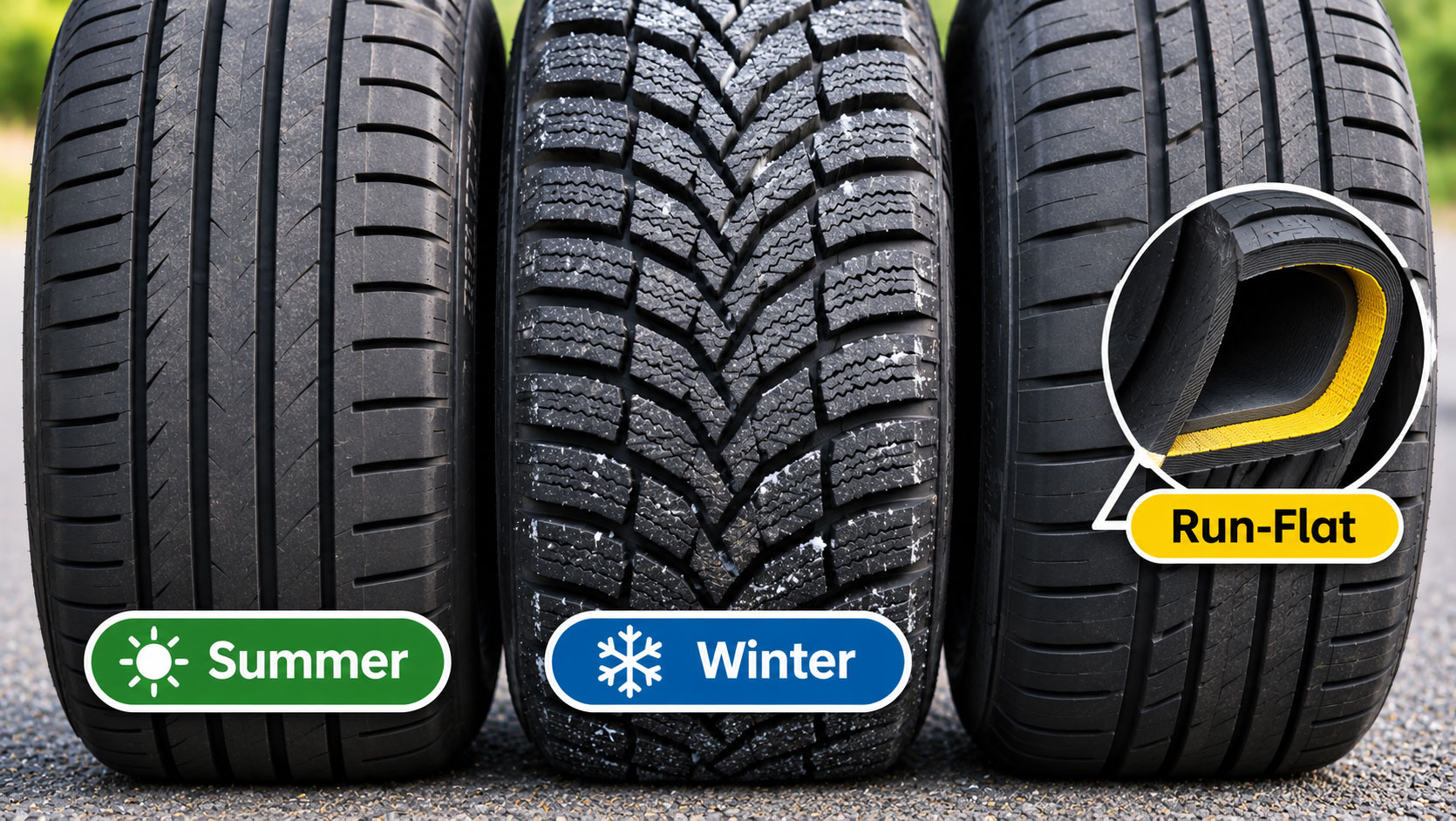
Run-flat tyres are a similar story. Their reinforced sidewalls are stiff enough to carry the car with no air in them, and that stiffness passes more road noise and more road texture into the cabin than a conventional tyre would.
5. Mismatched tyres on the same axle
Two different tread patterns on the same axle generate two different noises at the same road speed. The two sounds then interfere with each other, and what you hear is a warble or a slow beat that neither tyre would produce on its own.
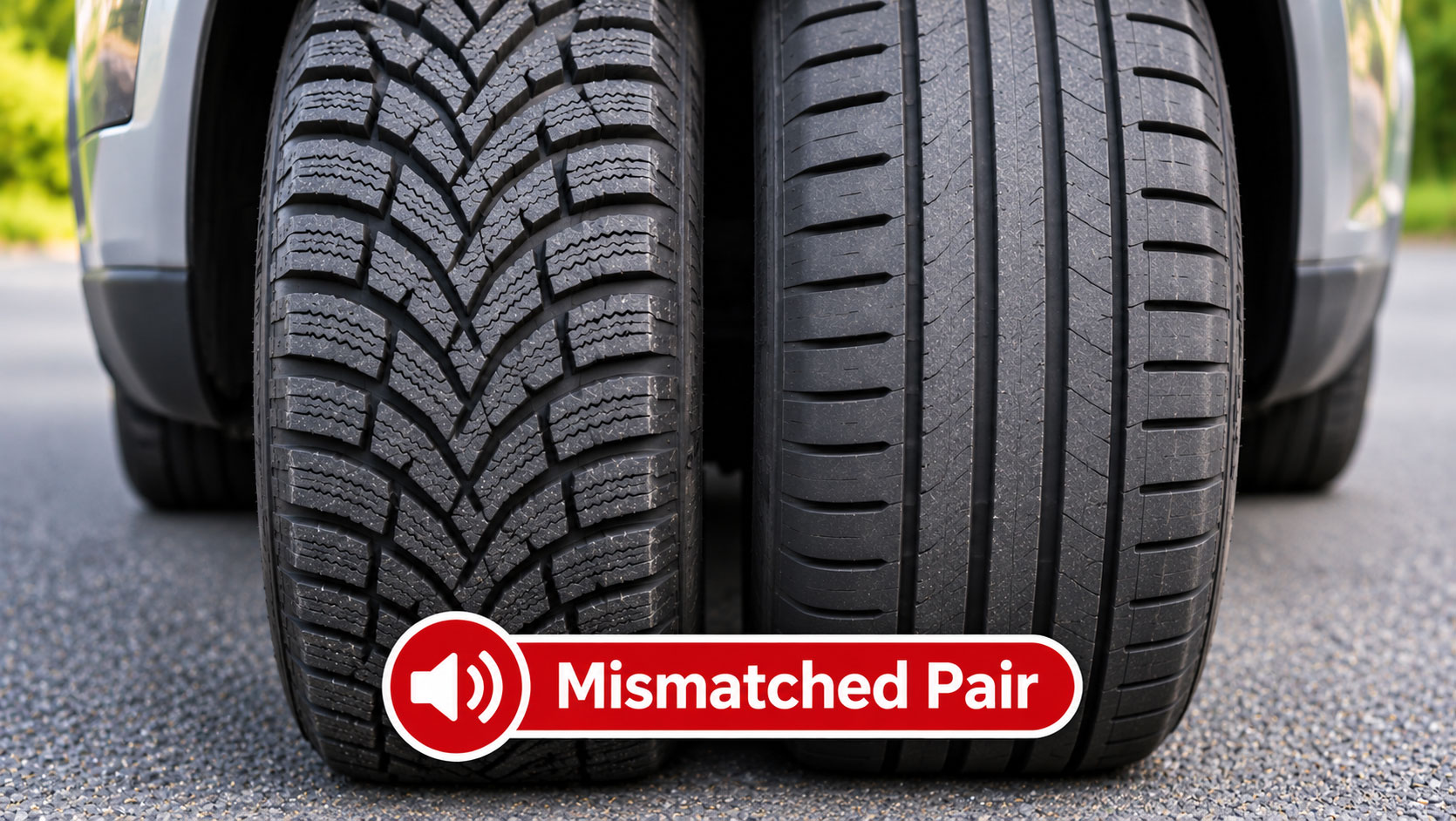
It is also the reason fitters recommend replacing tyres in pairs rather than one at a time — matched pairs across an axle keep the noise, the grip and the wear consistent.
6. A worn wheel bearing doing a very good impression of a tyre
A failing bearing produces a hum that rises and falls with road speed, which is precisely what tyre noise does. This is the most commonly misdiagnosed sound on the list, and plenty of people have bought four tyres to cure it.
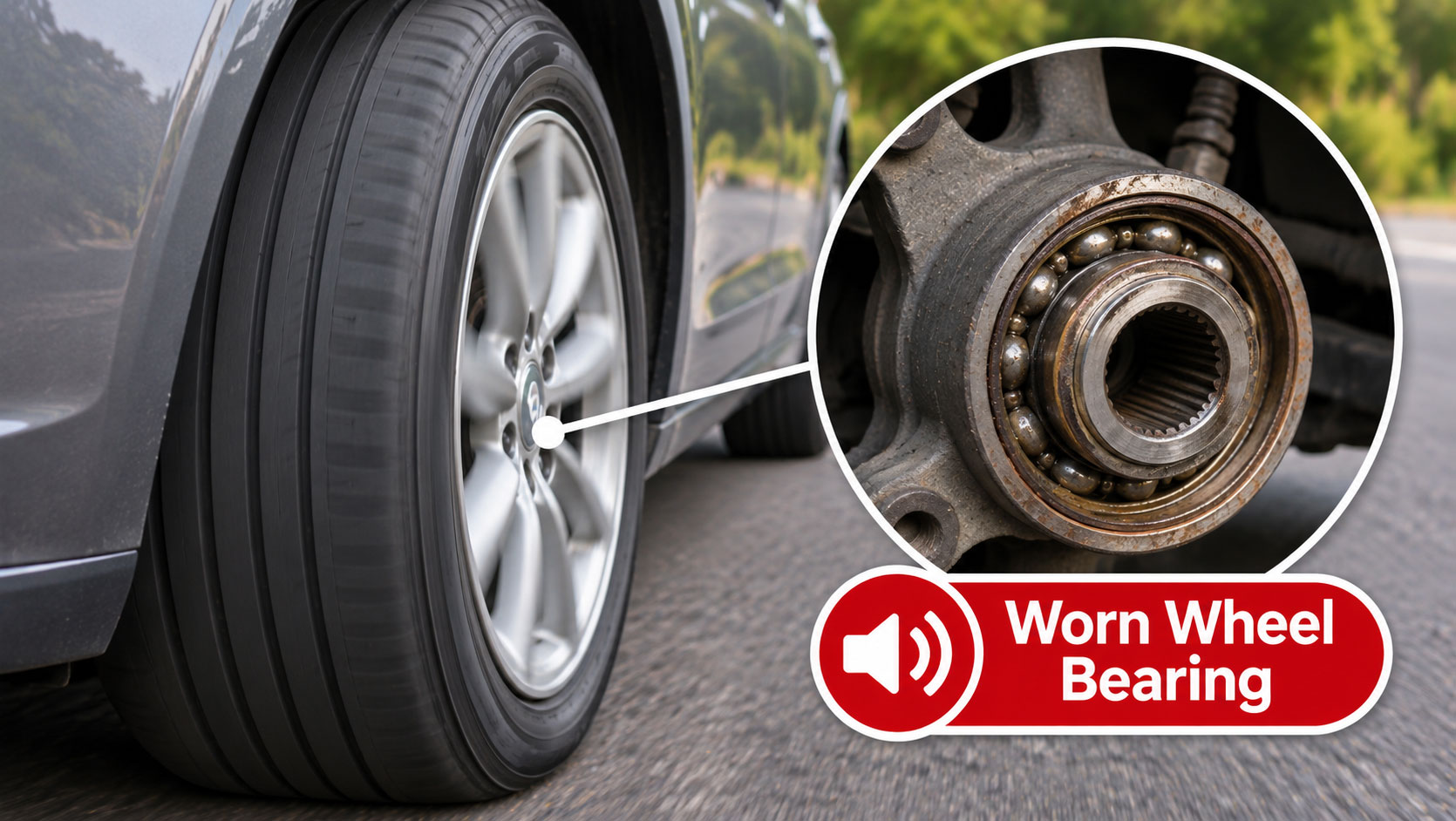
The tell is steering load. Find a quiet, empty road, hold a steady speed, and sweep very gently left and then right. A bearing hum will grow clearly louder in one direction and fade in the other, because you are shifting weight onto and off the bad side. Tyre noise barely changes at all. If the hum has started to sound like grinding or rumbling, get it looked at the same week.
7. The road surface, not your car
Coarse chipped tarmac can add several decibels on its own, and some concrete motorway sections produce a pronounced roar in every car that drives over them. If your noise appears on one stretch of road and vanishes on the next, your tyres are reporting the surface rather than failing.
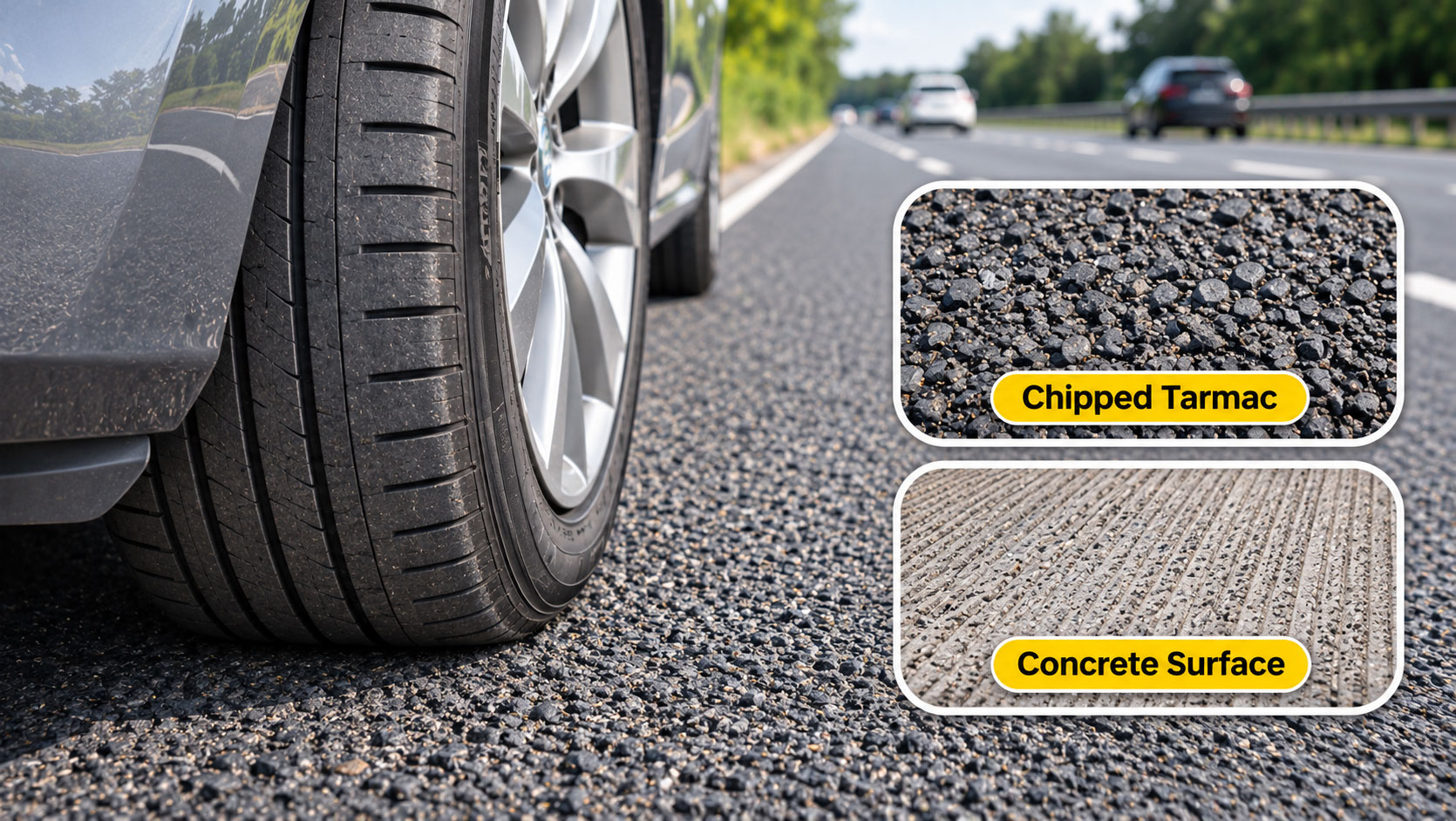
Tyres built for low rolling resistance and better fuel consumption are often slightly louder for the same reason — a harder, lower-rolling-resistance compound transmits more of what it rolls over.
Quick Test: Is It the Tyres or the Road?
- Drive the same stretch of road twice, at the same speed, windows up.
- Note whether the sound tracks the surface or stays constant throughout.
- Where your handbook allows it, move the front pair to the rear.
- Drive that same road again and listen to where the noise now comes from.
- If the sound moved to the back of the car with the tyres, the tyres are the source.
When Shaking and Noise Arrive Together
When both symptoms turn up at once, you are usually looking at one fault rather than two. The vibration is the movement; the noise is that same movement turned into sound a few thousand miles later. By far the two commonest single explanations are a wheel that has been out of balance long enough to wear the tread unevenly, and alignment that has been out of specification for months.
That matters for how you spend your money. Replacing noisy tyres without correcting whatever wore them out buys you a quiet car for a while and then hands you the identical problem on a new set of rubber.
Fix the Cause Before You Fix the Symptom
- Correct the alignment or suspension fault that is doing the damage.
- Balance all four wheels so the wear stops repeating.
- Only then replace the tyres that are already too worn or scalloped to recover.
Done in that order, one set of tyres lasts the way it should. Done backwards, you pay twice.
The Fixes, and What Each One Actually Cures
Each of these jobs does one specific thing. Knowing which is which stops you paying for an alignment when you needed balancing, or a set of tyres when you needed a shock absorber.
Wheel balancing
The wheel is spun on a machine that measures exactly where the heavy spot sits, and small weights are added to cancel it out. It takes roughly fifteen minutes per wheel. It cures speed-related shaking caused by uneven weight distribution, and it should be done every single time a tyre is fitted.
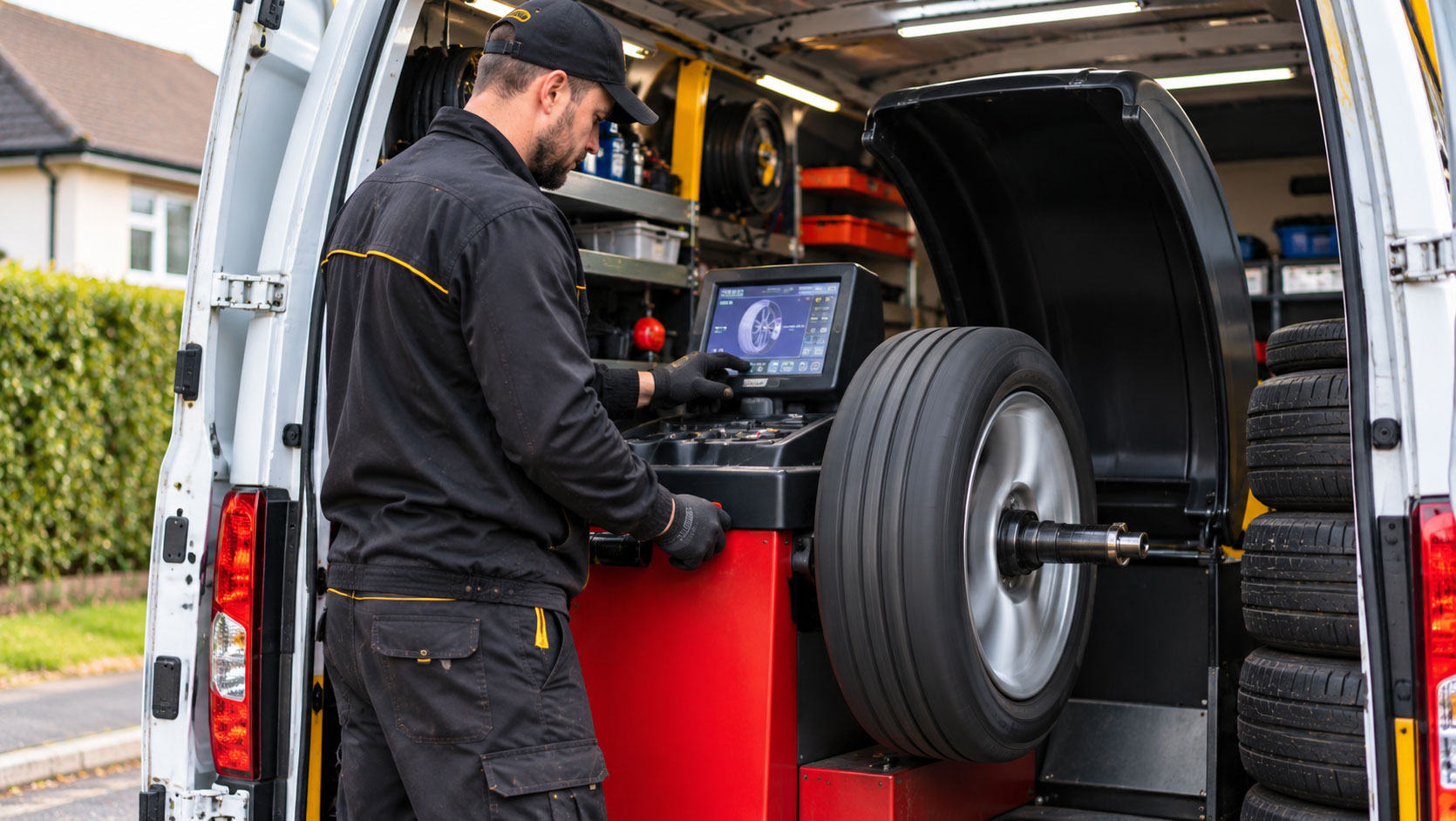
What it will not do is straighten a buckled rim, correct an alignment angle, quieten worn tread, or touch a brake judder.
Four-wheel alignment
This sets the angles your wheels sit at back to the figures your manufacturer specified. It cures pulling, off-centre steering and the feathered wear that causes roaring, and it protects the tyres you already own from being scrubbed away early.
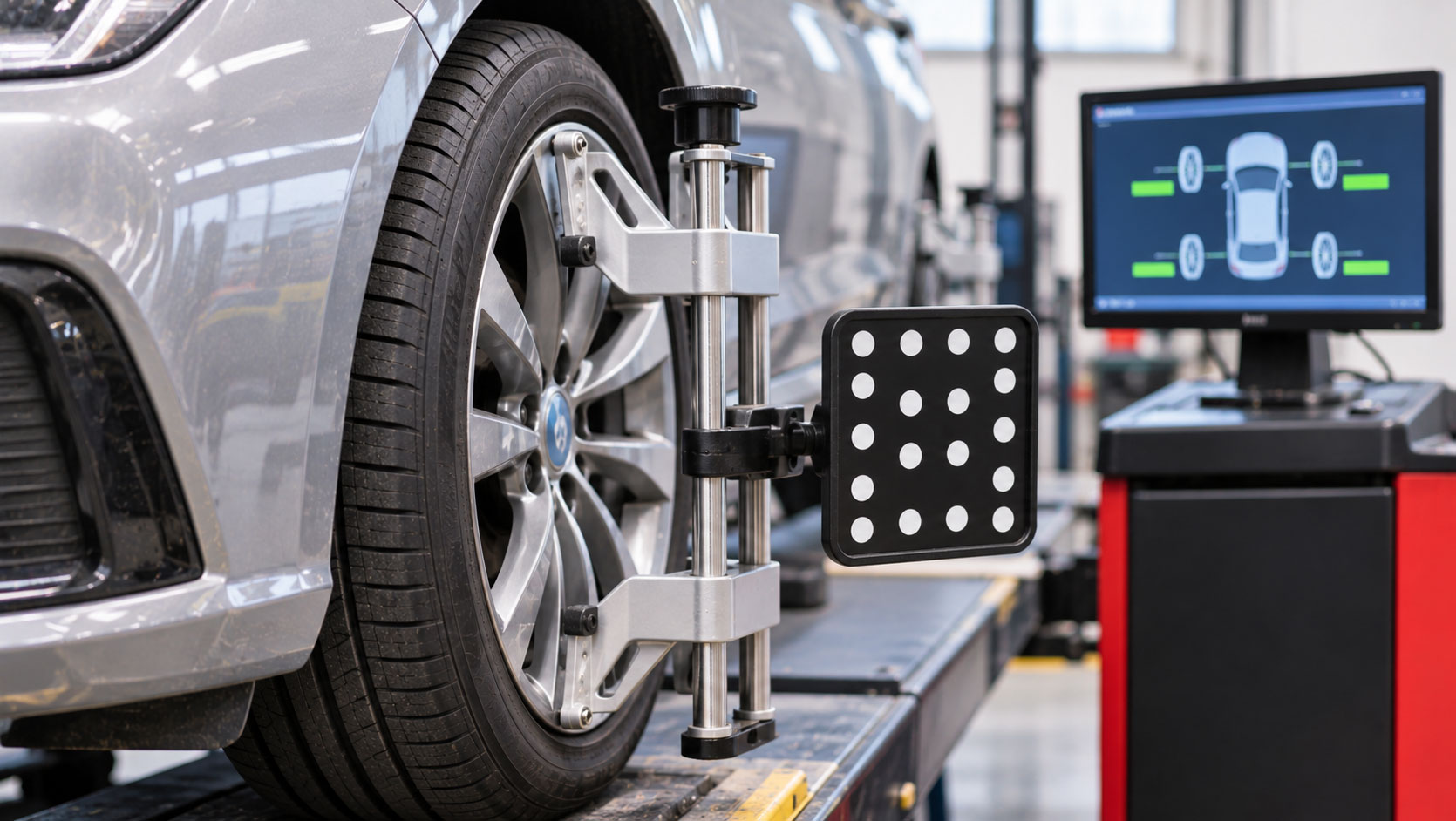
It will not remove a vibration that is already being caused by imbalance, and it cannot undo wear that has already happened.
Rotating or repositioning tyres
Moving tyres between positions spreads the wear around before any single pattern becomes permanent. It is the least costly way to keep heel-and-toe wear in check on a front-wheel-drive car.
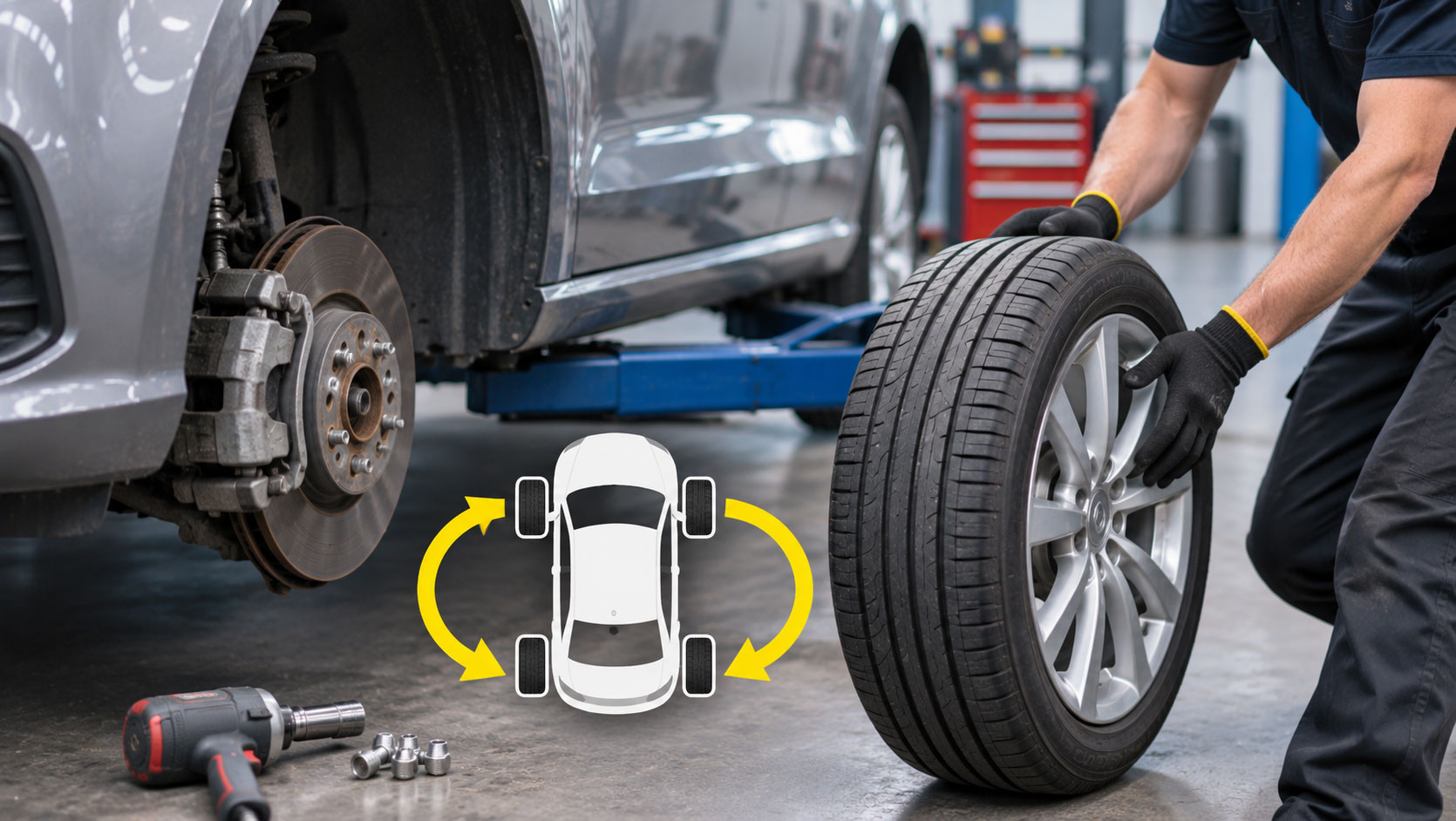
Check your handbook first, though — directional tread patterns and staggered front-to-rear sizes both limit what you are allowed to move where.
Replacing the tyre
Sometimes this is the only honest answer. Once the tread is scalloped, a belt has shifted inside the casing, or the sidewall is damaged, no amount of balancing will quieten it and no alignment will bring it back.
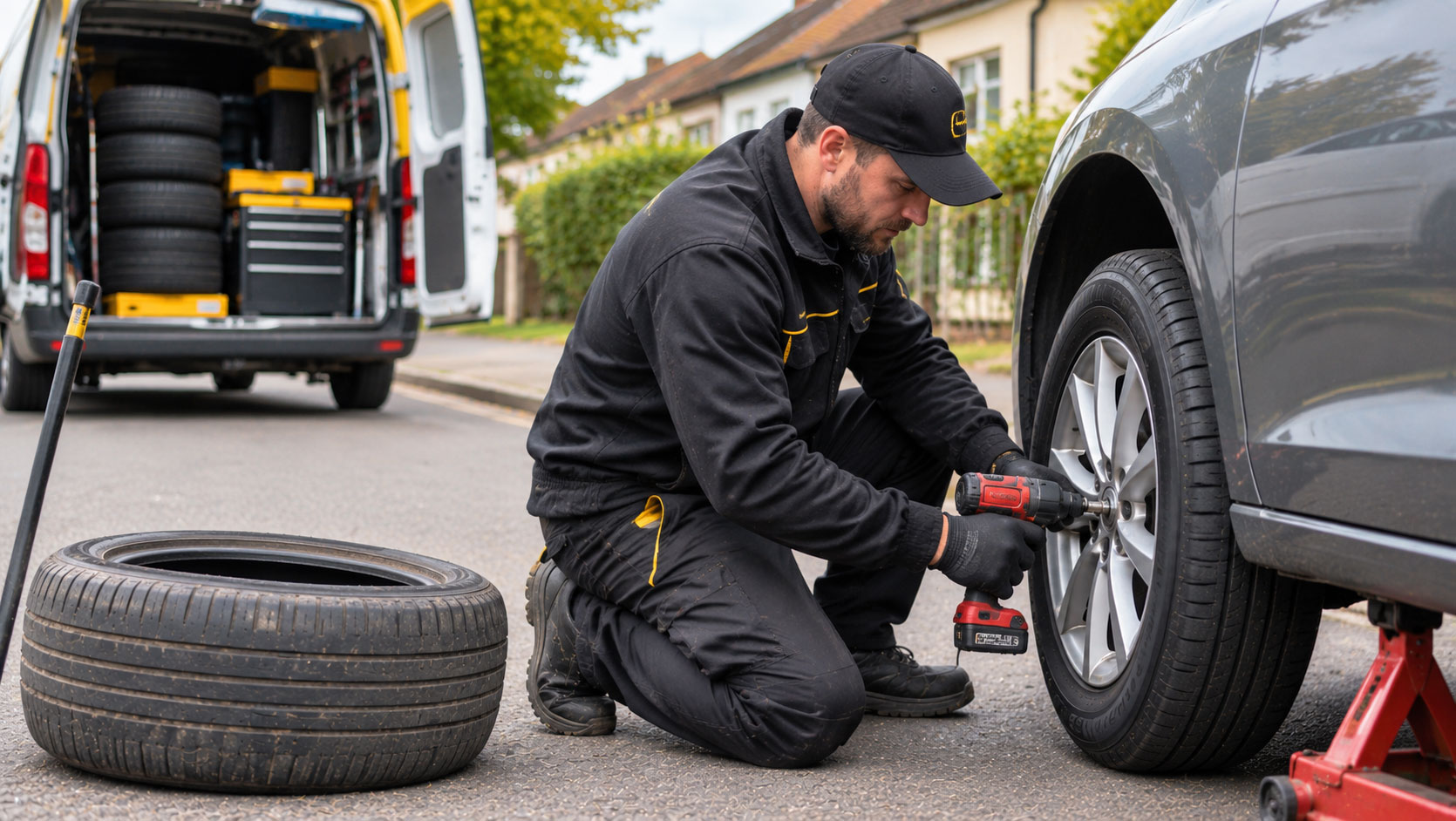
If you are choosing replacements, it is worth reading up on how mid-range tyres compare and what you get at the budget end before you decide, because noise and comfort vary far more between models than most buyers expect.
Suspension and bearing repairs
These are the parts that allow every other fault to happen. Replacing tired shock absorbers, worn bushes or a failing bearing stops the cycle of cupping and repeat vibration, and it restores the steady, planted feel the car had when it was newer.
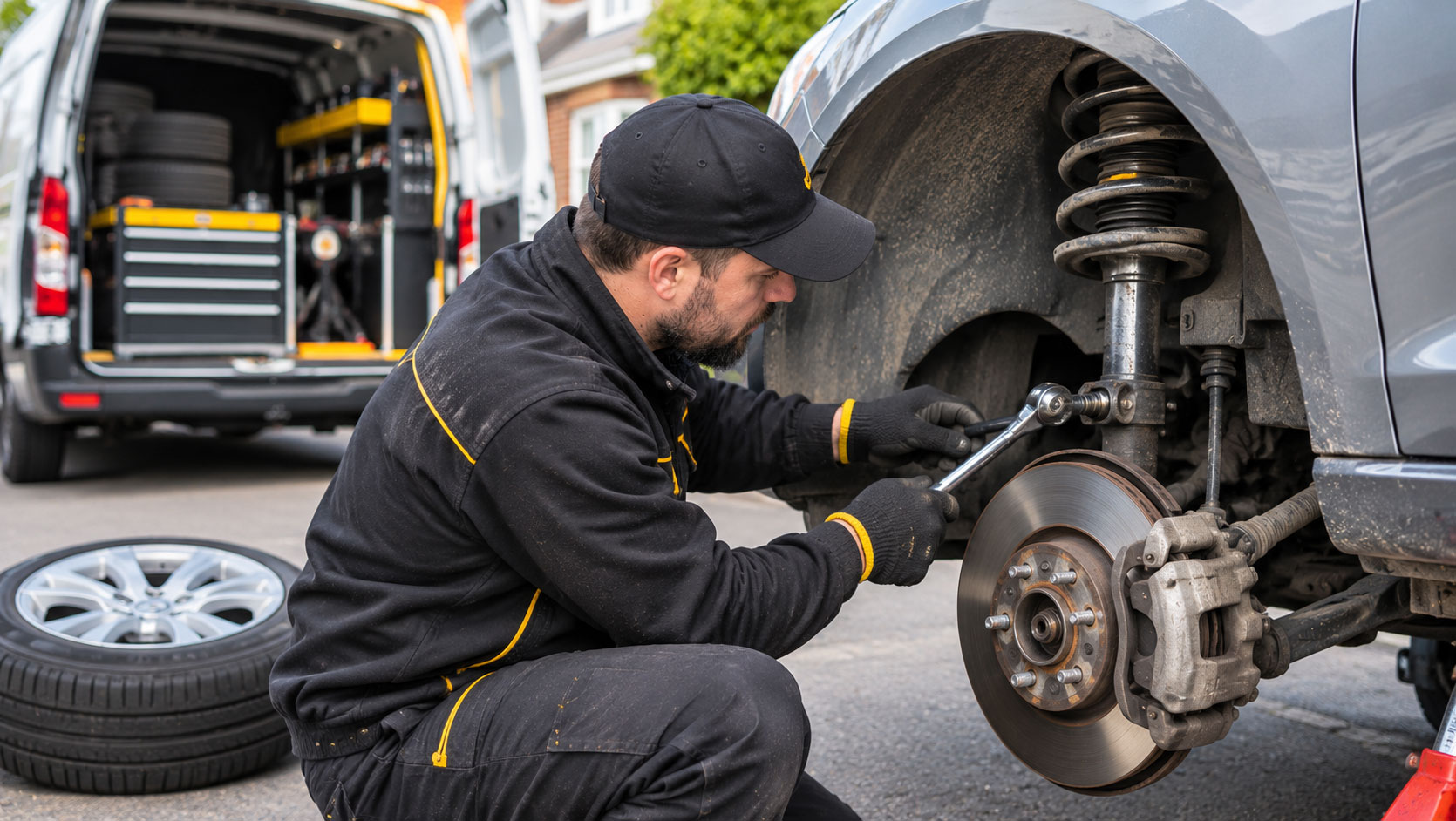
Expect to need balancing afterwards too, since the wheels normally come off for the work.
Work Through the Fixes in This Order
- Check all four pressures cold and clear anything stuck to the wheels or tread.
- Have all four wheels balanced and the valves checked.
- If the car still pulls, roars or wears unevenly, book an alignment check.
- Replace any tyre that is worn, cupped, thumping or damaged.
- Investigate suspension and bearings if the problem comes back.
Steps one to four can all be done on your driveway. Having your tyres fitted at your home means the car does not have to be driven to a garage while it is vibrating, and same-day fitting near you is available when the problem cannot wait.
Choosing Quieter, Smoother Tyres
What the noise figure on a tyre label actually means
Every new tyre sold in the UK carries a label with a noise figure in decibels. Here is the part almost everybody misses: that figure measures the noise your tyre makes outside the car, for the benefit of people who live near busy roads. The UK tyre labelling rules state plainly that it is not the tyre noise heard inside the vehicle.
Newer labels also show a noise class of A, B or C beside the decibel value, with A the quietest of the three. Because decibels are a logarithmic scale, a difference of around 3 dB is roughly the smallest change most people can actually hear.
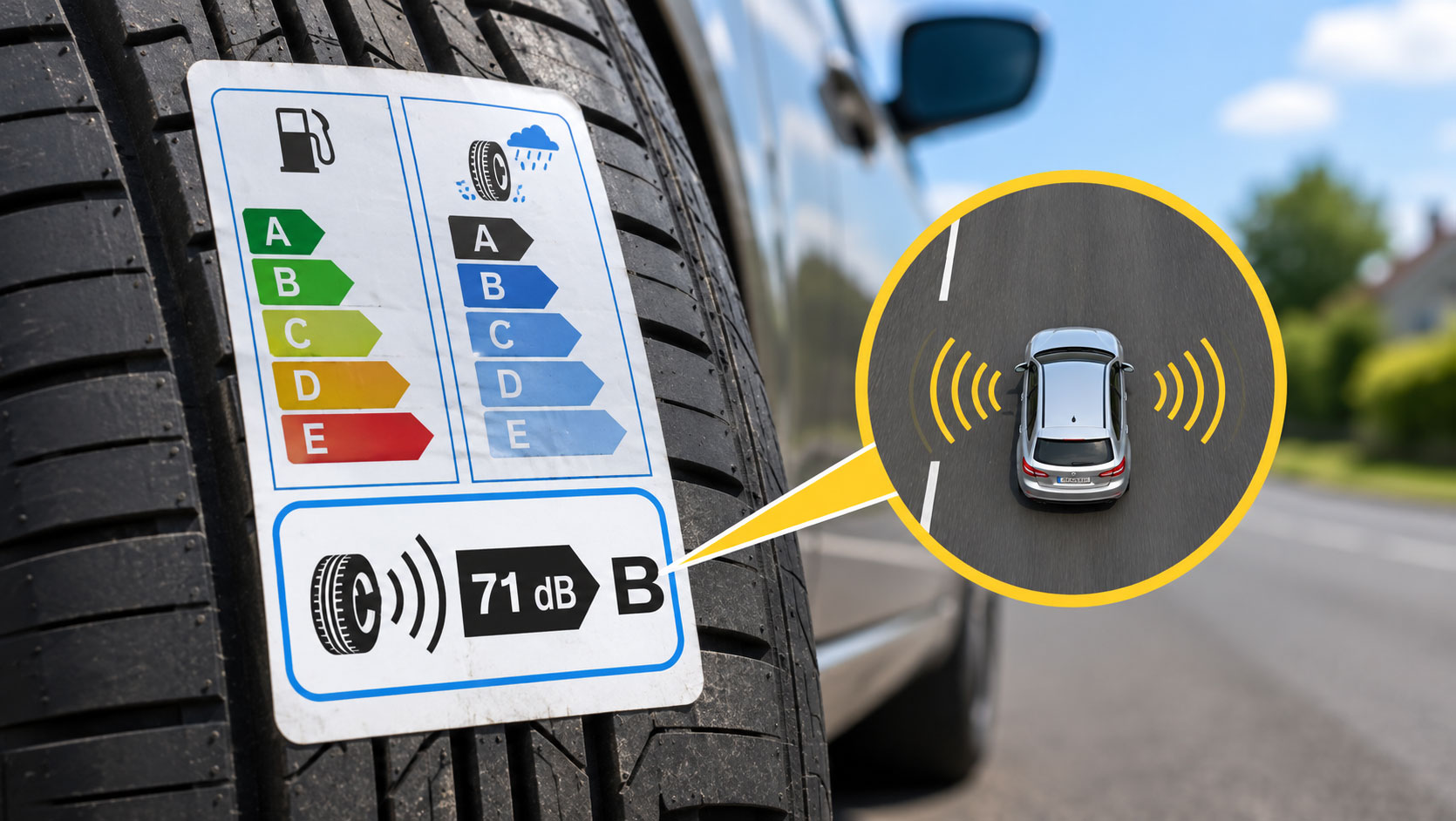
So the label is genuinely useful for comparing two tyres against each other. It just cannot promise you a quiet cabin.
Tyres with sound-absorbing foam inside them
Several manufacturers now bond a layer of polyurethane foam to the inside of the tyre. The reason goes back to that drum-skin effect: a tyre is a sealed chamber of air, and that air resonates as the tread passes over rough tarmac. The foam soaks up the resonance before it can travel through the wheel and suspension and into the cabin as a buzzing or droning note.
This is the one piece of tyre technology aimed squarely at cabin noise rather than external noise, which is why it has spread fastest on electric cars. With no engine sound to mask it, tyre noise is suddenly the loudest thing in the car.
A Detail That Confuses Buyers
A foam-lined tyre will sometimes show a higher decibel figure on its label than an ordinary tyre of the same size. That is not an error. The label measures noise outside the car and the foam works on the inside, so the two numbers are answering completely different questions. Judge foam-lined tyres on cabin comfort, and judge the label figure on external noise.
The best tyre for grip is not automatically the quietest
Worth saying plainly, because it catches a lot of buyers out. A top rated model in a magazine test may have earned that score on wet handling or braking rather than on comfort, and the two do not always travel together. Equally, there are affordable tyres that ride quietly and premium ones that do not.
If a quiet cabin is genuinely what you are after, say that first and judge the shortlist on it. Grip still matters more for safety — just be clear which one you are buying.
What to Ask For When You Buy
- Say up front that quietness and comfort matter to you, not only grip.
- Ask for the noise class and decibel figure for the exact size you need.
- Ask whether a foam-lined version exists in your size.
- Fit the same make, model and pattern across each axle as a minimum.
- Have all four wheels balanced at fitting, without exception.
If you are weighing up where to spend, our breakdown of which tyre brands are worth the money is a sensible place to start, because comfort and noise are where the gap between tiers shows up most clearly.
Keeping It Quiet and Smooth
The monthly habit that prevents most of this
Nearly every cause in this guide begins as a small pressure or condition problem that nobody noticed for months. TyreSafe recommends the same simple routine: check air pressure, condition and tread depth once a month, and again before any long journey.
Five minutes, twelve times a year. That is the whole trick.
Your Five-Minute Monthly Routine
- Check pressures when the tyres are cold, against the figure in the door sill or fuel flap.
- Run a hand across each tread in both directions – sharp one way means feathering has started.
- Look for bulges, cuts, cracking and scalloped edges around the tread.
- Pick out stones and grit lodged in the grooves.
- Check the spare too, if you carry one.
If you want the fuller version, our tyre maintenance habits cover the checks worth doing seasonally as well, and it is worth running through them before a long drive rather than discovering a problem at a motorway service station.
Driving habits that quietly cause vibration and noise
Kerbs are the main offender. A single firm kerb strike at parking speed can knock a balance weight off, buckle a rim very slightly, or shift a belt inside the tyre — and none of those announce themselves until you next reach 60 mph.
Carrying heavy loads at standard pressures is the second. Most handbooks list a higher laden pressure for a reason, and running underinflated with a full car scrubs the tread shoulders away quickly.
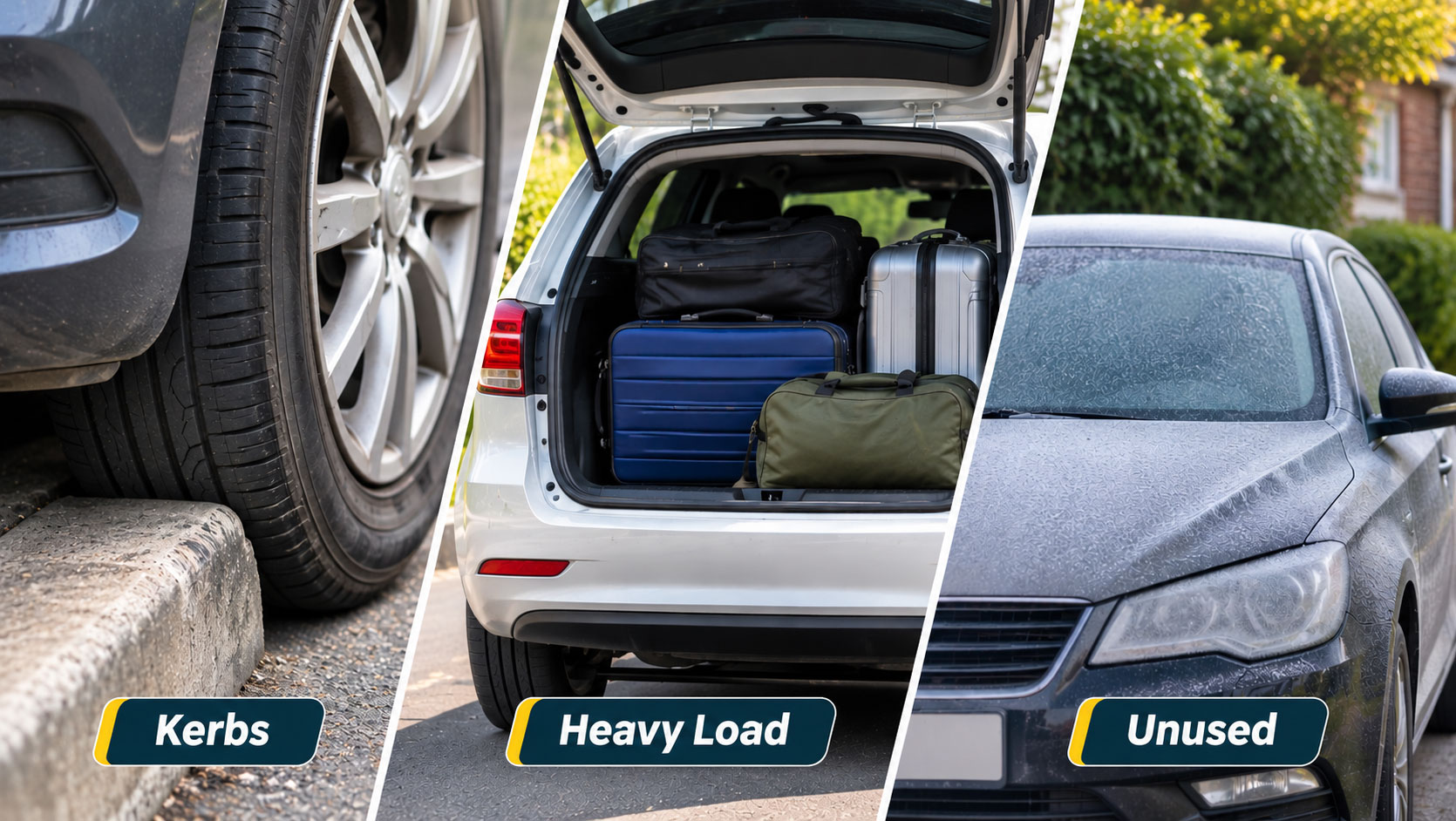
Leaving a car unused for weeks is the third, though this one is largely harmless. Expect a slight shudder for the first mile or two until the flat spots work out.
When to Stop Driving and Get Help
Most vibration and tyre noise is a comfort problem you can sensibly book in for next week. A small number of cases are not, and they are worth knowing by heart.
Stop and Get Help If You Notice Any of These
- A sudden, strong vibration that simply was not there an hour ago.
- Shaking that gets steadily worse the longer you keep driving.
- A visible bulge, blister or split in a sidewall.
- A loud rhythmic slapping or flapping sound with vague, wandering steering.
- A bearing hum that has turned into grinding or heavy rumbling.
- Any vibration that appeared immediately after a wheel was removed and refitted.
In those situations, pull over somewhere safe rather than pressing on to the next junction. Roadside tyre help will come to you, which is far safer than driving a car that is deteriorating. It is also worth knowing in advance how far you can drive on a flat tyre and what to do if a tyre bursts at speed, because both decisions are much harder to make calmly at the roadside.
Key Takeaways
If your car vibrates or your tyres have become noisy, work through it in this order:
- Note where you feel it, the speed it starts, and what changes when you brake or steer.
- Steering wheel shake points to the front; seat and floor vibration points to the rear.
- Juddering only under braking is brakes, not wheels.
- A drone or roar that rises with speed is normally uneven tread wear.
- A hum that changes when you steer is normally a wheel bearing.
- Check pressures and clear the wheels before paying for anything.
- Balance first, align second, replace tyres third, suspension last.
- Always fix the cause before you replace the symptom.
Quick Diagnostic Checklist
- Start speed, peak speed and fade speed noted
- Steering wheel or seat identified
- Brake test done
- Gentle left and right steering test done
- All four pressures checked cold
- Tread felt by hand in both directions
- Sidewalls checked for bulges and cuts
- Stones and mud cleared from wheels and grooves
Final Thoughts
Vibration and tyre noise are rarely mysteries. They are your car pointing at a specific wheel, and the answer is nearly always one of four things: balancing, alignment, pressures, or a single tyre that has quietly reached the end of its life. Diagnose it in the right order and you usually spend less than you feared.
If you already have tyres and simply need them fitted, balanced and set up properly, The Mobile Tyre Fitter comes to you and does the job at your home, your workplace or the roadside — no garage appointment and no waiting room. And if the diagnosis turns out to be a tyre that has to be replaced, we carry all the major brands in stock at reasonable, competitive prices, so it can be sorted in the same visit rather than booking twice.
One visit, one stop, sorted. Contact our support team with your tyre size or registration and we will tell you what we have available and when we can be with you. You can also check the areas we cover or arrange next-day tyre fitting if today is not convenient.
Frequently Asked Questions
Because the fault spins round with the wheel, so its effect grows with speed. A heavy spot that is barely detectable at 30 mph is hitting the road fifteen times a second at 60, and that is enough to shake the whole steering column.
This speed-linked pattern is the classic signature of wheels that are out of balance. A shake that is present at every speed, including slow ones, usually means something else – a tyre that has lost its shape, a buckled rim, or play in the suspension.
Only indirectly, and only if you catch it early. Balancing stops the bouncing that carves uneven patterns into the tread, so it prevents future noise. What it cannot do is quieten tread that is already scalloped or feathered, because the surface of the rubber is permanently uneven.
If your tyres have already become noisy, balancing is still worth doing to stop the damage spreading, but the noisy tyre itself will usually need replacing.
A mild shimmy that has been the same for weeks and only appears in a narrow speed band is usually safe to drive on while you get it booked in. It is a comfort problem at that stage.
What is not safe is a vibration that came on suddenly, one that worsens the longer you drive, or one accompanied by a visible bulge in a sidewall or a slapping noise. Those point to a structural failure, and the right move is to pull over somewhere safe and call for help rather than carry on.
Three common reasons. The tread pattern may simply be different – chunkier blocks and wider grooves make more noise by design. The new tyres may be a winter or all-terrain type, which hum on dry roads. Or they may have been fitted without being balanced properly.
There is also a harmless possibility: full-depth tread sits higher and squeezes more air through the grooves, so a new set can genuinely sound different for the first few hundred miles before settling down.
Use the steering test. On a quiet, empty road at a steady speed, sweep very gently to the left, then very gently to the right. A bearing hum will grow clearly louder one way and fade the other, because you are shifting the car’s weight onto and off the worn side. Tyre noise stays more or less the same in both directions.
A bearing also tends to sound more metallic, and it will progress to grinding or heavy rumbling if left. Tyre noise stays broadly constant in character.
Usually not on its own. Alignment corrects the angles your wheels sit at, which cures pulling, off-centre steering and uneven wear. It does not change the weight distribution of a wheel, which is what causes most speed-related shaking.
Alignment matters because it stops the uneven wear that creates vibration and noise over time. Think of balancing as the cure and alignment as the prevention – most cars benefit from having both checked together.
Yes, but to a specific kind of noise. The foam targets cavity resonance – the drumming note created by air vibrating inside the tyre – and manufacturers quote reductions of roughly two to nine decibels depending on the technology and the frequency involved.
What foam cannot do is silence the sound of tread meeting coarse tarmac, or rescue a tyre that is already worn unevenly. It also tends to be available only in certain sizes, and some versions are supplied as original equipment on new cars rather than sold separately.
Every time a tyre is fitted, without exception. Beyond that, it is worth having them checked if you have hit a deep pothole or kerbed a wheel, if a shake has appeared in a particular speed band, or if you can see uneven patches of wear forming on the tread.
There is no fixed mileage interval, because it depends entirely on the roads you drive and whether a weight has been knocked off. Most drivers notice the symptom long before any schedule would catch it.
