HomeBlogsBlogsCar Vibration And Tyre Noise

Car Vibration And Tyre Noise

Match Your Symptom to the Cause

Where exactly do you feel the vibration?

This one question narrows things down faster than anything else you can do. A shake that arrives through the steering wheel is nearly always coming from a front wheel. A vibration you feel through the seat base or the floor is coming from the back of the car. The reason is simple: the steering column is connected to the front hubs, so anything wrong at the front travels straight into your hands.

A rear problem has no such shortcut, so it reaches you through the body shell instead, which is why it feels more like a general tremor than a sharp shimmy.

The 30-Second Self-Check

Write those five answers down before you ring anyone. Any tyre technician can read that short list and know exactly where to start, which cuts out guesswork and saves you paying for diagnosis time.

What the sound itself is telling you

Tyre noise has a vocabulary, and learning it is half the diagnosis. A steady hum that rises in pitch with road speed is a different fault from a rhythmic thumping that repeats once per wheel rotation, and both are different again from a rough roaring that only appears when the road surface changes.

Put a name to the sound and you have already ruled out most of the list below.

What you notice
Most likely cause
First thing to do
Steering wheel shakes between 50 and 70 mph
Front wheels out of balance
Have all four wheels balanced
Seat or floor trembles at the same speeds
Rear wheels out of balance
Balance the rear pair first
Juddering only when you press the brake
Uneven or distorted brake discs
Have the discs and pads measured
Rhythmic thumping, once per wheel turn
Tyre has lost its true round shape
Have the tyre inspected off the car
Droning rumble that rises with speed
Cupped or unevenly worn tread
Replace the tyre and fix what caused it
Roaring noise plus steering that pulls
Alignment angles out of specification
Book a four-wheel alignment check
Hum that changes pitch when you steer
Worn wheel bearing
Have the bearing checked this week
Swipe the table sideways to see every column.

Important: Noise and Vibration Usually Share One Root Cause

Drivers often treat these as two separate problems and pay for two separate jobs. In reality a wheel that is out of balance will, left alone for long enough, chew the tread into an uneven pattern — and that pattern is what you then hear. The movement and the sound are the same fault at two different stages.

So treat them as one investigation. Checking your tread depth across each tyre at the same time costs nothing and often explains both complaints at once.

Why Your Car Vibrates: Causes in Order of Likelihood

These are listed roughly in the order a fitter would work through them, from the fault that explains most cases down to the ones worth checking last.

1. Wheels out of balance – the most common cause by a wide margin

No wheel and tyre assembly is perfectly even in weight. When your tyres are fitted, a technician spins each one on a balancing machine and corrects the difference with small weights clipped to the rim or stuck inside it. Those weights can be knocked off by a pothole or a kerb, and the tyre itself wears unevenly over thousands of miles, so the balance gradually drifts.
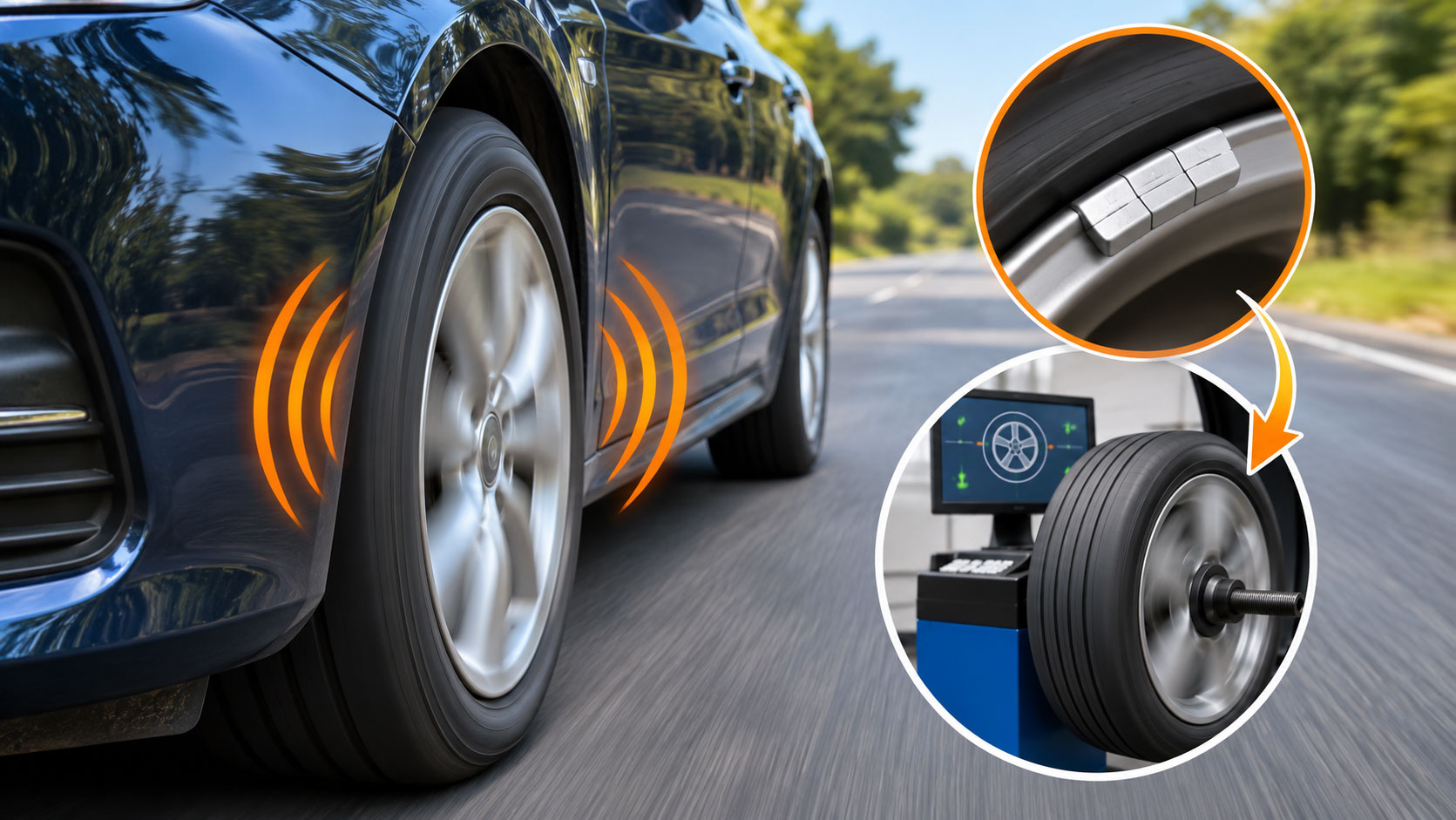
Wheel Out of balance

Because the heavy spot spins round with the wheel, the effect is tied to speed. It typically shows up somewhere around 40 to 50 mph, peaks between roughly 55 and 70, and often smooths out again above that. If your shake behaves that way, balancing is the first thing to try — not alignment, and certainly not a full set of new tyres.

Signs It Really Is Balance and Nothing Else

If that matches, having the wheels rebalanced is a short, inexpensive job that solves it outright. Valve stems are usually checked at the same time, since a leaking valve quietly drops your pressure and brings the problem back.

2. Juddering that only appears under braking

If the car is smooth at 70 mph and only shudders the moment you brake from speed, your wheels are not the problem. Brake discs that have worn unevenly are. Repeated heating and cooling leaves high and low spots across the disc face, and the pads skip over them as they bite, sending a pulse up through the pedal and the steering wheel.
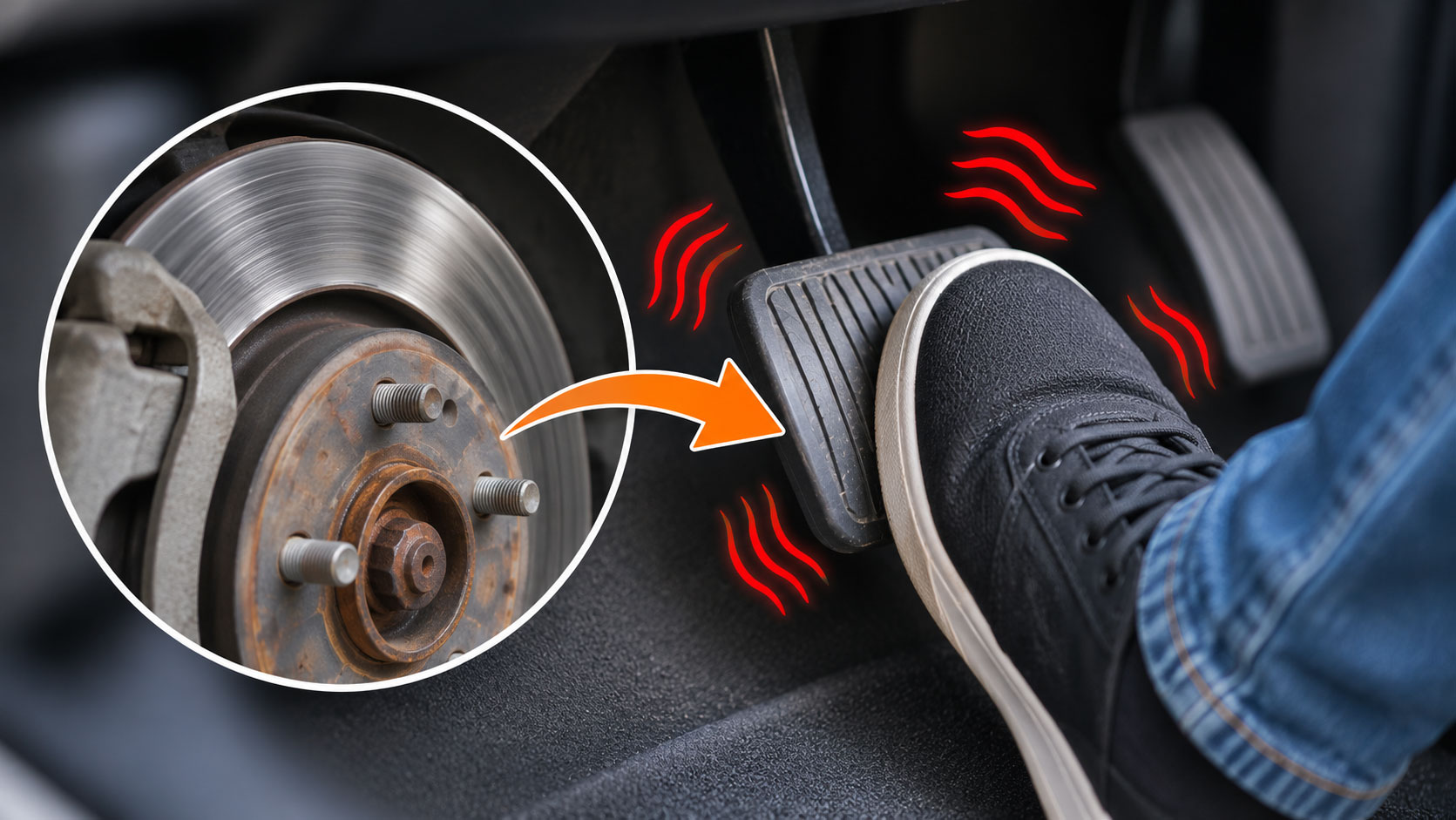
Brake Judder Disc and Pedal

This one is worth dealing with promptly rather than living with, because an uneven disc does not grip consistently, and that lengthens your stopping distance in exactly the situation where you need it shortest.

3. A tyre that has lost its shape

Tyres are built from layers of rubber over steel and fabric belts. A hard kerb strike or a deep pothole can shift one of those belts inside the carcass, leaving a flat or raised section you will almost never see from the outside. The result is a thump or wheel wobble that no amount of balancing can cure, because the tyre is simply no longer round.
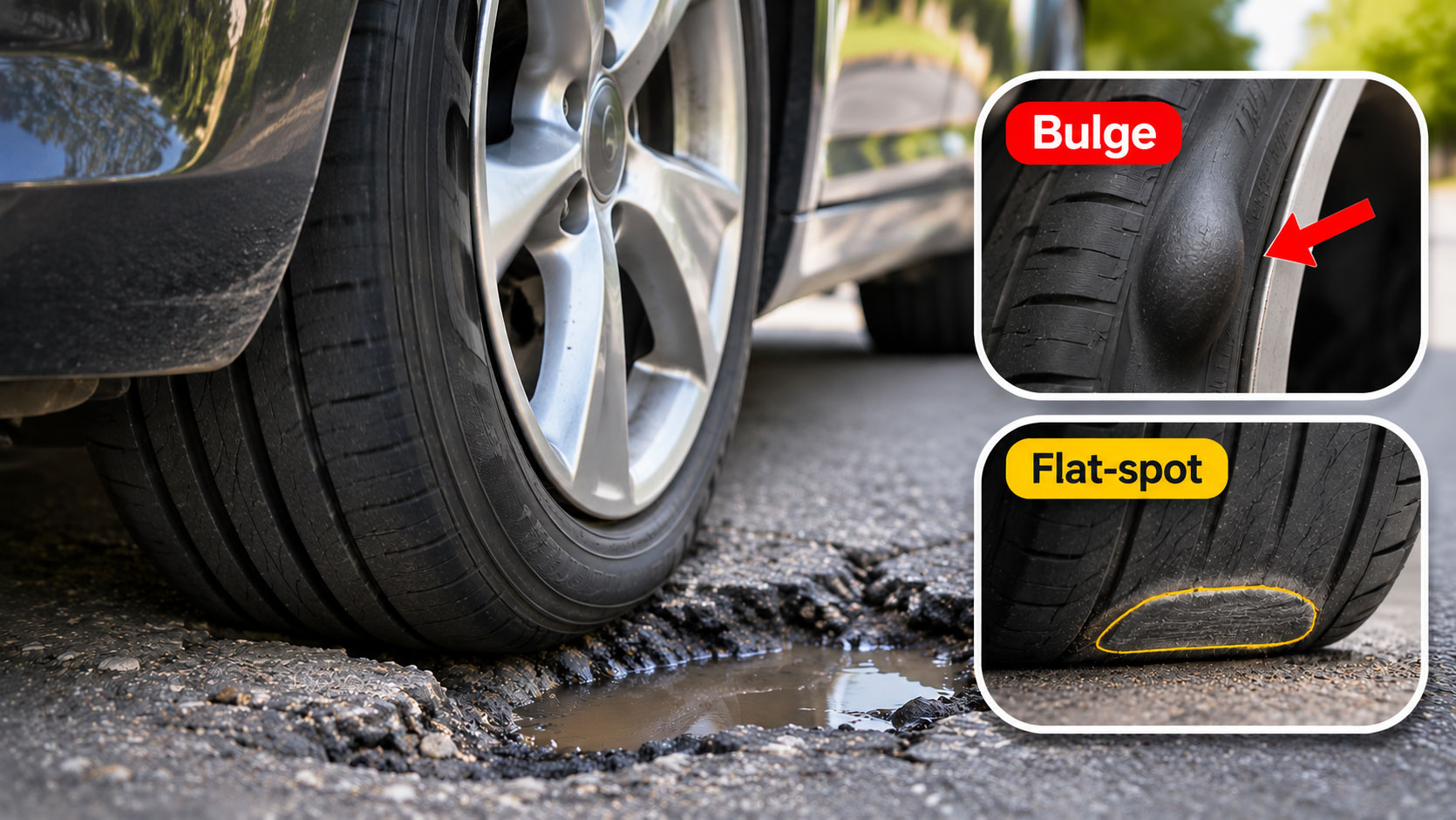
Tyre Damage

Flat-spotting is the much milder version of the same idea. Leave a car parked in one position for several weeks and the contact patch takes a temporary set, which you feel as a slight shake for the first few miles until the tyre warms and reshapes itself.

One thing to look for while you are down there: a bulge or split in the sidewall. A lump or blister means the structure inside has failed, and that tyre needs changing rather than inspecting again next month.

4. A buckled wheel

Kerbs and potholes bend rims as readily as they damage tyres. A bend of only two or three millimetres is enough to feel clearly at motorway speed, and it is often invisible until the wheel is spun on a machine.
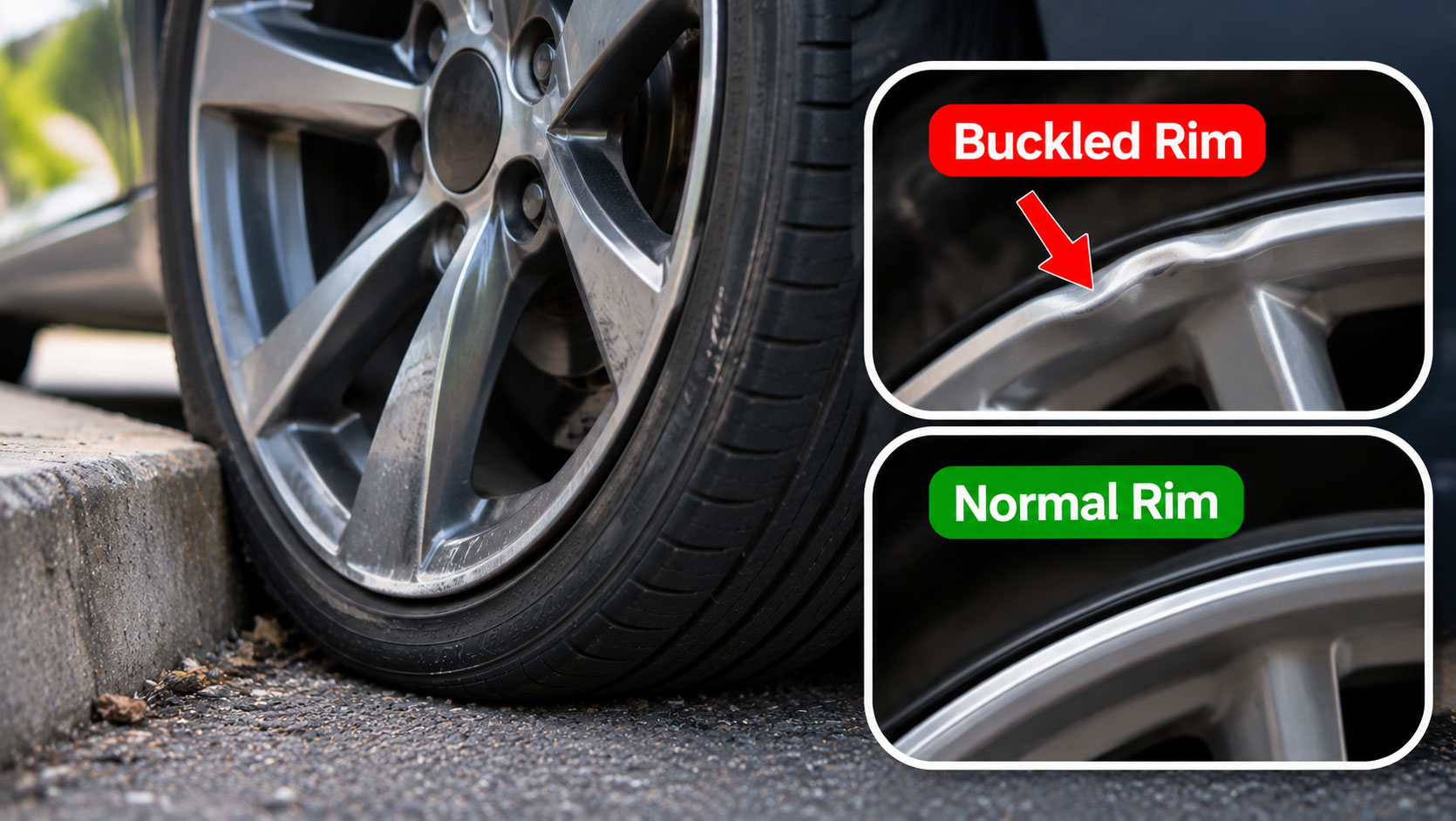
Buckled Rim Versus Normal Rim

Low-profile tyres make this more likely, because there is far less sidewall between the rim and the road to soak up the impact. If you have moved to bigger wheels with a shallower tyre, a firmer ride and the occasional buckle come with the territory.

5. Alignment angles that have slipped

Alignment describes the angles your wheels sit at relative to each other and to the road. Out-of-specification alignment rarely produces a strong vibration by itself, which is why people dismiss it. What it does instead is drag each tyre very slightly sideways for every mile you drive, scrubbing the tread into an uneven pattern — and that pattern then causes both the shaking and the noise.
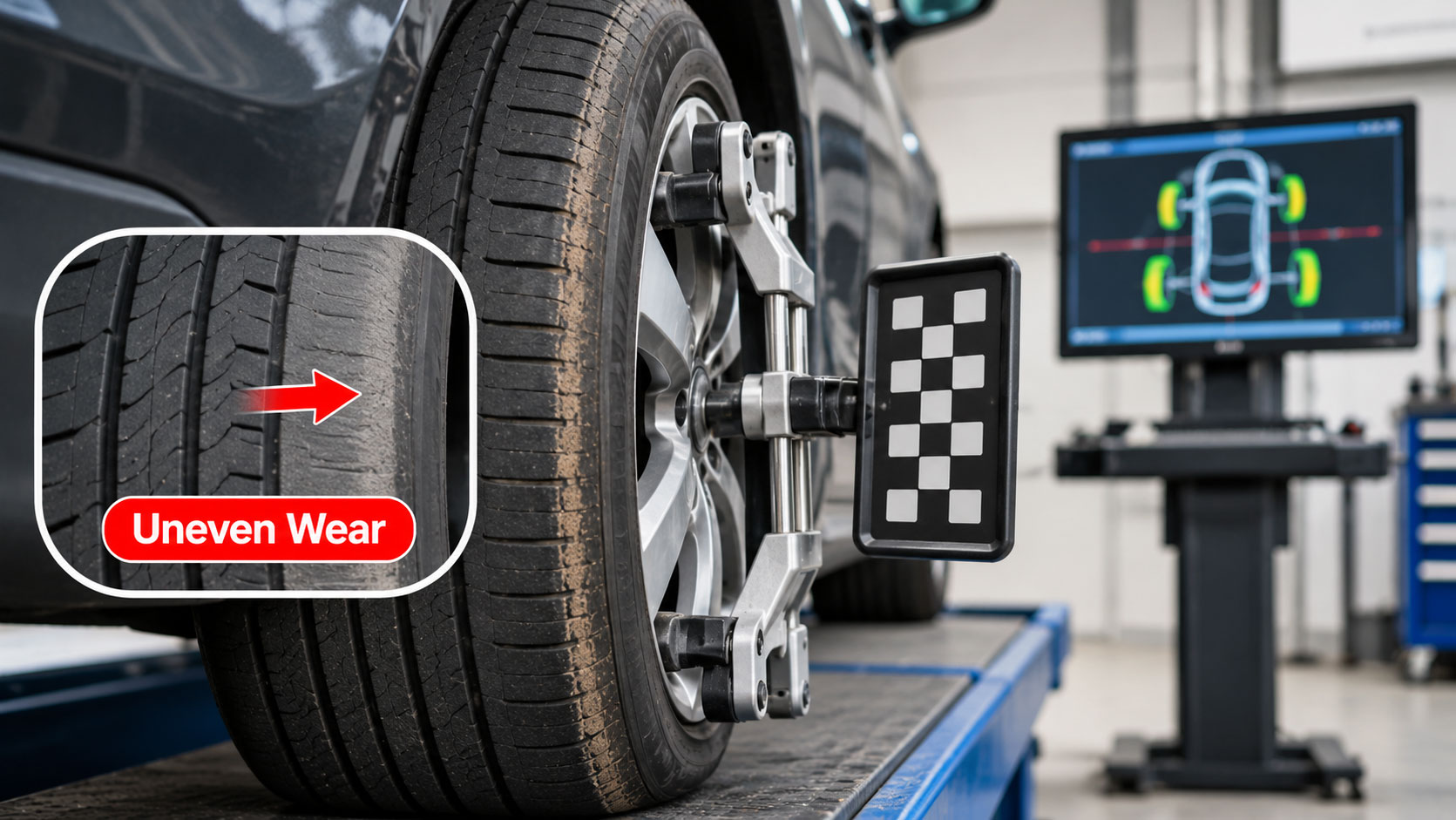
Uneven Tyre Wear

It is the slow-burn cause. Worth ruling out if you have already balanced the wheels and the problem is still there, or if you can see one edge of a tyre wearing faster than the other. There are a few clear signs your alignment needs checking that are easy to spot from the driver’s seat.

6. Worn suspension parts and bearings

Shock absorbers, bushes, ball joints and track rod ends all exist to hold the wheel steady against the road. When rubber bushes soften or a joint develops play, the wheel gains a few millimetres of movement it should not have, and that movement reaches you as a tremor through the wheel or a vague, floaty feeling at speed.
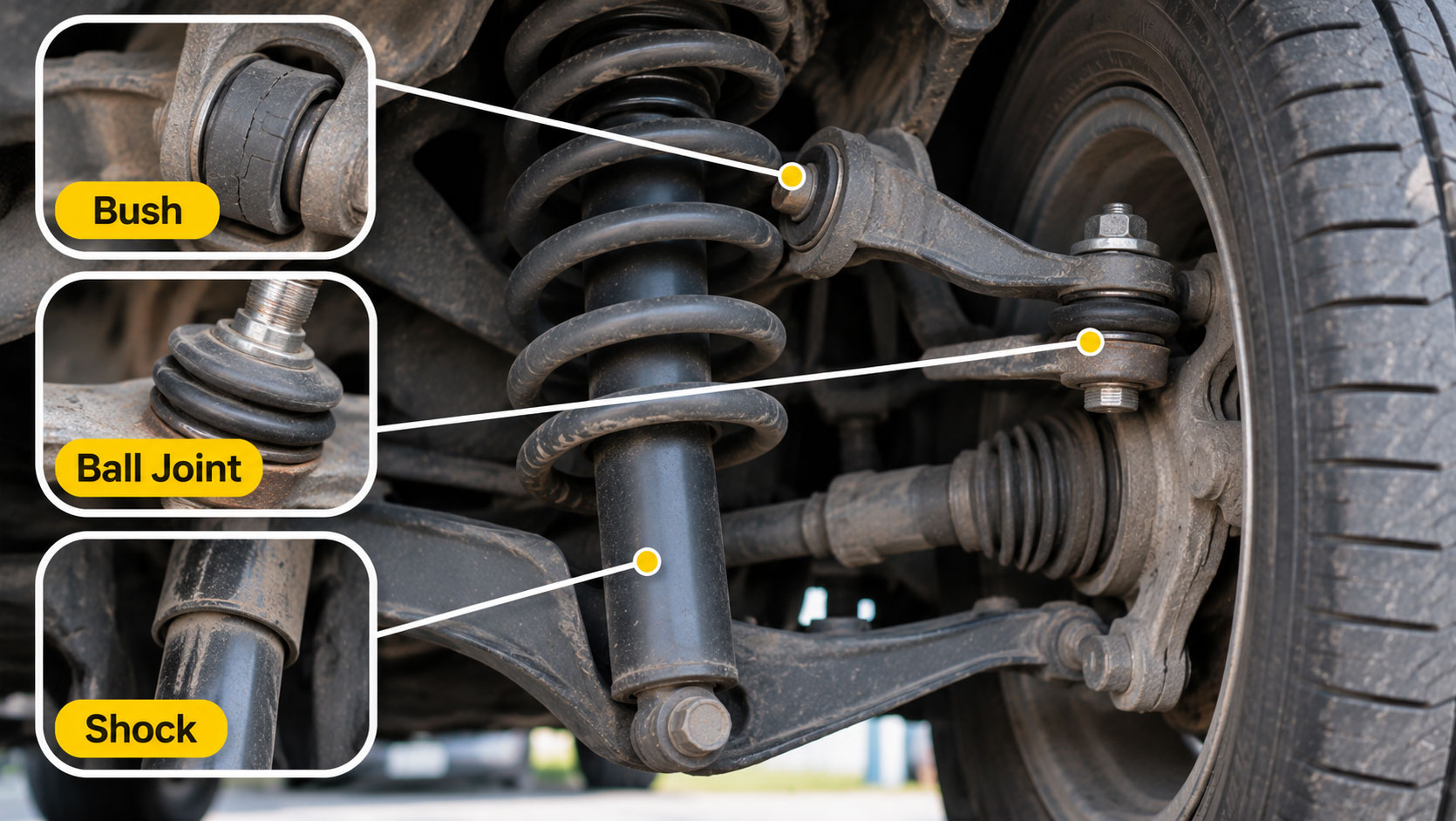
Suspension Components Diagnostic

Tired shock absorbers deserve special mention here, because they let the tyre bounce rather than stay pressed to the road. That bouncing is what carves the scalloped wear pattern covered further down, so a suspension fault you ignore today becomes a noisy tyre in six months.

7. Wheel nuts that were not torqued properly

Under-tightened nuts let the wheel sit very slightly off-centre on the hub. Over-tightened ones can distort the brake disc behind it. Either way you end up with a vibration that appeared immediately after a wheel was taken off and put back on.
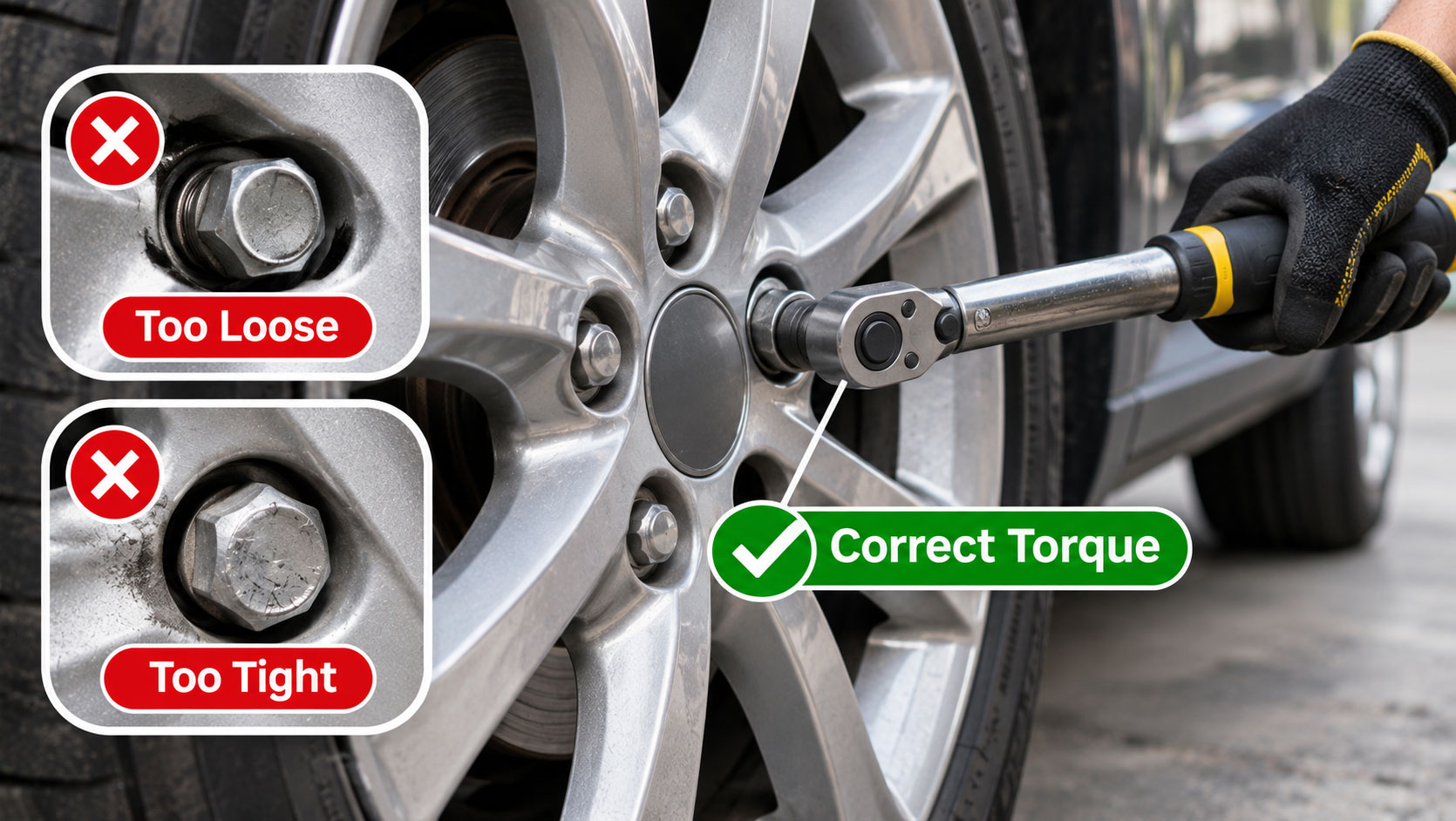
Correct Wheel Torque

If your shaking started the day after any wheel work, say so straight away — it is a strong clue and a two-minute check. It is also worth knowing what to do about a locking wheel nut, since a seized or missing one is often why a wheel ends up refitted in a hurry.

8. The simplest cause of all – something stuck to a wheel

Packed mud, compacted snow in the rim, a stone wedged firmly in the tread, or a balance weight that has fallen off will all upset a wheel enough to feel. Checking takes a minute and costs nothing, so do it before you book anything at all. More than a few callouts end with a technician pulling a flint out of a tread groove.
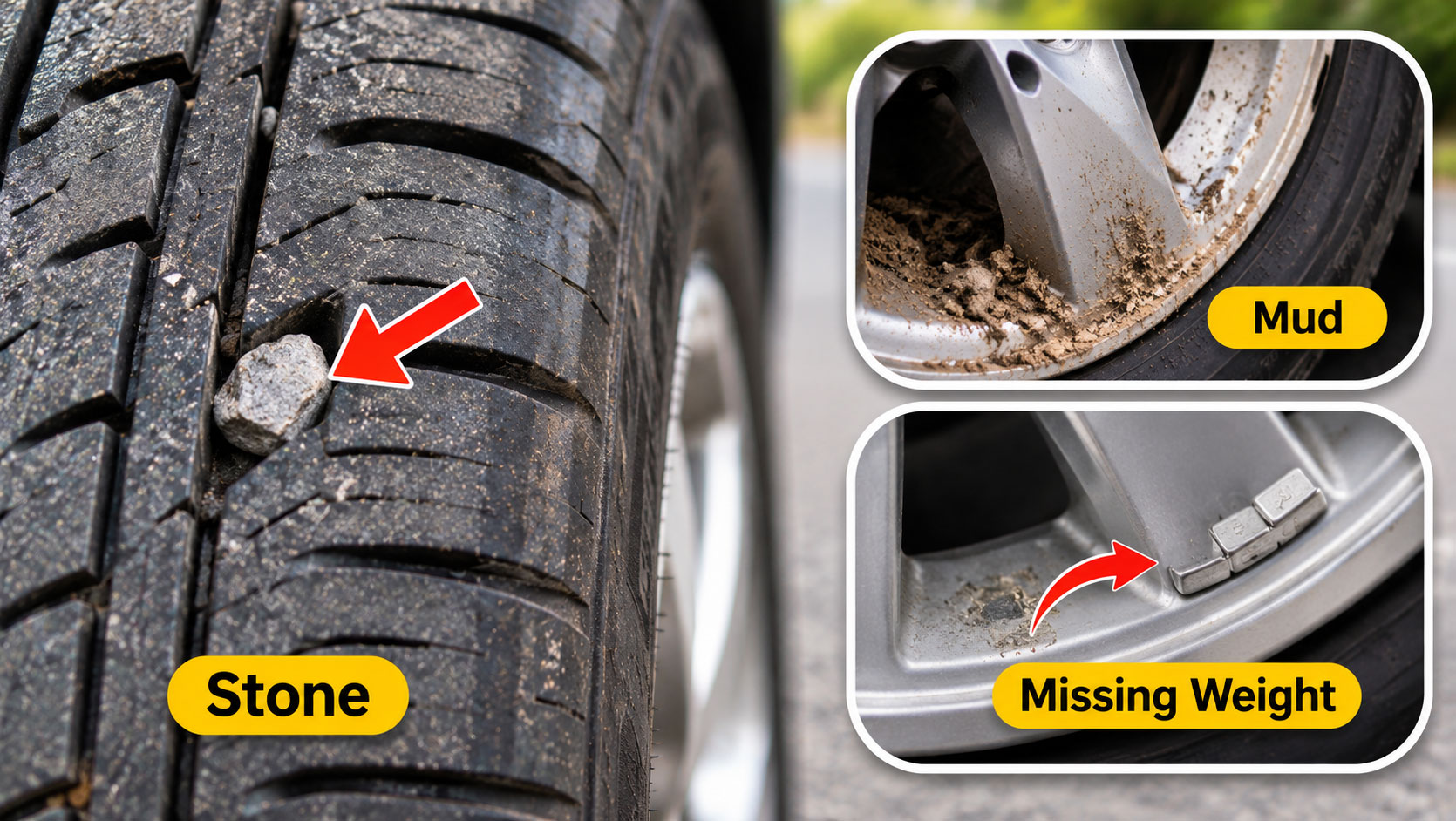
Common Tyre and Wheel

Speed where the shaking starts
What it usually points to
Next step
Present at all speeds, including under 30 mph
Tyre out of shape, buckled rim or suspension play
Have the wheel and tyre inspected off the car
Starts around 40 to 50 mph, worst at 55 to 70
Wheels out of balance
Balance all four wheels
Only noticeable above 70 mph
Small imbalance or a slight wheel buckle
Rebalance, then check the rim for runout
Only while you are braking
Uneven brake discs
Brake inspection – balancing will not help

Swipe the table sideways to see every column.

Why Your Tyres Are Noisy

How much tyre noise is normal?

Some noise is unavoidable and nothing to worry about. Tread blocks slap against the road surface, air is squeezed in and out of the grooves, and the tyre is a sealed chamber of air that resonates like a drum skin. All of that adds up to a background roar that rises with speed on every car ever built.

The question is never “is my car making tyre noise” — it is “has the noise changed”. A sound that has grown louder, altered in character, or appeared after new tyres were fitted is the one worth investigating.

1. Uneven and irregular tread wear

This is the single biggest reason a tyre becomes noisy over time. Once the tread surface is no longer smooth and level, every block meets the road a fraction out of step with its neighbour, and that irregularity is what you hear as sound.
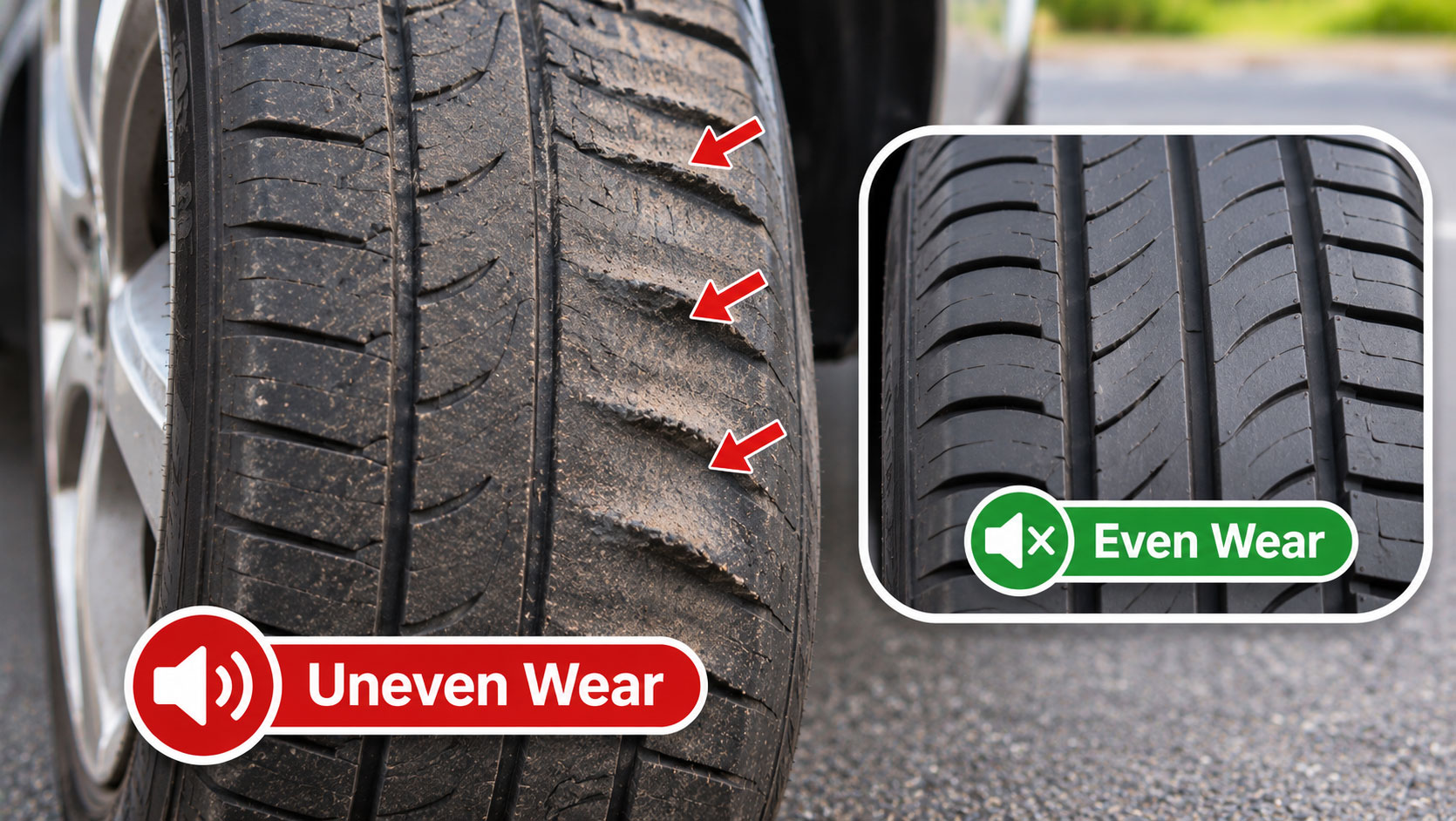
Uneven Tyre Wear Noise Comparison

The pattern of the wear tells you what caused it, which is why running a hand across the tread is worth more than looking at it.

Wear pattern
How it sounds
What caused it
Cupping – scalloped dips around the tread
Rhythmic drone that rises and falls with speed
Tired shock absorbers, or long-term imbalance
Feathering – blocks sharp one side, rounded the other
Rough roar that builds above 40 mph
Toe angle out of specification
Heel-and-toe – blocks worn like tiny steps
Low growl, very often mistaken for a bearing
Normal driving forces plus never rotating the tyres
Shoulder or centre wear
General hum that gets louder as tread drops
Pressures left too low or too high for months
Swipe the table sideways to see every column.

Worth Knowing: Cupping Does Not Smooth Itself Out

Replacing the worn shock absorbers stops the cupping getting worse, but the tyre stays scalloped and stays noisy for the rest of its life. Fix the cause, then plan to change that tyre rather than hoping it recovers. Knowing how long tyres normally last and how to read wear makes this easier to judge.

2. Pressures that have drifted away from the right figure

Under-inflation lets the shoulders of the tread carry more load than they should, so they scrub and wear fast while the middle stays untouched. Over-inflation does the reverse: it lifts the shoulders clear and runs the whole car on a narrow central strip, which makes the ride harsh and the drumming noticeably louder.
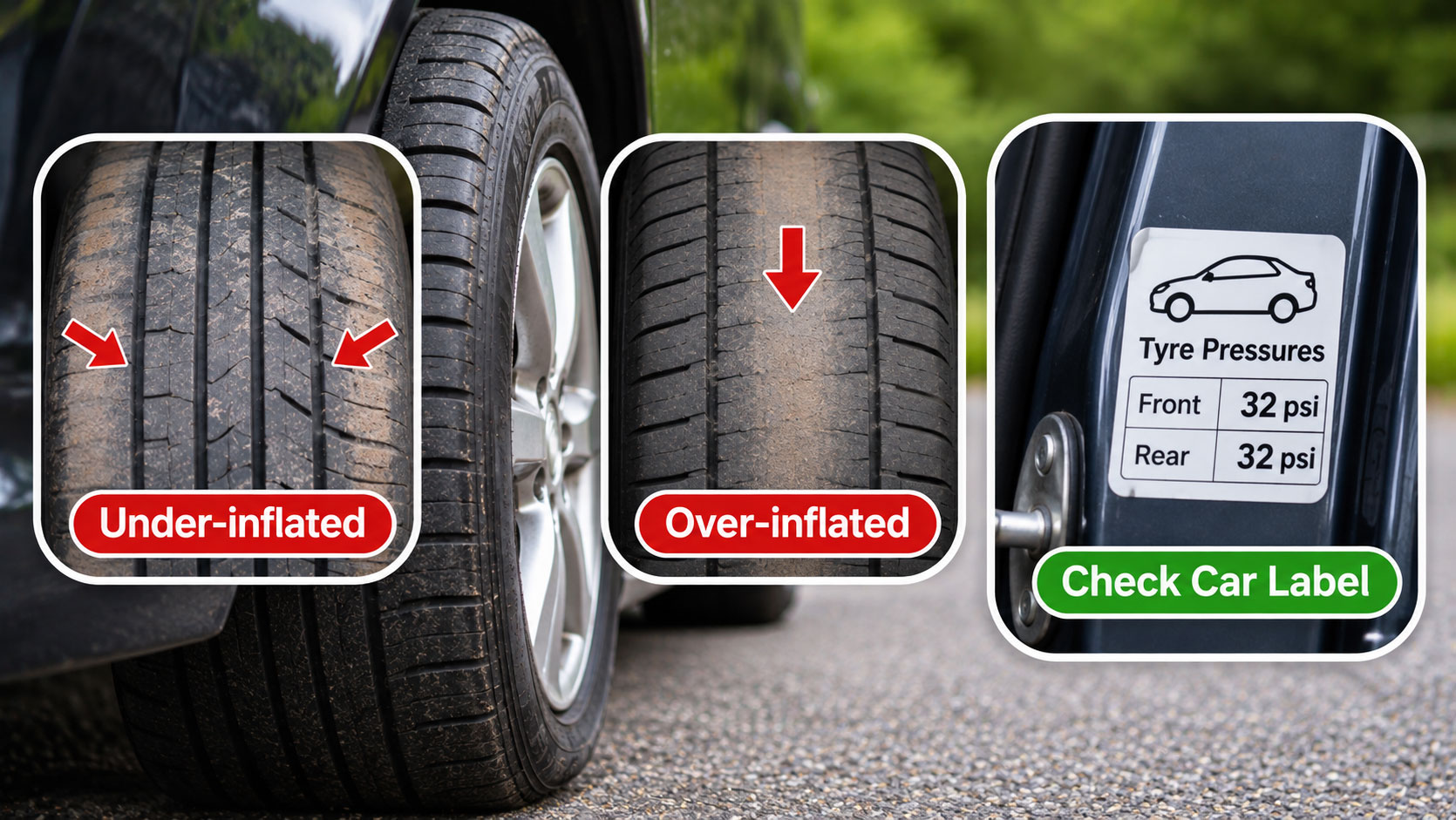
Tyre Pressure and Tread Wear

Both show up as noise long before they show up as a safety warning, and both are free to put right. The correct tyre pressure your car needs is printed in the driver’s door sill or inside the fuel flap, not on the tyre itself.

3. Tread that is simply worn down

This one surprises people: as tread wears away, tyres usually get louder, not quieter. Shallow grooves hold and release air differently, there is less rubber left to damp vibration, and more of the road’s texture passes straight through the carcass into the cabin.
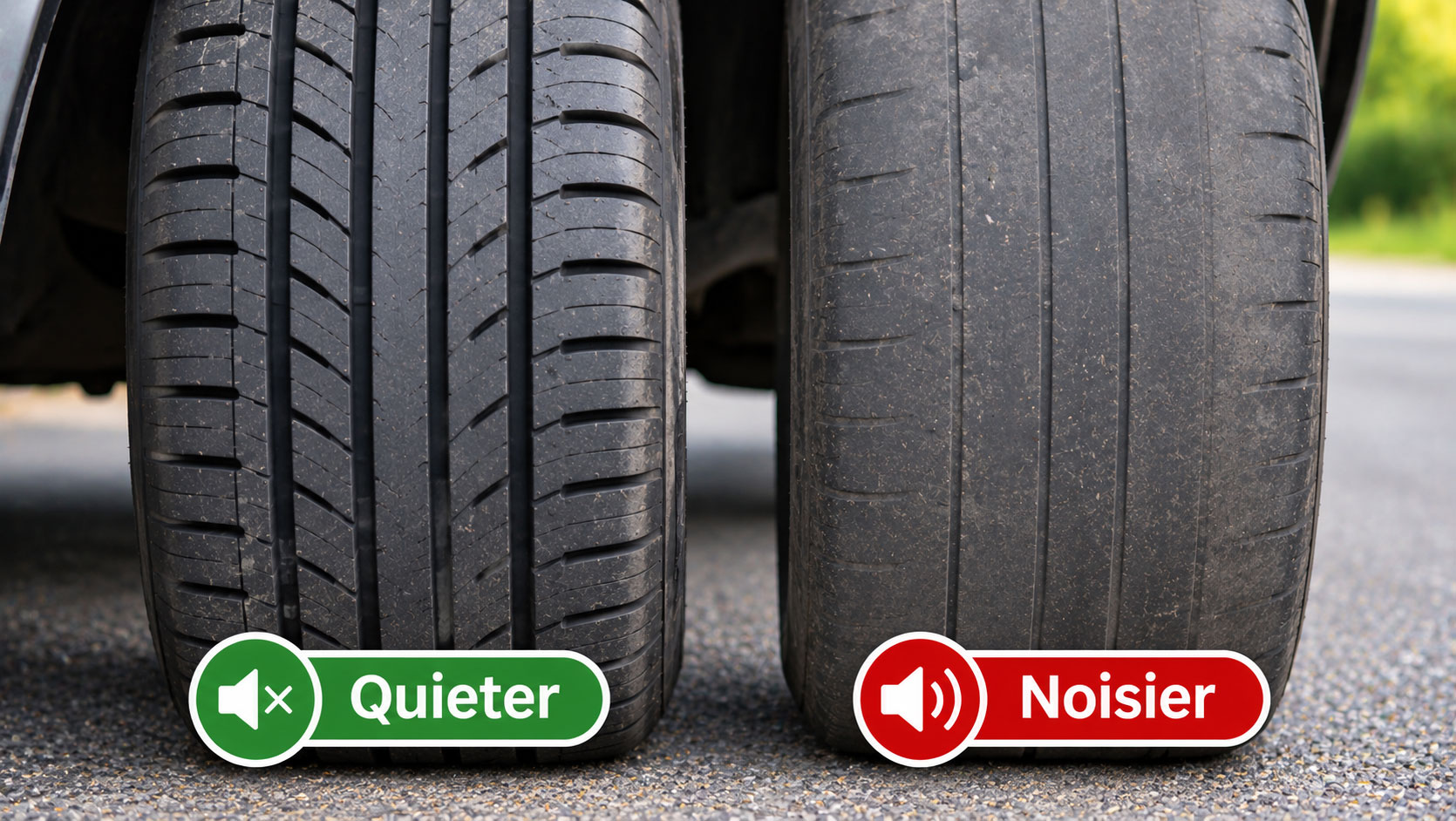
Quieter vs Noisier Tyres

If a set of tyres has slowly become a drone over the last year and the wear looks perfectly even, you may simply be hearing them reach the end of their useful life.

4. The type of tyre and the tread pattern itself

Chunky, widely spaced tread blocks are exactly what grips in snow, mud and loose ground — and exactly what hums and growls on dry tarmac. Winter tyres and all-terrain patterns are noisier than a standard summer tyre by design, not by fault.
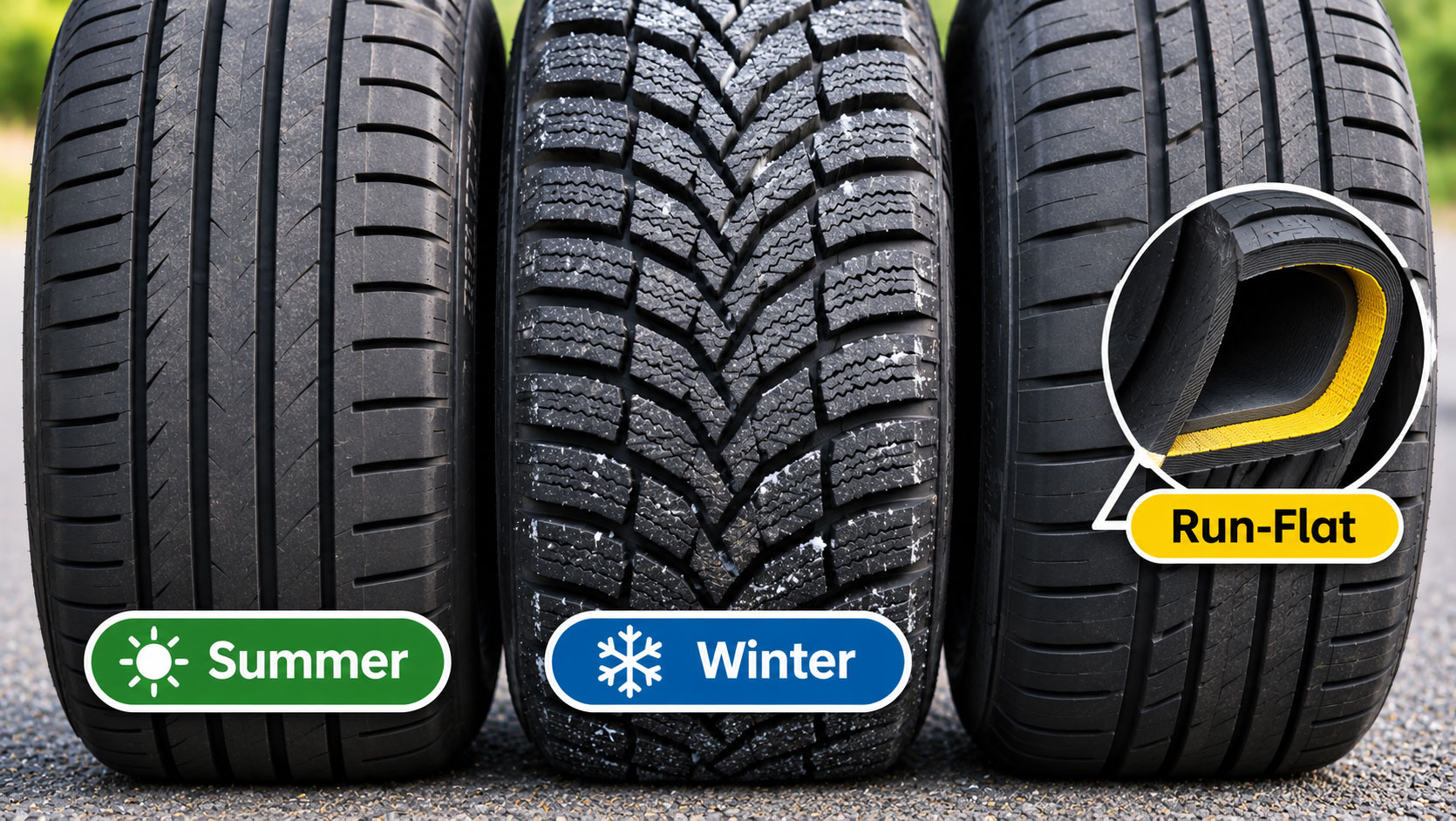
Summer,-Winter-&-Run-Flat-Tyres

Run-flat tyres are a similar story. Their reinforced sidewalls are stiff enough to carry the car with no air in them, and that stiffness passes more road noise and more road texture into the cabin than a conventional tyre would.

5. Mismatched tyres on the same axle

Two different tread patterns on the same axle generate two different noises at the same road speed. The two sounds then interfere with each other, and what you hear is a warble or a slow beat that neither tyre would produce on its own.
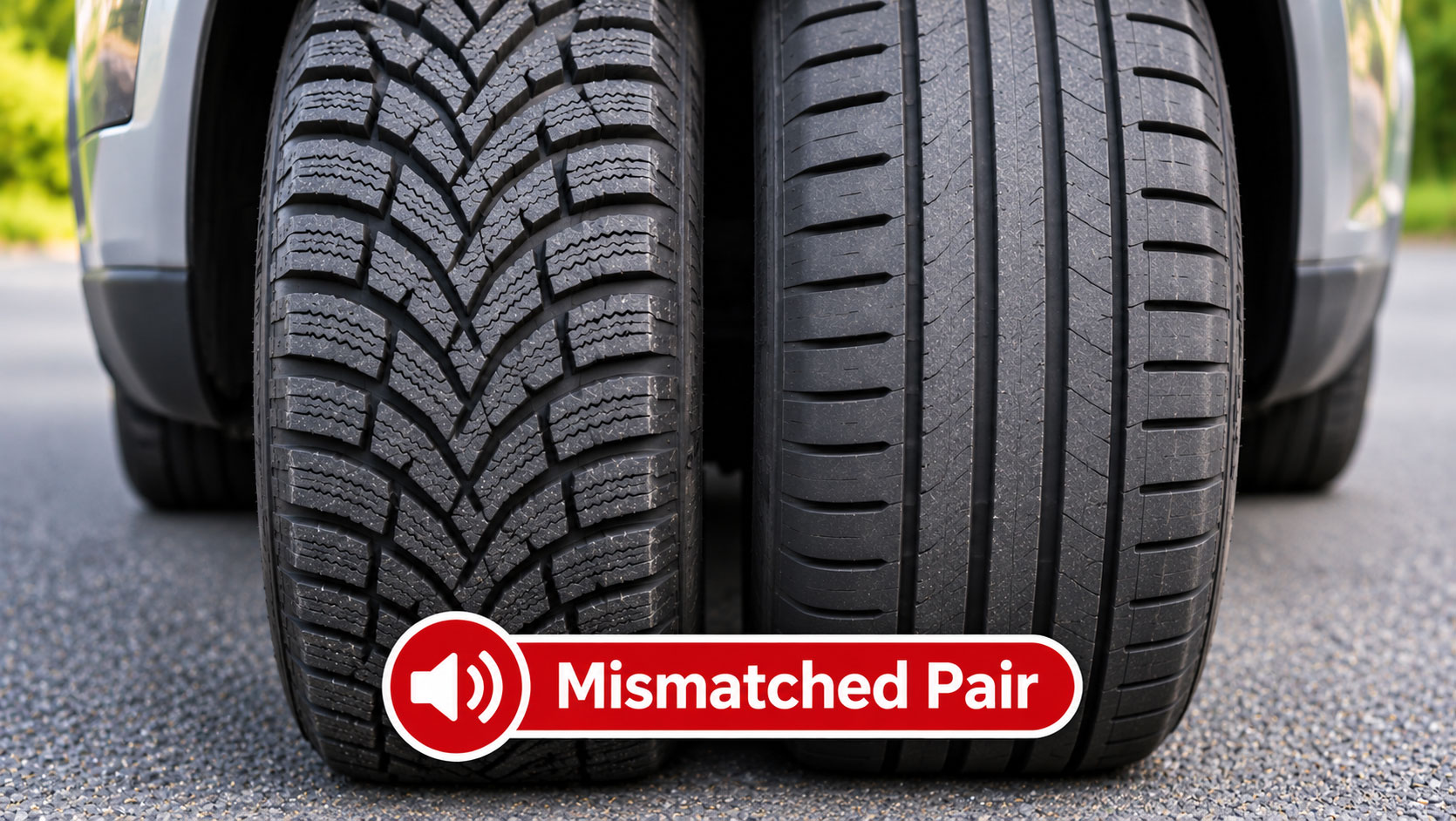
Mismatched Tyres Tread Comparison

It is also the reason fitters recommend replacing tyres in pairs rather than one at a time — matched pairs across an axle keep the noise, the grip and the wear consistent.

6. A worn wheel bearing doing a very good impression of a tyre

A failing bearing produces a hum that rises and falls with road speed, which is precisely what tyre noise does. This is the most commonly misdiagnosed sound on the list, and plenty of people have bought four tyres to cure it.
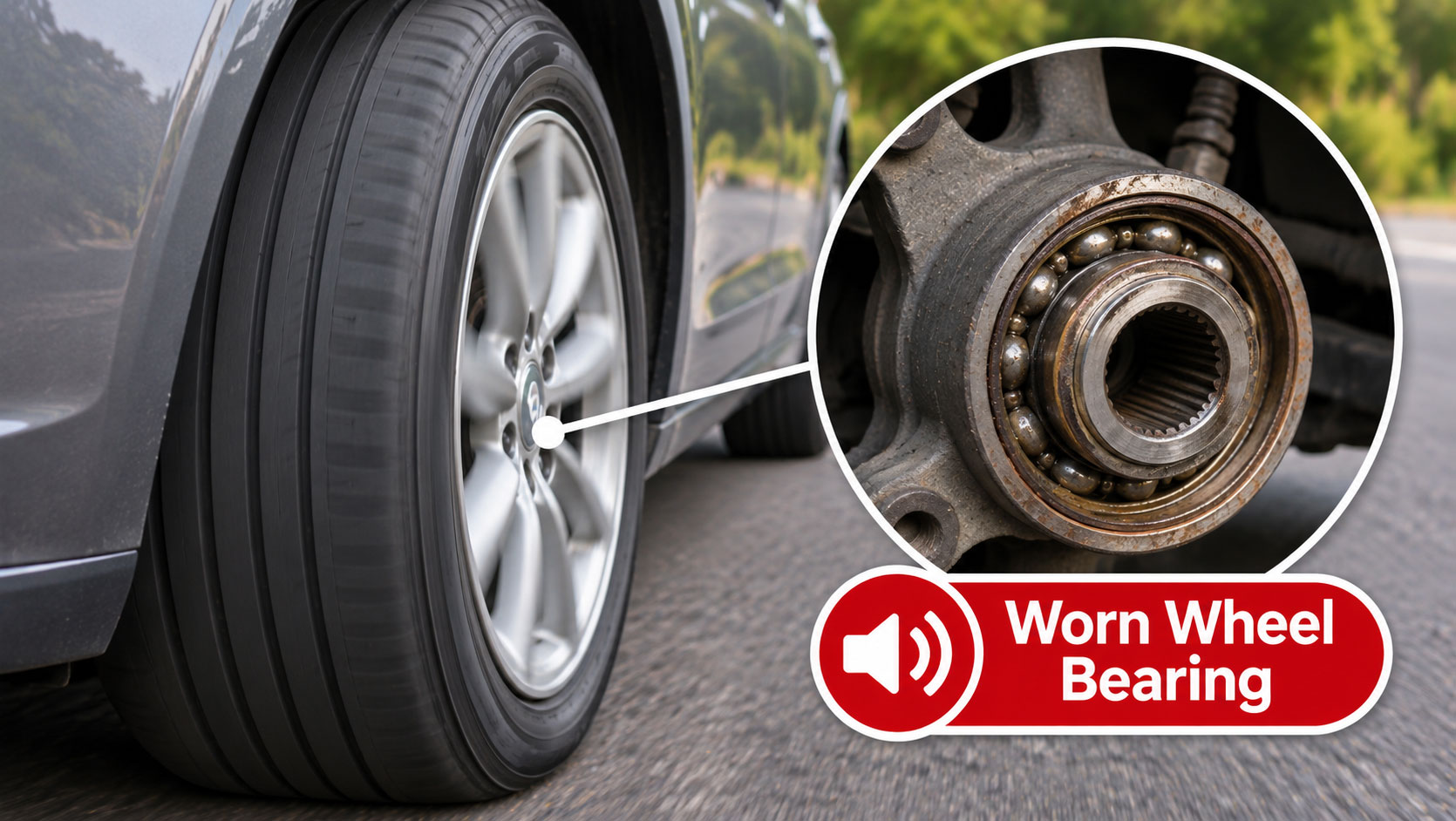
Worn Wheel Bearing

The tell is steering load. Find a quiet, empty road, hold a steady speed, and sweep very gently left and then right. A bearing hum will grow clearly louder in one direction and fade in the other, because you are shifting weight onto and off the bad side. Tyre noise barely changes at all. If the hum has started to sound like grinding or rumbling, get it looked at the same week.

7. The road surface, not your car

Coarse chipped tarmac can add several decibels on its own, and some concrete motorway sections produce a pronounced roar in every car that drives over them. If your noise appears on one stretch of road and vanishes on the next, your tyres are reporting the surface rather than failing.
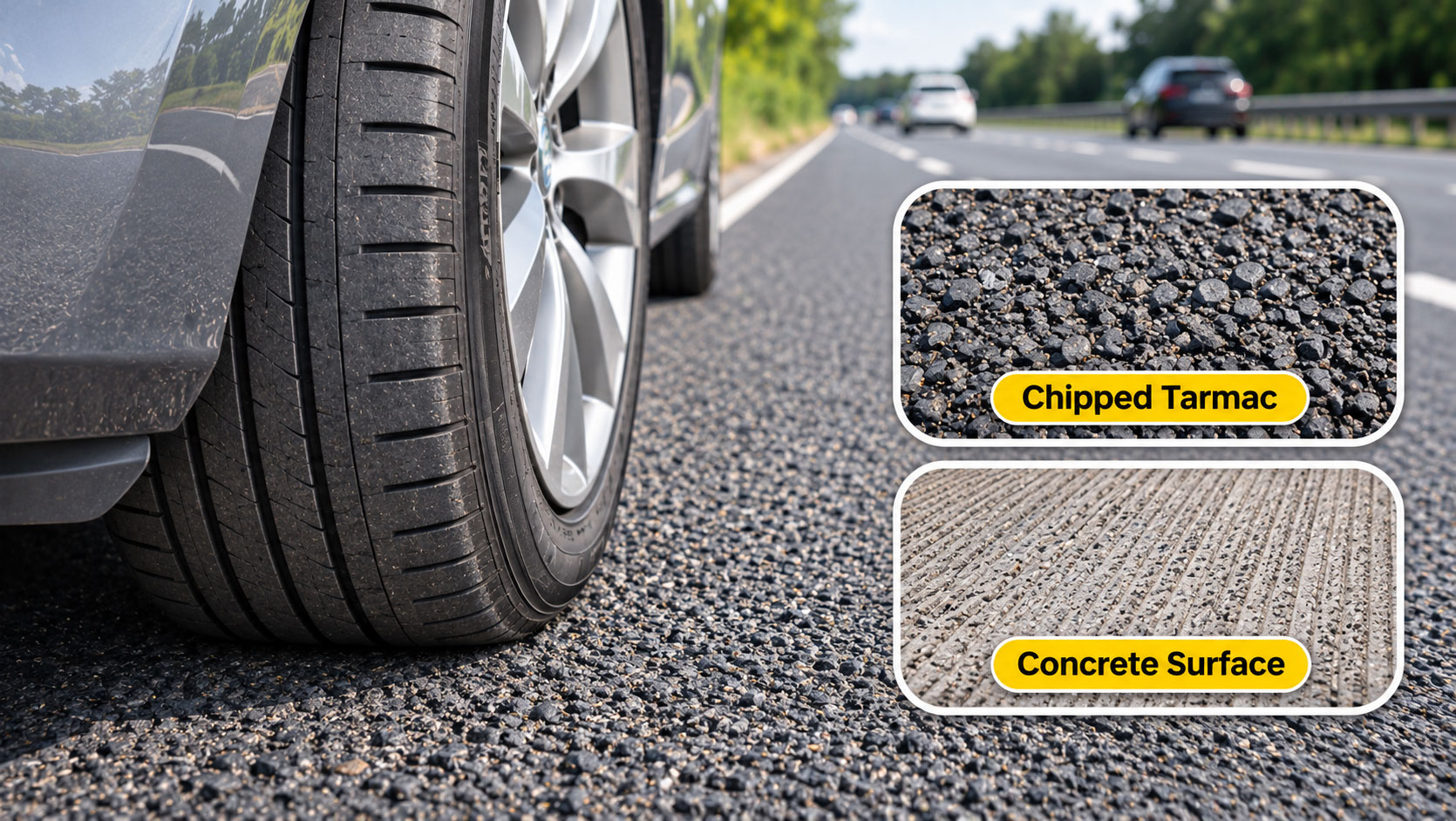
Tyre and Road Surface Textures

Tyres built for low rolling resistance and better fuel consumption are often slightly louder for the same reason — a harder, lower-rolling-resistance compound transmits more of what it rolls over.

Quick Test: Is It the Tyres or the Road?

When Shaking and Noise Arrive Together

When both symptoms turn up at once, you are usually looking at one fault rather than two. The vibration is the movement; the noise is that same movement turned into sound a few thousand miles later. By far the two commonest single explanations are a wheel that has been out of balance long enough to wear the tread unevenly, and alignment that has been out of specification for months.

That matters for how you spend your money. Replacing noisy tyres without correcting whatever wore them out buys you a quiet car for a while and then hands you the identical problem on a new set of rubber.

Fix the Cause Before You Fix the Symptom

  1. Correct the alignment or suspension fault that is doing the damage.
  2. Balance all four wheels so the wear stops repeating.
  3. Only then replace the tyres that are already too worn or scalloped to recover.

Done in that order, one set of tyres lasts the way it should. Done backwards, you pay twice.

The Fixes, and What Each One Actually Cures

Each of these jobs does one specific thing. Knowing which is which stops you paying for an alignment when you needed balancing, or a set of tyres when you needed a shock absorber.

Wheel balancing

The wheel is spun on a machine that measures exactly where the heavy spot sits, and small weights are added to cancel it out. It takes roughly fifteen minutes per wheel. It cures speed-related shaking caused by uneven weight distribution, and it should be done every single time a tyre is fitted.
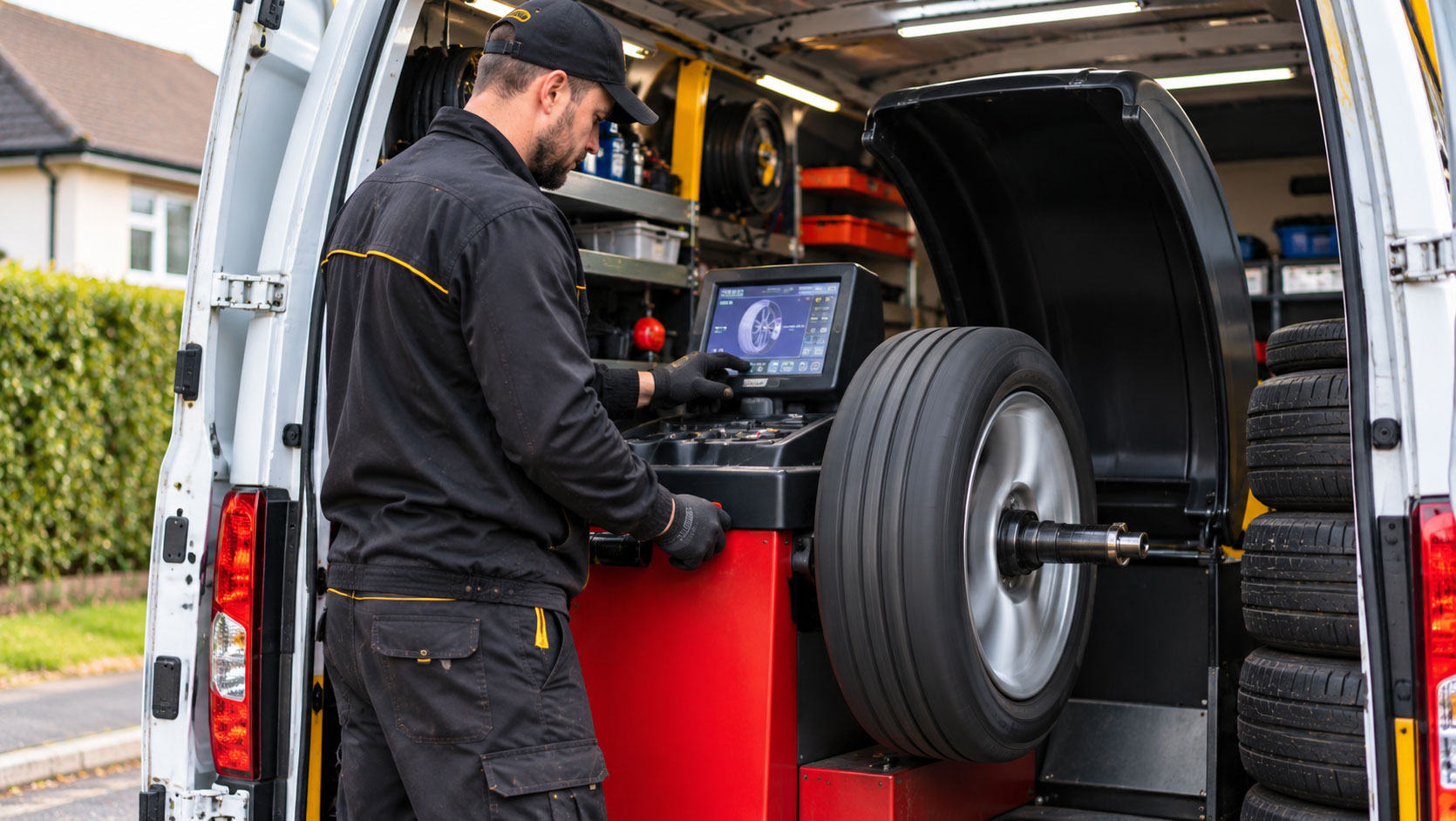
Mobile Tyre Van Wheel Balancing


What it will not do is straighten a buckled rim, correct an alignment angle, quieten worn tread, or touch a brake judder.

Four-wheel alignment

This sets the angles your wheels sit at back to the figures your manufacturer specified. It cures pulling, off-centre steering and the feathered wear that causes roaring, and it protects the tyres you already own from being scrubbed away early.
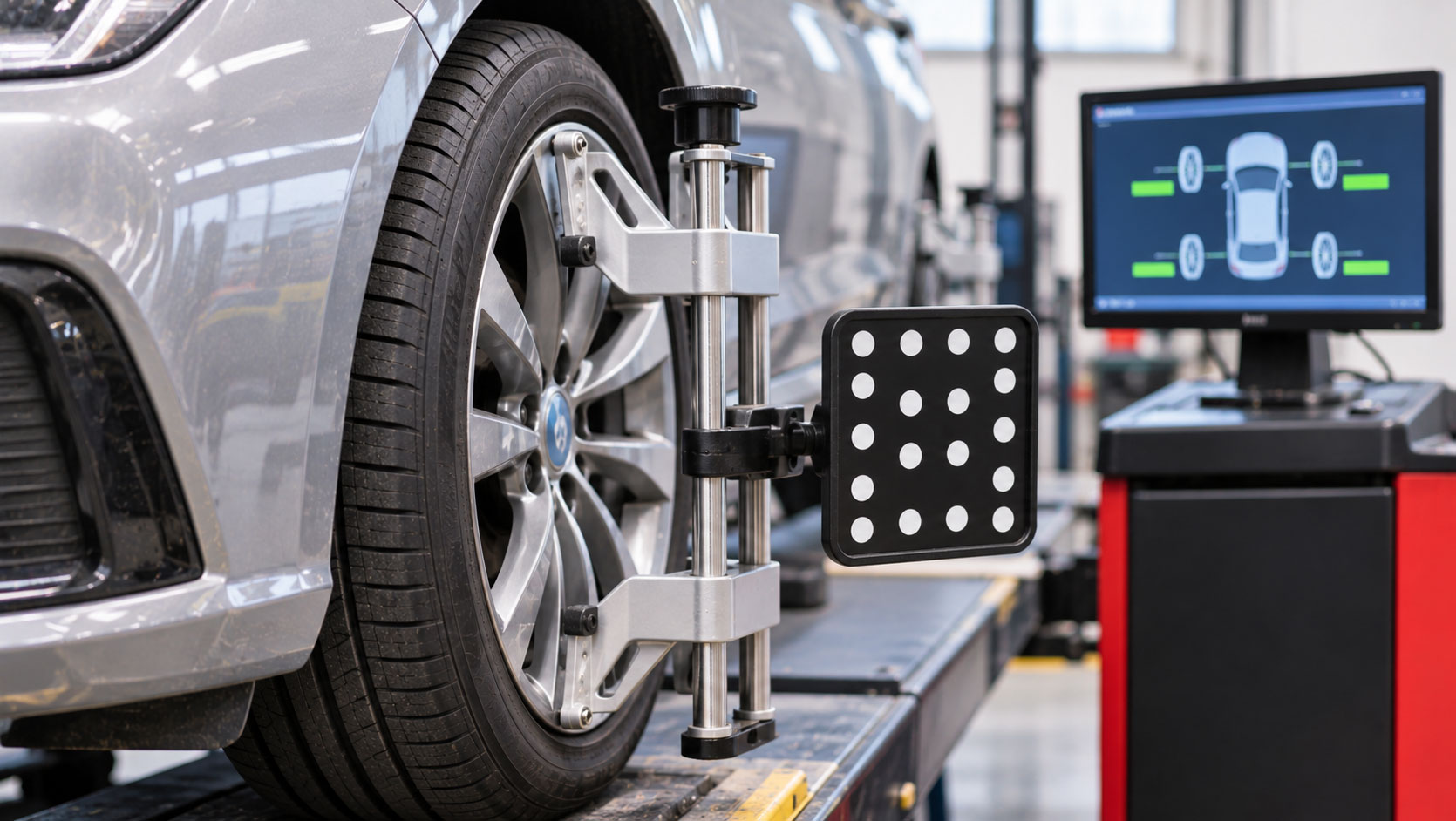
Four Wheel Alignment

It will not remove a vibration that is already being caused by imbalance, and it cannot undo wear that has already happened.

Rotating or repositioning tyres

Moving tyres between positions spreads the wear around before any single pattern becomes permanent. It is the least costly way to keep heel-and-toe wear in check on a front-wheel-drive car.
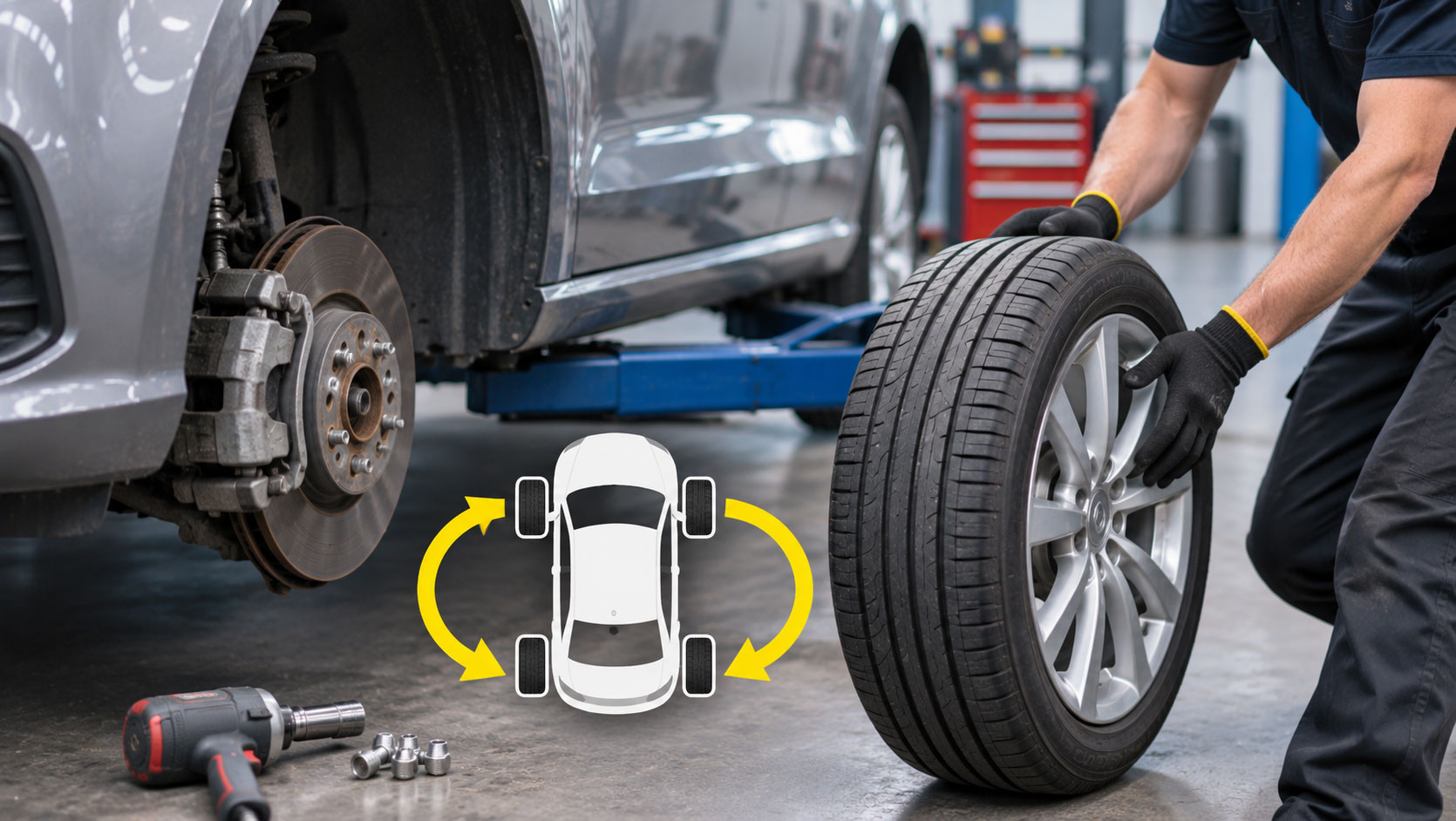
Wheel Rotation

Check your handbook first, though — directional tread patterns and staggered front-to-rear sizes both limit what you are allowed to move where.

Replacing the tyre

Sometimes this is the only honest answer. Once the tread is scalloped, a belt has shifted inside the casing, or the sidewall is damaged, no amount of balancing will quieten it and no alignment will bring it back.
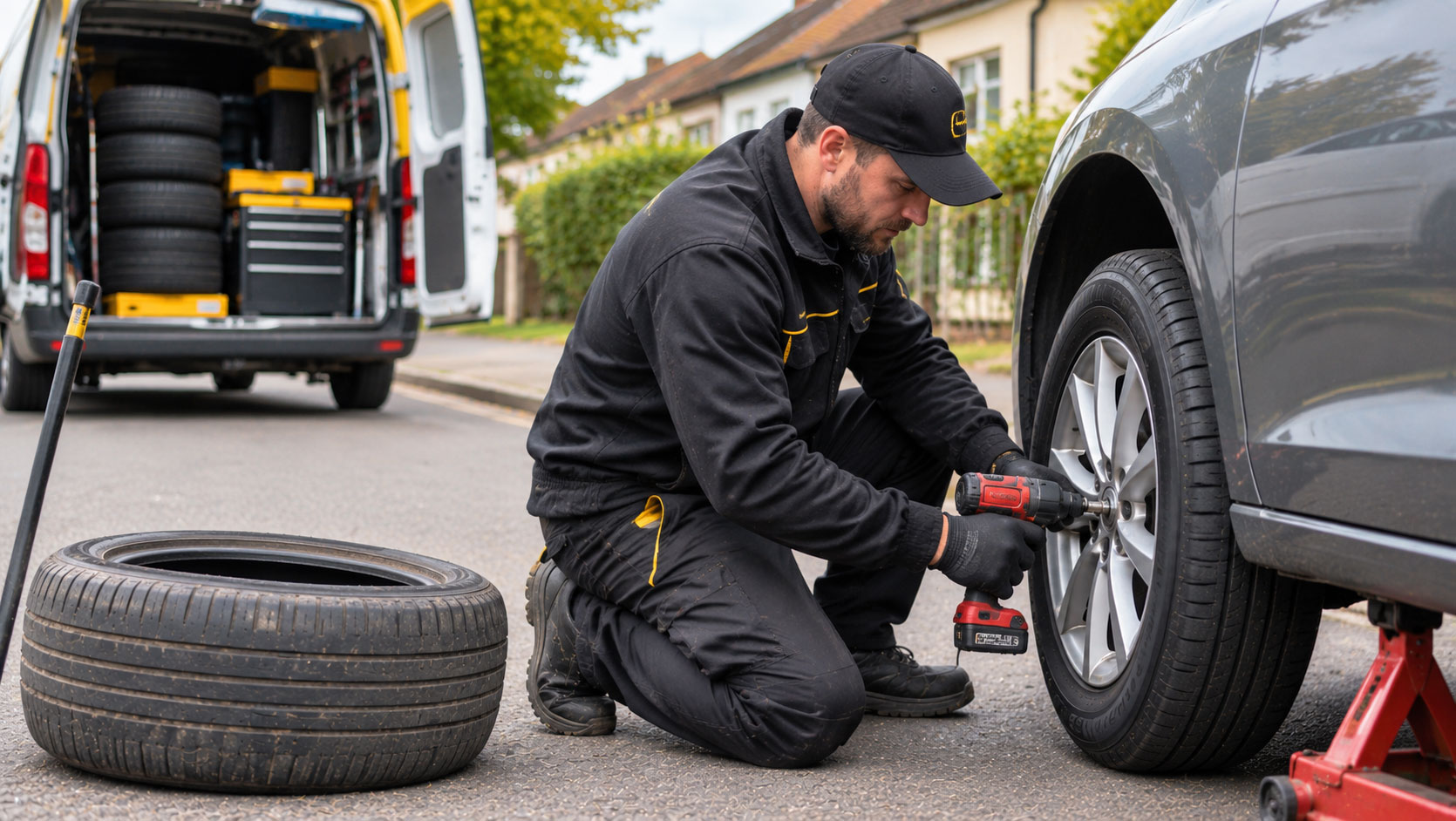
New Tyre Fitting

If you are choosing replacements, it is worth reading up on how mid-range tyres compare and what you get at the budget end before you decide, because noise and comfort vary far more between models than most buyers expect.

Suspension and bearing repairs

These are the parts that allow every other fault to happen. Replacing tired shock absorbers, worn bushes or a failing bearing stops the cycle of cupping and repeat vibration, and it restores the steady, planted feel the car had when it was newer.
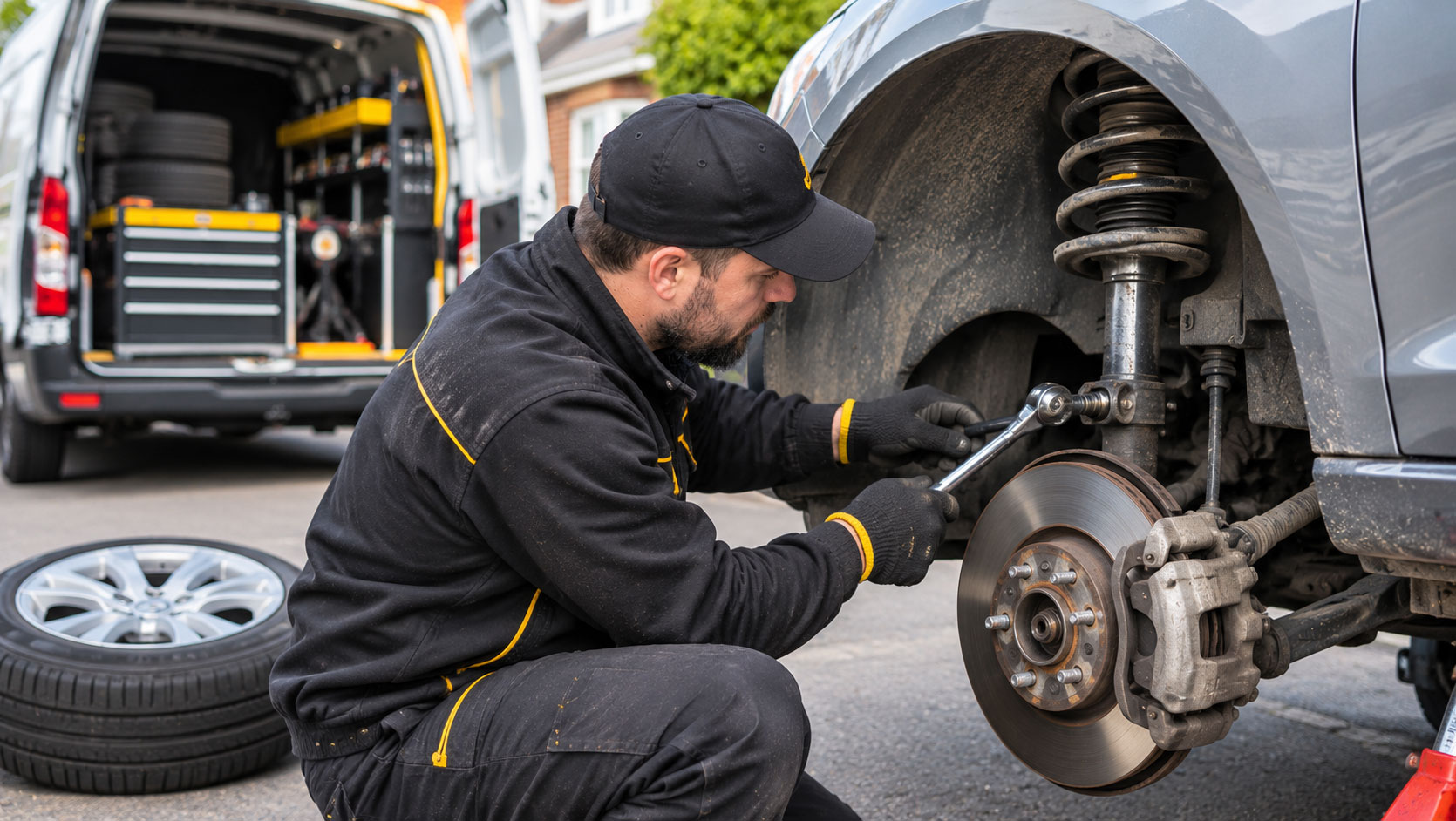
Mobile Mechanic Repairing Car Suspension

Expect to need balancing afterwards too, since the wheels normally come off for the work.

The fix
What it cures
What it will not cure
Wheel balancing
Speed-related shaking from uneven wheel weight
Worn tread, alignment faults, brake judder
Four-wheel alignment
Pulling, off-centre steering, feathered wear
A vibration already caused by imbalance
Rotating tyres
Uneven wear building up on one axle
Wear patterns that have already set in
New tyre or matched pair
Cupped, scalloped, thumping or damaged tyres
The underlying fault that wore the old one out
Suspension and bearing repair
Floaty steering, bearing hum, repeat cupping
Imbalance – the wheels still need balancing after
Swipe the table sideways to see every column.

Work Through the Fixes in This Order

  1. Check all four pressures cold and clear anything stuck to the wheels or tread.
  2. Have all four wheels balanced and the valves checked.
  3. If the car still pulls, roars or wears unevenly, book an alignment check.
  4. Replace any tyre that is worn, cupped, thumping or damaged.
  5. Investigate suspension and bearings if the problem comes back.

Steps one to four can all be done on your driveway. Having your tyres fitted at your home means the car does not have to be driven to a garage while it is vibrating, and same-day fitting near you is available when the problem cannot wait.

Choosing Quieter, Smoother Tyres

What the noise figure on a tyre label actually means

Every new tyre sold in the UK carries a label with a noise figure in decibels. Here is the part almost everybody misses: that figure measures the noise your tyre makes outside the car, for the benefit of people who live near busy roads. The UK tyre labelling rules state plainly that it is not the tyre noise heard inside the vehicle.

Newer labels also show a noise class of A, B or C beside the decibel value, with A the quietest of the three. Because decibels are a logarithmic scale, a difference of around 3 dB is roughly the smallest change most people can actually hear.
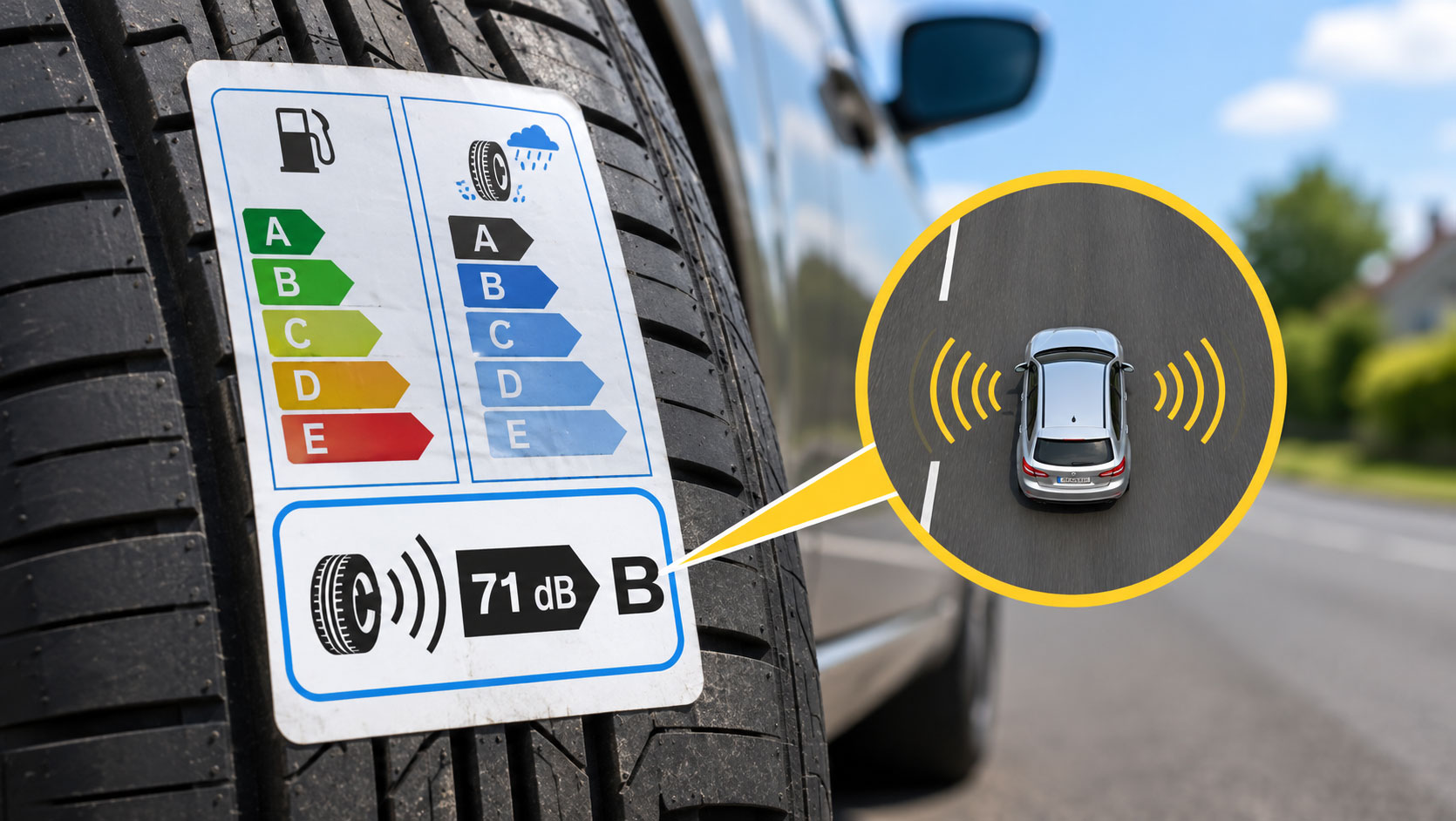
Tyre Noise Label

So the label is genuinely useful for comparing two tyres against each other. It just cannot promise you a quiet cabin.

Noise class
What it means
What you will notice
A
The lowest external rolling noise of the three classes
The quietest option on paper, though your car still decides
B
Mid band, roughly 3 dB above a class A tyre
Hard to separate from an A in ordinary driving
C
At the current upper limit for external noise
Usually the chunkier, grippier, more aggressive patterns
Swipe the table sideways to see every column.

Tyres with sound-absorbing foam inside them

Several manufacturers now bond a layer of polyurethane foam to the inside of the tyre. The reason goes back to that drum-skin effect: a tyre is a sealed chamber of air, and that air resonates as the tread passes over rough tarmac. The foam soaks up the resonance before it can travel through the wheel and suspension and into the cabin as a buzzing or droning note.

This is the one piece of tyre technology aimed squarely at cabin noise rather than external noise, which is why it has spread fastest on electric cars. With no engine sound to mask it, tyre noise is suddenly the loudest thing in the car.

Brand technology
How it works
What the maker claims
A custom polyurethane foam ring bonded inside the tyre
Around 20% less perceived cabin noise; supplied as original equipment
A foam absorber attached beneath the tread area
Up to 9 dB(A) off the rolling-noise frequencies drivers find most annoying
A sound-absorbing sponge on the inner wall of the tyre
Roughly 2 to 3 dB less noise, which halves perceived loudness
Swipe the table sideways to see every column.

A Detail That Confuses Buyers

A foam-lined tyre will sometimes show a higher decibel figure on its label than an ordinary tyre of the same size. That is not an error. The label measures noise outside the car and the foam works on the inside, so the two numbers are answering completely different questions. Judge foam-lined tyres on cabin comfort, and judge the label figure on external noise.

The best tyre for grip is not automatically the quietest

Worth saying plainly, because it catches a lot of buyers out. A top rated model in a magazine test may have earned that score on wet handling or braking rather than on comfort, and the two do not always travel together. Equally, there are affordable tyres that ride quietly and premium ones that do not.

If a quiet cabin is genuinely what you are after, say that first and judge the shortlist on it. Grip still matters more for safety — just be clear which one you are buying.

What to Ask For When You Buy

If you are weighing up where to spend, our breakdown of which tyre brands are worth the money is a sensible place to start, because comfort and noise are where the gap between tiers shows up most clearly.

Keeping It Quiet and Smooth

The monthly habit that prevents most of this

Nearly every cause in this guide begins as a small pressure or condition problem that nobody noticed for months. TyreSafe recommends the same simple routine: check air pressure, condition and tread depth once a month, and again before any long journey.

Five minutes, twelve times a year. That is the whole trick.

Your Five-Minute Monthly Routine

If you want the fuller version, our tyre maintenance habits cover the checks worth doing seasonally as well, and it is worth running through them before a long drive rather than discovering a problem at a motorway service station.

Driving habits that quietly cause vibration and noise

Kerbs are the main offender. A single firm kerb strike at parking speed can knock a balance weight off, buckle a rim very slightly, or shift a belt inside the tyre — and none of those announce themselves until you next reach 60 mph.

Carrying heavy loads at standard pressures is the second. Most handbooks list a higher laden pressure for a reason, and running underinflated with a full car scrubs the tread shoulders away quickly.
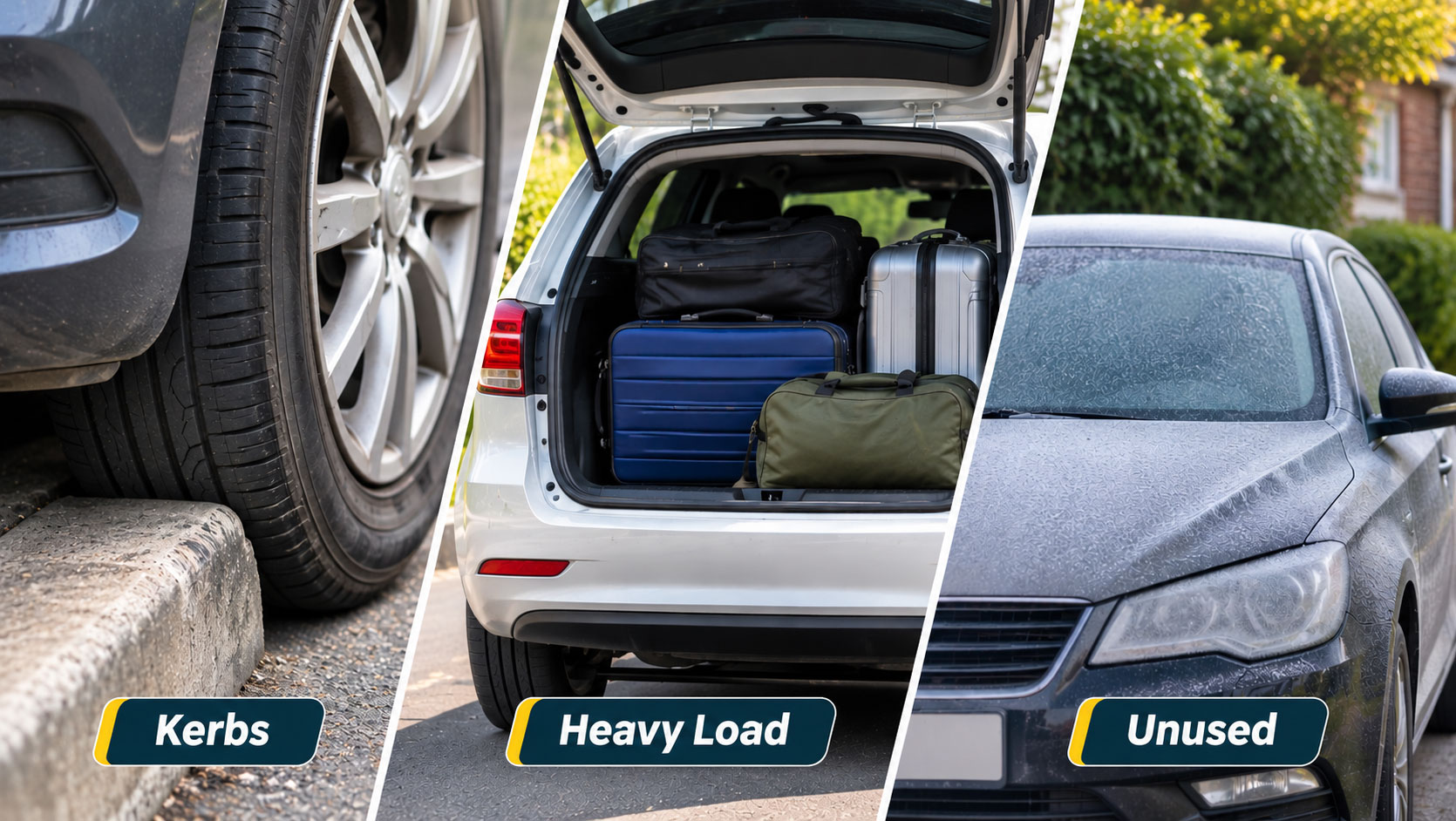
Driving Habits

Leaving a car unused for weeks is the third, though this one is largely harmless. Expect a slight shudder for the first mile or two until the flat spots work out.
When to Stop Driving and Get Help

Most vibration and tyre noise is a comfort problem you can sensibly book in for next week. A small number of cases are not, and they are worth knowing by heart.

Stop and Get Help If You Notice Any of These

In those situations, pull over somewhere safe rather than pressing on to the next junction. Roadside tyre help will come to you, which is far safer than driving a car that is deteriorating. It is also worth knowing in advance how far you can drive on a flat tyre and what to do if a tyre bursts at speed, because both decisions are much harder to make calmly at the roadside.

Key Takeaways

If your car vibrates or your tyres have become noisy, work through it in this order:

  1. Note where you feel it, the speed it starts, and what changes when you brake or steer.
  2. Steering wheel shake points to the front; seat and floor vibration points to the rear.
  3. Juddering only under braking is brakes, not wheels.
  4. A drone or roar that rises with speed is normally uneven tread wear.
  5. A hum that changes when you steer is normally a wheel bearing.
  6. Check pressures and clear the wheels before paying for anything.
  7. Balance first, align second, replace tyres third, suspension last.
  8. Always fix the cause before you replace the symptom.

Quick Diagnostic Checklist

Final Thoughts

Vibration and tyre noise are rarely mysteries. They are your car pointing at a specific wheel, and the answer is nearly always one of four things: balancing, alignment, pressures, or a single tyre that has quietly reached the end of its life. Diagnose it in the right order and you usually spend less than you feared.

If you already have tyres and simply need them fitted, balanced and set up properly, The Mobile Tyre Fitter comes to you and does the job at your home, your workplace or the roadside — no garage appointment and no waiting room. And if the diagnosis turns out to be a tyre that has to be replaced, we carry all the major brands in stock at reasonable, competitive prices, so it can be sorted in the same visit rather than booking twice.

One visit, one stop, sorted. Contact our support team with your tyre size or registration and we will tell you what we have available and when we can be with you. You can also check the areas we cover or arrange next-day tyre fitting if today is not convenient.

Frequently Asked Questions

Why does my steering wheel shake at 60 mph but feel fine at 30 mph?

Because the fault spins round with the wheel, so its effect grows with speed. A heavy spot that is barely detectable at 30 mph is hitting the road fifteen times a second at 60, and that is enough to shake the whole steering column.

This speed-linked pattern is the classic signature of wheels that are out of balance. A shake that is present at every speed, including slow ones, usually means something else – a tyre that has lost its shape, a buckled rim, or play in the suspension.

Only indirectly, and only if you catch it early. Balancing stops the bouncing that carves uneven patterns into the tread, so it prevents future noise. What it cannot do is quieten tread that is already scalloped or feathered, because the surface of the rubber is permanently uneven.

If your tyres have already become noisy, balancing is still worth doing to stop the damage spreading, but the noisy tyre itself will usually need replacing.

A mild shimmy that has been the same for weeks and only appears in a narrow speed band is usually safe to drive on while you get it booked in. It is a comfort problem at that stage.

What is not safe is a vibration that came on suddenly, one that worsens the longer you drive, or one accompanied by a visible bulge in a sidewall or a slapping noise. Those point to a structural failure, and the right move is to pull over somewhere safe and call for help rather than carry on.

Three common reasons. The tread pattern may simply be different – chunkier blocks and wider grooves make more noise by design. The new tyres may be a winter or all-terrain type, which hum on dry roads. Or they may have been fitted without being balanced properly.

There is also a harmless possibility: full-depth tread sits higher and squeezes more air through the grooves, so a new set can genuinely sound different for the first few hundred miles before settling down.

Use the steering test. On a quiet, empty road at a steady speed, sweep very gently to the left, then very gently to the right. A bearing hum will grow clearly louder one way and fade the other, because you are shifting the car’s weight onto and off the worn side. Tyre noise stays more or less the same in both directions.

A bearing also tends to sound more metallic, and it will progress to grinding or heavy rumbling if left. Tyre noise stays broadly constant in character.

Usually not on its own. Alignment corrects the angles your wheels sit at, which cures pulling, off-centre steering and uneven wear. It does not change the weight distribution of a wheel, which is what causes most speed-related shaking.

Alignment matters because it stops the uneven wear that creates vibration and noise over time. Think of balancing as the cure and alignment as the prevention – most cars benefit from having both checked together.

Yes, but to a specific kind of noise. The foam targets cavity resonance – the drumming note created by air vibrating inside the tyre – and manufacturers quote reductions of roughly two to nine decibels depending on the technology and the frequency involved.

What foam cannot do is silence the sound of tread meeting coarse tarmac, or rescue a tyre that is already worn unevenly. It also tends to be available only in certain sizes, and some versions are supplied as original equipment on new cars rather than sold separately.

Every time a tyre is fitted, without exception. Beyond that, it is worth having them checked if you have hit a deep pothole or kerbed a wheel, if a shake has appeared in a particular speed band, or if you can see uneven patches of wear forming on the tread.

There is no fixed mileage interval, because it depends entirely on the roads you drive and whether a weight has been knocked off. Most drivers notice the symptom long before any schedule would catch it.

Leave a Reply

Your email address will not be published. Required fields are marked *

Registered Office:

Mobile Tyre Fitter

Unit J20, Hastingwood Ind. Park Wood Ln, Birmingham, B24 9QR

© 2024 Mobile Tyre Fitter. All rights reserved.